
- Prompts
- Handy Hints
- Writing School
- Trivia and Puzzles
- Creative Corner
- Dear Aunt Molly
- Interviews
- Lair of Madam Pince
- Character Interviews
- Writing Q and A with Ash
- League Table
Follow all important events of the International Wizarding School Championship here in the Wizarding World News. We also have a live Twitter feed, Facebook, and an Instagram account for you to get day by day updates!
the review corner – forum
If anyone fancies joining a brilliant review community, you’re all invited to The Reviews Corner!
Hi, everyone!

Us mods over at the Reviews Corner just wanted to drop in and do some (shameless!) self-plug for our forum. Our forum was inspired by the wonderful Reviews Lounge and, as it is no longer operating, we wanted to continue to spread as many reviews as possible.
As the name suggests, we focus very heavily on reviewing stories and making sure that all those fabulous fanfics out there get the love they deserve. We have a self-plug thread where people can post their under-reviewed fics and a recommendations thread where people can share other quality under-reviewed work—so you will be able to find tons of amazing reads!
We like to keep the forum active with games and the like and we have a number of events, ranging from a review tag to a ‘crowning the monthly reviewer’ game and, recently, a ‘trick or treat’ event. The challenge is closed, but the stories written for it are worth checking out!
We are a very friendly forum and would welcome new members enthusiastically; we have a Chatroom and a Funroom for you to meet and mix with other members.
We welcome any and all fandoms and would love to hear your suggestions for new fandoms to add to the forum.
We would love for you to check us out here!
Stay safe!
-Lillian and Yazzy
My experience with this forum has been amazing. When I struggled to finish one of my longer stories, this community with its ever-encouraging and ever-helpful reviews got me through. I got to read great, under-reviewed fics and meet wonderful people. Everyone is incredibly supportive and welcoming! If you want to join, you can introduce yourself here.
x Hemlock x
Prompts – introducing picture prompts
This season we have welcomed a new prompt into the fold: the image prompt. Like the song prompt, this prompt type refers to a real image that can be freely accessed.
“The image or the concept of the image should play a key role in the story. This may include referencing the picture or using the key themes of the image to underpin your story. The image or its themes must be significant to the story to gain full points.”
PROMPT GUIDANCE
Unlike other prompt types, you cannot use an image prompt directly within your story due to formatting constraints. This means that you will need to be creative in how you use it.
There are two ways to use an image prompt within your story:
- Having the image be a literal object within your story.
- Drawing on the themes of the image to use within your story.
I am going to explore these two methods using the image of Snape and Harry below.
1. Using the image itself
There are two ways that I could use this image literally.
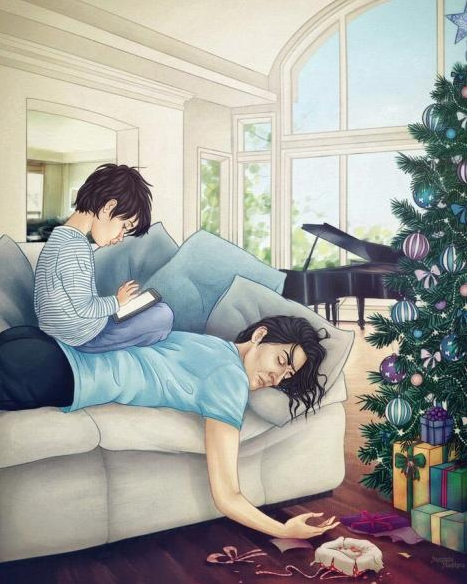
Firstly, I could write about this scene in real-time. The story would start prior to the scene we see in the image, with Harry and Severus setting up the Christmas tree. An exhausted Severus falls asleep, leaving the opportunistic Harry to open one of his presents. The image was a photograph taken by Lily when she discovered the scene before her giggles startled Harry and woke Severus. What follows would be some light-hearted family fluff—perhaps Severus half-jokingly tries to get Lily to delete the photo, or maybe they place it in a family album.
A second way to use this prompt literally in a story would be to start with the photo and have my main character reflect on it. Perhaps Lily is going through her photo albums ahead of Harry’s wedding, missing the little boy he once was but realising how proud she is of the young man he has become. Alternatively, Harry could come across the photograph while cleaning out his parents’ house after their deaths. The story would then focus on Harry’s reflections on his childhood and his parents.
It is important to note that in all of these examples, any story using this prompt would be an AU, which would need to be highlighted in your A/N, as well as make sense within the story. Perhaps Lily takes a moment to reflect on having to choose between Severus and James, or Harry muses on his “Uncle James” and how his life turned out compared to that of Harry’s parents.
2. Using key themes from the image
The second way to incorporate an image prompt into your story is to draw from its key themes to underpin and inform your story. This would be similar to how you would include your school’s given theme. You must ensure that any theme you take from the image is used clearly in your story, in a way that significantly impacts the plot line and characters.
If you choose to use the themes of the image, you do not have to use specific characters or objects that are within the image itself. In this case, you would not be required to use Harry and Severus as characters within your story.
When we look at the example image, we see multiple themes such as family and Christmas. We could also draw on the theme of trust, seen in Harry sitting comfortably on his father’s back, and success, symbolised by the large room and grand piano.
Looking a little deeper, we can see multiple AU possibilities such as a Muggle!AU based on the use of technology. A second AU could be taking two characters that are enemies or rivals in canon and giving them a positive relationship.
When using the themes of an image prompt, highlight in your A/N which theme/s you use and ensure that the themes are clear within your story.
As with all prompts, an image prompt must have a significant impact on the plot to receive full points regardless of whether you are using it literally or symbolically.
Handy Hints – Romantic relationships

Romantic relationships are a regular part of our writing because everyone loves love. Most stories have a romantic pairing even if it’s minor. I know I can’t resist hinting at a little bit of Snily action. For that reason, I decided to do some research and find out what things I should avoid when trying to write the best couple.
Avoiding Conflict and Tension
Conflict and tension are essential elements that move a story forward. They keep the reader gripped and interested. The use of tension and conflict helps the reader to get invested in the story, characters, and relationships.
We tend to love the conflict and tension that comes with a couple getting together, falling in love, the ups and downs of that process. The problem is that the story needs more than that. Two big mistakes regarding tension and conflict in romantic writing include:
- A writer not maintaining conflict and tension in other areas of the story—keeping all the tension with the romantic pairing.
- A writer not maintaining conflict and tension after the couple gets together.
For the first point, it’s essential to read your story and ensure that you have other elements than straight romance. There should be something more than love bringing your characters together and providing tension. Whatever element you choose can even be what brings them together. Even in a strictly romantic story, you should have subplots that aren’t romantic.
You should consider the genre that you are writing. If you are writing outside of romance, you need to ensure that you are paying close attention to the conflict outside of the romantic subplot.
The second point focuses on writing that has terrific build-up and a pivotal moment where the couple finally gets together. After the couple comes together, everything works out perfectly, and there’s no more tension. Without tension, there’s nothing driving the story since you have resolved everything. To continue the story, you need to keep conflict and tension in that relationship.
Let’s take a pairing that I know many people love as an example: Hermione Granger and Draco Malfoy. We can all imagine the bickering and fighting that is involved in them getting together; how could there not be? Once they get together, would Draco stop rubbing her the wrong way? Would Hermione’s know-it-all attitude go away and stop grating on him? No. The characters would love and hate these qualities about each other. Draco and Hermione would have tension between them because of their differences; this creates the spark for the couple. Don’t take it away.
In real life, no relationship is perfect, and to keep the interest up, it should be the same in fiction. There can be difficulties between the couple and individually. One thing is certain; things can’t be plain sailing until you have resolved everything and written: ‘The End.’
Creating Stereotypical Characters
Romance novels and rom-com movies tend to have stereotypical characters. Predictable characters come across as cringe-worthy or two-dimensional. It can happen in any story, but it is more prominent in romance. Examples are the guy with a troubled past, the hard exterior with a soft heart, or maybe the pixie dream girl or characters with absolutely no flaws. The way we write characters, even in fanfiction, can make or break a story.
There are a few things that you can keep in mind when writing your characters. Firstly, craft and develop the characters individually. Suppose the character you are writing becomes one-dimensional, for example, focusing on obvious character traits such as Luna’s fascination with creatures that might not exist. They aren’t as believable on their own, or in their relationship.
To create an authentic character, you need to add flaws and make them more complex rather than only including their signature traits. Look at the motivations and focus on getting that character to resonate with your readers. When you focus only on the surface attributes, characters lack substance, which then causes the relationship to lack substance. Well-rounded characters form fully rounded and engaging relationships.
Love at First Sight
Instant attraction should not be confused with love at first sight. In real life, this doesn’t happen, and so it doesn’t ring true. There should never be an excuse for the use of instant love; even when using tropes such as ‘soulmate!AU’. It removes the conflict from the relationship, which removes satisfaction from the reader’s experience.
It erases the journey of the relationship since you’re already at the finish line. It eliminates the anticipation between the characters and from your readers. You have cut your story off from a significant source of conflict and tension, and it takes all the fun out of writing the relationship development and reading it.
What makes this most damaging is the lack of real, meaningful connection between the characters. This lack of connection prevents the reader from feeling for the characters and can cause them to eye-roll and move on.
Romanticising Harmful Dynamics
Relationships can be both positive and negative. Romantic relationships are no different. Your writing needs to be able to distinguish which of your romantic relationships are good and which are bad. Some relationships can be harmful, and it’s essential to show that.
How can you do that? By not romanticising the harmful attributes or relationships in your writing. They can aid conflict and tension, but don’t tell the reader that these are positive.
When you show negative actions as a symbol or expression of love, you are saying—intentionally or not—that these damaging actions are romantic and therefore positive. We often see this where a romantic lead has characteristics that are abusive verbally, emotionally, or even physically. You then show these attributes as sexy and desirable.
Characteristics to watch out for:
- Extreme jealousy.
- Possessiveness.
- Dominant and controlling.
- Obsessiveness.
It doesn’t mean that a character cannot display these traits, or that you cannot write about relationships that are controlling; however, it’s not romance if it’s abusive or toxic. When a reader chooses a romantic story, they are looking for certain things, and the dynamics in these relationships aren’t it. Use these traits to show your readers what’s healthy and what’s not.
Cliche Language and Descriptions
Romantic stories are full of clichés in the plot points, words used, and the way that we describe things. What makes a story great is its originality and the way it takes a reader by surprise. Clichés do not take us by surprise.
When I know what’s coming or I can predict a phrase, paragraph, or even plot point, I skim. Readers skimming is a sign that something is boring or expected, and it can cause the reader to miss important information. The reader should always be wholly engaged.
Clichés that are seen most commonly in romantic stories:
- Descriptions of eyes in excessive detail.
- Unoriginal ways of expressing emotions or feelings.
- Racing pulses.
- Lots of blushing.
- Long-drawn out gazes.
- Overused comparisons.
- To celestial bodies.
- To food.
- To flowers.
- Cliché phrases.
- You’re not like other girls.
- You don’t know how beautiful you are.
- Eyes raking over their body.
- Cliché plot points.
- Bad boy + good girl.
- Jealous ex.
- Love triangle.
- Word choices.
- Love.
- Passion.
- Desire.
You can avoid these pitfalls with a little thought and creativity. Think about the characters and what romance and emotion mean to them. If you feel the need to use a cliché, do it in a way that no one would expect and always try to incorporate the character into how you use them.
A brilliant example of using a cliché originally is in Fantastic Beasts when Newt Scamander refers to Tina’s eyes as being like a Salamander’s. The comparison Newt makes tells us a lot about him as a person as well as how he feels about Tina.
Think about the entire body and its language. The usual ways to show emotions are eyes and racing hearts and pulses, but what is the rest of the body doing? Think about what a character does with their hands, their posture. Communication comprises ninety-three per cent of non-verbal cues.
Far too often, we read stories where a character looks at their love and compares them to the sun, moon, stars, to the point where these comparisons to nature and celestial bodies have become a cliché. Employ fresh imagery and comparisons that matter to the characters or speak to them more profoundly. Think outside of what is obvious. Use unique words in ways that will surprise the reader.
Finally, simplicity is sometimes the most elegant way. Try to economise your words and use what moves the story forward and shows us how the character feels. Use streamlined descriptions that are far more effective and poignant than something long and poetic.
Ash’s Quick Tips

“That” and “which” are not interchangeable:
– Use “that” to say which one.
– Use “which” to give extra information.
Example: “He took the briefcase that contained the money.”
→ This sentence suggests that there are several briefcases, but only one containing money.
Example: “He took the briefcase, which contained the money.”
→ This sentence means that there’s only one briefcase and that the money it contains is relevant to the character or plot.
Be careful: “which” comes after a comma; “that” does not.
Writing School – Paragraphs

Paragraphs have an impact on your writing. They can be used for emphasis and to make sure readers don’t skip vital information.
Uses:
- Pacing: Decrease paragraph and sentence length in action scenes and increase them again during slower, quieter scenes to adjust the reading speed.
- Mood: A short paragraph, perhaps a sentence of only one or two words, dropped in the middle of a series of long paragraphs can have the effect of an exploding bomb. Paragraph style can influence the tone and feel of a story.
- Structure: Information can be revealed or hidden inside paragraphs. The first and last sentences frame the contents and draw the most attention. The details in between are more likely to be skimmed.
- Variety: Paragraph length and sentence construction can create a better reading experience. Avoid monotony to keep your readers engaged.
Types of paragraphs
- Expository paragraphs.
- The expository paragraph focuses on setting, characters, and atmosphere.
- Each of those can get a separate paragraph to set a scene step by step and add emphasis.
- Narrative paragraphs.
- Narrative paragraphs, also called action paragraphs, tell the story from the narrator’s point of view and move the story forward.
- Dialogue paragraphs.
- Dialogue paragraphs have three parts:
- the words that are spoken (the quote sentence).
- the dialogue tag (he said, she said).
- the unspoken actions or thoughts that add meaning to the quote (actions beats).
Sometimes the dialogue is lengthy with only one character speaking. In this case, you can break up long paragraphs at strategic spots for easier reading. When adding a line break to a long monologue, omit the quotation mark before the line break.
Example:
“My family is quite big. There’s my mum’s side, which is mostly absent from our family gatherings. She has three sisters, and my aunts’ names all start with an A: Annelise, Anthea, and Amalie.
“On the other hand we have my dad’s brothers, who are all named after big philosophers. The eldest is called Immanuel, and then there’s Friedrich, and of course Sigmund, the youngest.”
When to start a new paragraph
There are many reasons to add a line break. Try to avoid long paragraphs so that you don’t build a wall of text but also don’t just randomly start new paragraphs. Use the line break for a purpose such as:
- Something changes or a new topic is introduced.
- The time or location changes.
- A new character enters a scene.
- The mood shifts.
- Dialogue.
- Creating emphasis.
Don’t be afraid of single-line paragraphs! They can add strong emphasis or ground the reader in a complex narrative.
Final tip:
Shorter paragraphs can help ease the reader into the story. A lengthy exposition paragraph can be a significant downturn for some readers, so find something catchy and short to get their attention.
Writing School Challenge
Win up to 10 extra points by writing a drabble that will be judged specifically on the aspects of this round’s challenge. These stories are not to be beta’d. The idea is that you learn the rules and beta for yourself, ensuring that there are as few errors as possible.
Find the rules for this challenge in our rules and regulations thread!
For this round’s drabble, try out different methods of paragraphing to structure your story. You will score on how well your paragraphing supports the flow and structure of the plot.
Your optional prompts this round are the following:
- (Dialogue) “Give me an opportunity to fail,” X said. “I promise my corpse won’t interrupt your ‘I told you so’ speech.”
- (Action) pursing of the lips
- (Emotion) dread
- (Sound) laughter
Points:
- 3 points for submitting a story according to the rules and regulations.
- up to 2 points for the story (plot, flow, and characterisation).
- up to -1 point for SPaG errors.
- up to -1 point for submission errors.
- up to 5 points for the given technique.
- 1 P for proper paragraphing of dialogue.
- 1 P for paragraphing that varies the story’s pacing.
- 1 P for long paragraphs that are structured to add emphasis on the right sentences.
- 1 P for single line paragraphs that add emphasis.
- 1 P for respecting the TipTop paragraphing rule.
Deadline: 6th February 2021.
Trivia and Puzzles
Welcome to the Trivia and Puzzles section of the WWN. Have fun and win points!
These quizzes and puzzles will always follow the books over the movies, so in case of disparity, the book-correct answer will be the right one. The answers to Trivia and Puzzles can be sent to the competition account: WizardingSchoolChampionship or emailed to wizardingschoolchampionship@gmail.com until the end of the round.
Trivia and Puzzle are worth 5 points each. The winners will be drawn by an admin from a magic hat and announced in the following issue. If we receive up to 10 entries, 1 winner will be drawn; if we get more than 10 entries, 3 winners will be drawn!
round 1 trivia and puzzle winners
Issue One’s Puzzle Winner’s are: Lady Slone, Bea Write and GingerDream all from beauxbatons! Congratulations, guys!
Issue One’s Trivia Winner’s are: Accio-Broom – Ilvermorny, KeepSmiling – Durmstrang, Loverloverlover – Beauxbatons! Congratulations, guys!
WWN 2 Deadline: 6th February 2021.
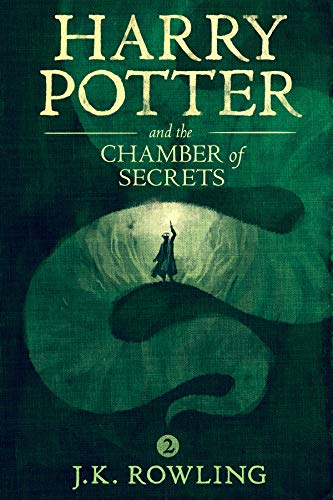
How well do you know Harry Potter and the Chamber of Secrets?
- What was Hagrid looking for when he ran into Harry in Knockturn Alley?
- What spell did Lockhart use to try and round up the pixies?
- Which two creatures did Hagrid suspect were killing the roosters?
- Who had teased Moaning Myrtle because of her glasses?
- What was the name of Aragog’s wife?
- What did Harry and Ron leave for Crabbe and Goyle to make sure they didn’t burst in on them while they were in the Slytherin common room?
- How many years of his death had Nearly Headless Nick celebrated on Halloween?
- What task was Harry given as detention due to he and Ron flying and crashing the flying Ford Anglia?
- What book was Hermione reading during breakfast on the first day back to Hogwarts?
- What kind of quill did Lockhart use to write Hermione the note allowing her into the Restricted Section?
Crossword — Swish and Flick!
The crossword—which is here—consists of different spells. Use the clues given to fill in the blanks. Screenshot your completed puzzle and send it to our email above.
Clues Across:
2. Hermione used this on Cormac McLaggen.
4. This spell was used against the Longbottom’s by Bellatrix.
5. Remus Lupin used this spell to shoot chewing gum up Peeves’ nose.
9. The spell Tonks used to mend Harry’s nose on the train.
10. The spell Hermione used on Salazar Slytherin’s locket to avoid making Umbridge suspicious.
11. The charm Harry’s DADA examiner for OWLs Practical’s wanted to see for extra credit.
13. Light charm
16. Hermione used this spell on Neville during their first year.
17. The one spell Lockhart was exceptional at.
18. The spell McGonagall had always wanted to use.
20. The spell Harry used on Draco in the washroom in his sixth year.
23. The last spell Voldemort used.
Clues Down:
1. This spell was cast by Barty Crouch Jr. using Harry’s wand.
2. The opposite of Alohomora.
3. The first spell that Harry Potter learnt.
6. When Seamus used this spell in charms class, he knocked professor Flitwick off his chair.
7. The spell Hermione used just before meeting fluffy.
8. James Potter used this spell on Severus Snape during their fifth year.
12. The spell Harry Potter used against Voldemort.
14. The spell Harry used during the first task.
15. Draco Malfoy used this spell on Neville during their first year.
19. When harry used this spell against Snape during Occlumency lessons, Snape staggered back.
21. This spell is used against boggarts.
22. The spell Hermione put up around their campsites when the three of them were on the run, protects against hexes.
Creative Corner – character collages
Hi, guys!
Welcome to the Creative Corner. It’s Verity here, and I cannot wait to show off all the artwork you guys have sent through.
We have had some truly great fanart submissions and some fantastic submissions for the logo challenge, too. I would like to take a moment to thank everyone who took part. You all worked really hard, and there were so many to choose from. Go to our Potter Art page to see the rest of the fantastic submissions.
The logo challenge was tough to judge, but in the end, our top three winners are:
1st Place and our new logo goes to: Accio-Broom

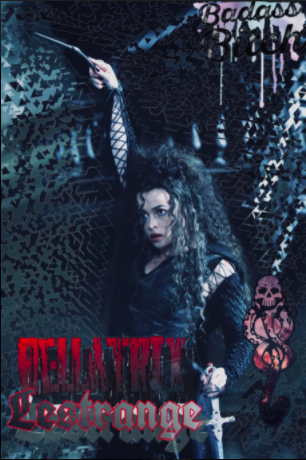
Runners up: NinjaDevil – Mahoutokoro, Bea Writes – Beauxbatons, and Be11atrixTheStrange – Hogwarts


This round’s creative challenge is character centred. We want you to create a character collage! A collage, in the traditional sense, is:
‘A piece of art made by sticking various materials such as photographs and pieces of paper or fabric onto a backing.’
We will also be accepting digital versions known as Aesthetics. As usual, we have a few rules for this challenge:
- It should be representative of a character from the wizarding world.
- You should include numerous images, styles, and words.
- You should not include the character’s name in the image.
- It should be your original work, not something that we can find on google.
Each student can only submit one piece. Each submission will automatically gain 3 points. The winning collage (or sometimes top three depending on the number of submissions) will get an extra 5 points for their team.
You should email them to wizardingschoolchampionship@gmail.com and include: Pen name; School; Year.
We have also had some fantastic fanart submissions during this first round of the competition. It’s limited to one per person, per round as we are unable to show everything. Here are some items by NinjaDevil, LittleTee, and JanieOhio.
Old Fashioned Letters – By LittleTee
Old-fashioned letters from yesteryear;
They told tales of the far away, ne’er blear;
Misadventures filled with merriment;
News from home carried fond sentiment;
Like, where they’d been and the folks they’d seen;
But nobody writes of the quaint delights;
Of the sunny days, the merry nights.
Now, it is a DM, a text, a tweet;
Angry trolls abound around our feet;
Creepy, crude texts spate and haunt our phones;
Cyberbullying grows only to reap more thrones;
We all would be happier, I think,
If we’d spent our time with pen and ink.


Dear Severus Snape
Welcome to what has been described as ‘the worst thing to happen to the Wizarding World News’. I have been assaulted by flocks of owls. Each and every beast has been burdened with one of your inane questions.
As the most intelligent person at the WWN, it is down to me to steer you in the right direction.
Dear Severus,
I want to apologise for what me, James, Sirius, and Peter did to you at school. We were wrong to do it, but I was the worst of all because I stood by and did nothing to stop them from harming you. For that, I am sorry.
Dear Mr R. J. Lupin,
This is ridiculous. You send owl after owl, alway asking for forgiveness and comradery. It is pathetic. As such, I have decided to extend an offer of friendship, but with clear and fair boundaries.
- Don’t approach me in public or private,
- No correspondence of any kind,
- If you see me, pretend you don’t know me.
Yours Sincerely
Prof. S. T. Snape
Dear Snape,
How do you feel being voted the second most recognized Boggart shape in wizarding Britain, second only to Umbridge?
~A Curious Wizard
Dear Curious Wizard,
It’s Professor Snape.
I’ll be honest, it fills me with deep, deep shame.
I have threatened students my entire career, yet she still wins? I am an accomplished potioneer and stock many deadly poisons. I do not understand how that vile creature took my spot?
It is as I have always suspected, there is no justice in this world!
Boggart Snape
Oi Snivellus,
Who in their right mind would give you this job? Honestly, this column has become a joke…
A group of disgruntled Gryffindors
Dear Bunch of Ignorant Self-Important Dunderheads,
The last man who called me Snivellus is now dead. It’s not a threat, it’s just something that happens.
Your Worst Nightmare
Dear Severus,
I recently took a match-making test to decide who in the wizarding world is my perfect fit. My top two matches — with 100% each — were Voldemort and yourself. However, I wonder, should I be worried that one of my top candidates is a dramatic megalomaniac, who is both crazy and awful?
I just love you, you know. Why does he have to be there too?
Could you help me?
Yours
Dear Crazy Stalker,
Please find attached your copy of my restraining order.
Mr Snape
Dear Severus Snape,
I received my Hogwarts letter last Saturday, and I’m so excited! My father is a wizard. My parents promised to get me a pet, and I’ve always wanted to own a ferret or even a magical creature like a Crup.
However, when I read the entire letter, I noticed that it said that only owls, cats, and toads are permitted at Hogwarts.
Is there anything that can be done about these rules? Can I take a Crup instead of a cat?
Best regards
Emily Finnigan
Dear Emily,
I found your letter on the Headmaster’s desk. I want to let you in on a secret, students are allowed Ferrets, but they must be named after a professor at Hogwarts. It just so happens, an old friend of mine is starting teaching this year, and I just know it would make his day if you named yours after him. You could call it Draco, Mr Malfoy, or even Stupid Blond Git. Whichever makes you happy. My advice, get a blond one, and definitely introduce it to the Professor Malfoy; it’ll make him so happy.
Have a great first day,
Harry Potter
Dear Severus,
You have been teaching for a long time now. I hope to be a potions master one day and maybe even teach at Hogwarts, after your position has been vacated of course, and I was wondering what you could tell me about students? Are there certain years that are easier to teach than others? What kind of techniques do you use to keep your students concentrated and focused?
– an aspiring potions master
Dear Aspiring Potions Master,
Teaching is a worthless pursuit because of the children. In an effort to educate you, I will detail the most hopeless case I have ever come across.
I once had the great misfortune of teaching a set of twins.
One day, when I had taken the time to prepare a demonstration, they performed a non-verbal freezing charm on the flames. I then had to take the time to lecture the class on the stupidity and immaturity of this foolish prank! I was distracted by one of the complaining twins, only for the other to add a heat-triggered, wet-start firework to my concoction.
I countered their spell easily, but once the potion was complete, I was supposed to show the desired result to the class when it exploded! I got engorgement potion all over myself, most notably on my nose!
Regards
Severus Snape – an inspiration to all
I am obligated to state that the opinions presented in no way represent the views and opinions of the Wizarding World News or its members. All opinions expressed belong to a sarky miserable old git with a propensity to skip shower day—the worst day of the year.
Interview

This week, I have with me Headmistress Georgie! Georgie hails from Australia and loves reading, drinking tea, and crochet. She is a self-confessed clutz—let’s hope she doesn’t fall on her way in!
From judge, to admin, to headmistress, you’ve done it all for the IWSC. How old were you when you threw in your lot with the Potterheads?
I read Philosopher’s Stone when I was eleven, but I can’t remember whether I even finished it! I’m ashamed to say that I mindlessly hated it for a while. But I read a chapter to my cousin when I was sixteen, and I have been hooked ever since.
Do you remember what put you off so strongly?
As a kid, I was extremely literal (my mum would say “hop to it”, and I would unironically start hopping), and I just couldn’t handle the fact that Harry Potter couldn’t happen in real life. It didn’t matter so much whether it made sense for one person to go through so much in their life (for example, Little Women, Anne of Green Gables), it was more that it couldn’t physically occur.
But reading a chapter to your cousin is what changed your view on the series?
I think I was heading in that direction already. A year or so before that (so I was about 14), my best friend got me to read a fantasy series by Michael Scott called The Secrets of the Immortal Nicholas Flamel. It was a good gateway for me because it was set within the “real world”. All the fantasy figures were pulled from real religions and myths from civilisations throughout history.
We’ve got to thank that friend of yours. Without them, you wouldn’t be on the mod team!
Haha, yes. And he lent me all of his Harry Potter books too!
A true hero! Now that you’re a Harry Potter veteran, you must have a favourite HP thing to read about, a character, trope, topic, era…
I love reading and writing next-gen—I love that we can take this world we already know and turn it into anything we want.
In there lies the beauty of fanfiction. Do you have a favourite next-gen character or pairing?
It changes depending on who I’m writing, but I have a strong loyalty to Teddy Lupin/Victoire Weasley. Most of my other pairings involve OCs, so they are always interesting to write.
OCs can be a real challenge but are so good when done well. Do you have any tips for creating a believable OC?
Plan them out. I have a document with character profiles for all of my next-gen characters, including details such as Quidditch position, academic ability/enjoyment, friendships, strengths and weaknesses, etc.
I think one of the traps that a lot of people fall into with OCs is having them be too good to be true. Every human has flaws, and every human has idiosyncrasies. So ask yourself what those will be for your OC. Do they have a short temper? Are they chronically messy? Do they wind their hair around their fingers when they’re nervous?
Similarly, don’t make OC antagonists all bad. Maybe they’re mean to humans but super gentle with animals. Maybe they’re sarcastic because they’re socially anxious and don’t know how else to interact with people. Give them a balance of traits so that they will feel real and believable.
I like the terminology you use—“real” and “believable” as opposed to “strong”. The term “strong characters” can be misleading, often resulting in the belief that if a character can’t beat the tar out of everyone, they aren’t well-written.
Do you have a least favourite Harry Potter character or pairing?
Vee will get me for this, but I don’t really like Snape! I don’t know if I would call any my “least favourite”, though—all characters and pairings have both strengths and faults.
That’s a very diplomatic answer. To rile Vee up some more, what would you say is Snape’s greatest flaw, and to ease that sting a bit, what’s his greatest quality?
I think Snape’s greatest flaw is his unwillingness to separate the past from the present, as seen in his treatment of both Harry and Neville. His greatest quality is his loyalty—although even that can be his downfall, as in the case of his devotion to Lily to the point of harming others and not allowing himself to enjoy life.
Now that you’ve poked holes in Vee’s hero, could you describe your perfect book hero or heroine?
My perfect hero or heroine would be flawed and know it, but they become the hero/heroine despite those flaws. They know they aren’t perfect, but they work really hard and use their imperfections to accomplish what they need to.
Is there a particular flaw you really like seeing in heroes, either generally or in one specific case?
Hmm, that’s a really interesting question!
I think a flaw that is used a lot is where the character is so focused on being the hero that they block everyone out. While it is used a lot, I think it’s really believable because a lot of us do that in our daily lives. I can’t count the number of times that I have not asked for help because I thought that I should be strong enough to deal with it on my own. It’s a flaw that can be viewed as a strength by the hero—look at me, strong and independent and protecting everyone—but it can do more harm than good.
Another fun one to play with is the selfish hero. Because they usually see themselves as being selfless, but in actual fact, they wallow in “woe is me, I have all the weight of the world on my shoulders,” and often can’t see past their own struggles to notice those of others. Like in GoF, when Harry is so focused on himself, he doesn’t think about how his estrangement with Ron is affecting Hermione, or even that she’s spending enough time around Krum to warrant an invite to the Yule Ball.
That’s a great example. Character flaws are necessary and work best when the narrative doesn’t actively acknowledge them. Harry’s selfish behaviour is never named in GoF. It’s up to readers to pick up on it by observing his actions and their consequences.
Other than believable characters, what’s another thing you love finding in stories?
I love finding a new/creative twist on a character/event/trope that I’ve seen before or getting insight into a side character that we don’t see a lot of in canon.
Could you give an example of a new/creative twist?
The one that comes to mind is a fic called Living with Danger and its sequels by whydoyouneedtoknow. It’s a take on the “Harry raised by Sirius and Remus” trope, except that it is Sirius, Remus, and their two wives. He is also raised, through various ways and plots, with Hermione and Draco as his siblings. The author weaves in things like prophecy and Heirs oof magic without it feeling forced or done before.
I’ve also been combing my mind and phone for examples of ones I’ve read recently through IWSC. The great thing about being a judge is that you read so many interesting stories! One is Blood Stains by our very own x Hemlock x. I thought it was a really interesting take on Sirius and definitely left me wanting more.
Oh, Blood Stains! That was one of the first stories I judged last season, and it has left such a lasting impression. I went to read it again the other day, and it still gives me chills, haha.
I suppose while we’re on the topic of good writing, I should ask you one of my favourite questions: do you have any writing advice that you think everyone should know?
You’re better than you think you are, and you will only continue getting better. Keep writing, and keep showing your writing to people. It’s the only way to learn and grow. And listen to feedback!
Everyone knows that some feedback can be tough to swallow. Do you have any feedback tales of woe? And some advice on how to deal with it?
I don’t get many reviews, which is a bit of a double-edged sword! But a lot of my writing has been comp-based, which comes with judging. I’ve had a few stories recently that I worked really hard on and was really proud of, only to have the plot pulled apart. That can really hurt, when you’ve put so much of yourself into something and then it isn’t appreciated as much as you thought it would be.
I think the primary thing to remember is that 99% of the time, the feedback is meant well and is designed to help you grow. Certainly, in the case of judging, every sentence is designed to give specific feedback to help you write better stories in the future. When I was a judge, I found sending out negative feedback really hard, because I knew that it would upset the writer. I did it, though, in order to gently point them in the right direction. So know that we don’t enjoy it any more than you do!
Also, remember that you don’t have to take feedback on if you don’t agree with it. Judges and reviewers are human too. We don’t always get it right. If there is something that you disagree with, I suggest that you get someone else to have a look at it. Sometimes it is just that you are too close to the problem and can’t see the benefits of the feedback.
We’re on to “Would You Rather”: would you rather read an excellent story that is poorly written or read a poor story that is excellently written?
Read a poor story that is excellently written. I really struggle to get through poorly written stories, so I would always wonder how it ended. However, I could forgive a poor plot if it was written well.
So, in your opinion, writing style trumps plot?
Well, having read Lun’s interview, I may change my mind, but I think that weaknesses in the plot can be disguised or strengthened by good writing. There might be a glaring hole in my story, but if my use of description is strong, and I use interesting language and dialogue, I might be able to trick you into looking over it. I struggle to get out of “edit” mode, so if a story is riddled with grammar and stylistic errors, that’s all I can focus on. The plot might be brilliant, but my brain won’t see on it so long as it is correcting the mistakes. It sounds harsh, but I can’t make it stop!
You make a fair point. The editor brain can sap the enjoyment out of a lot of things.
Now for “Either-Or”: computer or notebook?
Notebook.
And last but not least: what will you be sharing with us?
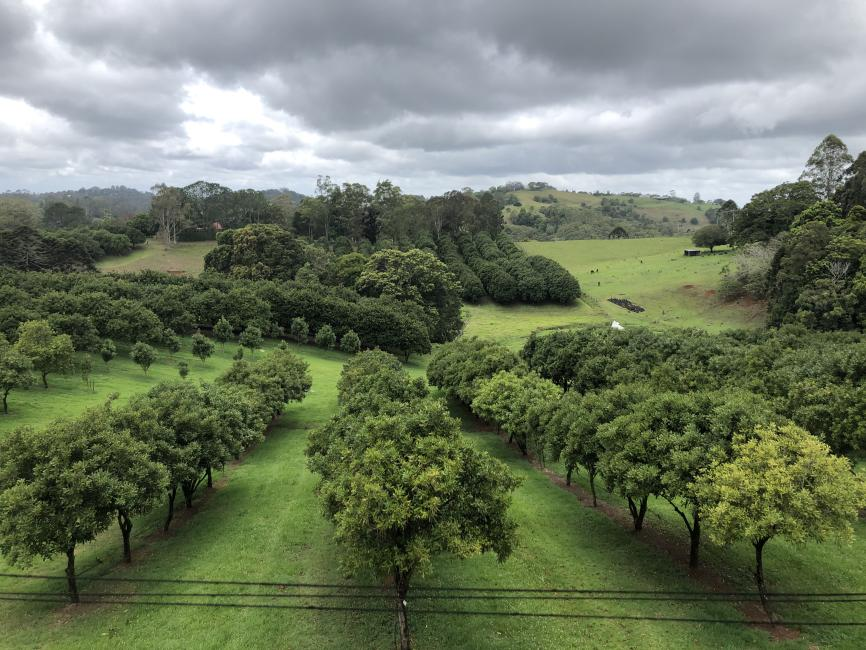
This is a picture of my grandpa’s macadamia nut farm in Queensland. The farm was bought when I was a baby, and it is my favourite place in the world.

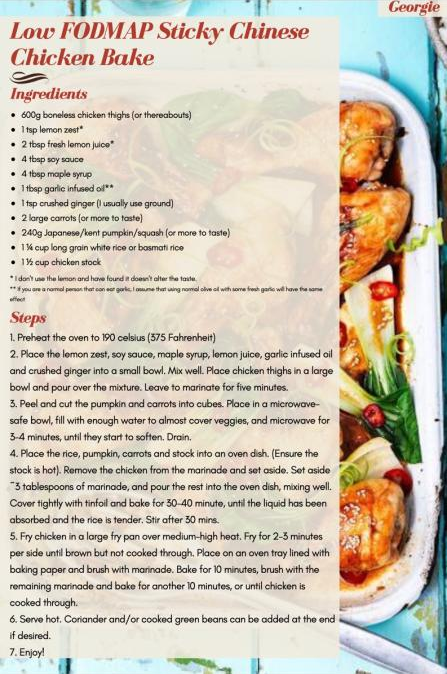
And I must give credit to the blog A Little Bit Yummy for this. It’s a great recipe for those with sensitive stomachs and weird dietary requirements, but my normal-diet husband loves it too: low FODMAP Sticky Chinese Chicken Bake.
Now, please welcome one of our judges: Hummus and Peeta!
Hummus and Peeta is a university student who loves escaping to the various fandoms of fanfiction. Don’t be fooled by her username; pita dipped in hummus is not her favorite food (the way to her heart is with pastries and pasta). She did, however, have the biggest crush on Peeta in high school. She’s now outgrown it and finds that Katniss is more her type, but Hummus and Katniss isn’t as cool of a username.
Do you have a preference between fanfiction and original stories?
I think I’d have to go with fanfiction. I like that I can constantly find new stories and adventures to read about characters that I either love or bring me comfort. The downside of fanfiction is that sometimes stories are left unfinished, but they can still be enjoyed and appreciated.
Fanfiction, for me, represents comfort and nostalgia, but original stories allow for the discovery of new characters and plots. It’s easier to recommend and bond over a book with someone than a fanfiction with a specific pairing.
Very true. What made you want to take time off from reading stories of your choosing to judge a fanfiction competition?
Last year, when I received the opportunity to judge, I was at a point in my life where I couldn’t go to school or work and was searching for a purpose. Because of my health, I’ve been confined to my bed and the opportunity to read fantastic stories every week seemed like too good an offer to turn down! It turns out becoming a judge was something I needed to do to keep myself busy and happy.
I don’t want to be thankful for your ill health, but you are an excellent addition to the team!
Thank you, haha. I feel the same way! If it wasn’t for my health, I wouldn’t have taken the chance and joined the competition!
What are you most looking forward to this season?
I’m looking forward to discovering characters that aren’t featured much in the books. As always, I’m just excited to read more stories!
I’m always amazed by the creativity the students show when it comes to writing a story that’s not only extremely entertaining and unique but also manages to step up to all the challenges each round!
The students are very good at coming up with great ideas! Do you have a favourite story from season 2?
This is tough because I read so many incredible stories! The one that I enjoyed the most was Metamorphosis of Living Nature by Jessica-Doom. The imagery and symbolism were incredibly creative and detailed. It was a lot of fun to read, showing different sides of characters from The Cursed Child.
I’ll put that story on my to-read list. Creativity is the first thing that a writer needs, but it’s far from the last. How important is SPaG to you?
I have a love-hate relationship with SPaG! I think it’s important since, when followed, it aids with the flow and helps a story shine. The rules of SPaG aren’t always easy, and it pains me to have to remove points in this category, especially for typos!
SPaG mistakes can be easy to make but hard to find; I know I often have a hard time spotting my own mistakes!
Our brain tends to skip over our writing because it knows what we meant to say. Do you have a method that helps you find your mistakes?
I like to read my stories out loud. I tend to read fast and gloss over mistakes, but when I’m reading out loud, I’m forced to take the time to slow down and notice errors. Reading out loud also helps me make sure the sentences flow properly and are understandable.
That’s good advice!
One aspect of fanfiction that people either love or hate is character bashing. How do you feel about it?
I guess it depends on the situation. Everybody has different opinions on characters, and that’s fine. I feel like it’s okay to show your feelings about a character as long as it’s not the only goal and subject of a story and that the reasoning behind the bashing is explained. But if someone were to bash a character for their sexuality or race, I wouldn’t continue reading.
So creativity is wonderful, SPaG is difficult, and character bashing should never be about discrimination. Is there anything else you’d like students to know about your judging process?
I always write feedback while listening to the Harry Potter movie soundtrack. I find it adds to the mood!
I feel it’s important to add, given what’s happened recently, that I support trans rights. All gender identities and sexualities are valid! Also, Black Lives Matter. As long as it’s legal, respectful, appropriate, and consensual, I support any character, pairing, and plot changes!
Fanfiction without diversity would be far less interesting. We have the possibility to explore, both as writers and readers, aspects of ourselves and others that we don’t see often in mainstream media.
Canon isn’t all bad, obviously; otherwise, we wouldn’t be here. Which are your favourite Harry Potter characters and pairings?
Since first reading the books, Ginny has been my favorite character. I love everything about her, from her personality to her hair! (I loved it so much that I dyed my hair ginger when I turned sixteen!) Naturally, Ginny and Harry were my favourite pairing.
I still like reading Hinny stories, but I also love Ginny and Luna. My other favorite ships are Remus/Sirius and Seamus/Dean.
A lot of people in the fandom don’t like Ginny. Why do you think that is?
Really? Haha, I didn’t know that! Naturally, not everybody is loved. I don’t like the version of Ginny presented in the movies. She doesn’t have much of a personality, and her only purpose is to act as Harry’s love interest, so maybe that’s why some people don’t like her?
I much prefer the version of Ginny from the books; she’s courageous, knows how to stand her ground, and she’s caring. Maybe people don’t like her because she ends up with Harry?
I think that’s part of it. A lot of people imagined that Harry would end up with someone else, so him falling for Ginny felt like an unwanted plot twist.
Truth be told, from a literary point of view, Ginny’s one of the few characters with whom Harry could have a relationship without breaking anyone’s characterisation.
What is your all-time favourite book?
I love the Percy Jackson series. I’ve always had an interest in Greek mythology, and this series is what helped me find some great friends throughout middle school and high school!
My other all-time favourite book would be They Both Die at the End by Adam Silvera. This book is the first and only one to make me cry on a public bus. It’s such a beautiful, yet sad, story, and it has a great message.
People say that the Percy Jackson series is all-around better than Harry Potter. I’ve not read Rick Riordan’s works, but I do know, in terms of diversity and representation, he does a much better job than J.K Rowling. What would you say is one area in which the Harry Potter books trump Percy Jackson?
I do feel that the Percy Jackson series has more diversity and representation, but it’s definitely not perfect. There are some flaws and problematic/stereotypical representations as well.
Both stories offer overall important messages. Percy Jackson is a lot more lighthearted and funny, although it does have some sad and dark moments. I find Harry Potter to have a darker tone and a presentation of more complex emotions and themes. I find the messages of Harry Potter more diverse and easier to identify and relate to.
Themes in writing can make or break a story, but they vary a lot depending on the target age group. How old were you when you started writing?
I began publishing fanfiction in 2011 (13 years old) thanks to one of my great friends from school.
One day when we were in the school library, I noticed she was working on something that wasn’t homework and I asked her about it. I knew about fanfiction and had read a few, but I was too nervous about writing anything myself. She told me she wrote and published fanfiction, and she encouraged me to publish my own stories. She also was my beta reader for a long time; I learned a lot of tricks from her! Everything she writes is incredibly detailed and creative, so if you’re looking for a good Harry Potter or Percy Jackson story, go check out HecateA!
I’ve read a few of her stories, and I second that endorsement. What is the best writing advice that you have?
Sometimes taking a step back helps with writer’s block. And always plan beforehand! Even if you’re really excited for the world to see your story, make sure you have the end planned before you publish the beginning!
This is advice that I have a hard time following, but I find that after having finished writing a story, it’s always best to wait a day or so before publishing it. If I put my story aside for a day and then come back and read it one last time before posting it, I’ll often find mistakes that I missed or think of a couple more things to add.
It’s time for Would You Rather! Would you rather write naked à la Victor Hugo or in a skintight Catwoman outfit?
I would prefer the Catwoman outfit since I love cosplaying.
Is there a character that you most love cosplaying as?
I liked getting to dress up as Peggy Carter from the tv show, Agent Carter. I wore the iconic outfit with the red hat and blue suit. She’s such a great character, and I felt confident getting to dress up as her! (Content warning) I also liked getting to dress up as She-Ra. One of my friends made me that costume, so it’s special to wear and show off her talent (Content warning end).
One of the few things Steve Rogers and I have in common is our love for Peggy Carter, haha.
Either-Or: Ballpoint or fountain pen?
Fountain pen
And finally, could you share your favourite song with us?
‘Epiphany’ by Kim SeokJin from BTS. The lyrics share an important message, one that I’ve struggled with coming to terms with this past year, so it means a lot to me. I also really love ‘Save Me’ by BTS.
I always listen to music when I’m writing. I love creating playlists for my favorite characters or pairings, so I’ll listen to those songs to better understand and write about those characters!
Would you like to share one of those playlists?
The lair of madam Pince
advertise your fics here

Title: Albus Potter and the Journey Through Time
Author: Glowstar826
Trigger warnings: Some instances of torture, depictions of violence
Something appealing: This story goes against the clichéd next-generation time-travel trope and is very different from most next-gen time-travel stories. It focuses on the character development of two next-gen characters rather than spreading the attention between fifteen different kids. It also is more realistic, takes the rules of canonical Time-Turners into account, and is not as boring or as irritating as most next-gen time-travel stories are.

Title: Out of the Woods
Author: JanieOhio
Summary: Harry and Draco struggle to find a way to escape a world of dark fairy tales and get back to Teddy, but the challenges they face are not all hidden in the woods.
Tags/Warnings: Harry/Draco, Romance, Adventure, Mystery, Brothers Grimm, Fairy Tales, Fae & Fairies, Minor Violence, Minor Character Death (of the fairy tale variety), Happy Ending, Into the Woods References.
Rated: T ~ words: 35k ~ Status: Complete.
story of the week
Albus Potter and the Journey Through Time by Glowstar826
Summary: When Albus Severus and James Sirius mistakenly travel back to 1996, they seem to be hopelessly trapped in the past. That is until Severus Snape finds them.
“And what would two young students such as yourselves be doing in the Restricted Section when you should be in class?”
Albus’s head perked up. He knew that voice, but why on Earth would it be right behind him? He craned his head around to confirm his suspicions, and he gasped.
“Professor Snape! You’re alive!”
Albus Potter and the Journey Through Time
This ongoing multi-chapter is the sequel to a one-shot titled The Bravest Man I Ever Knew, in which Albus Severus Potter gets into trouble during Potions class and confides in the portrait of a certain greasy-haired Potions Master.
In Albus Potter and the Journey Through Time, Glowstar826 returns to Albus’s POV for an adventure through time.
I tend to avoid Time-Turner stories because my suspension of disbelief doesn’t cover time-travel. Doctor Who has given me more than one headache over the years, but this fic deals with time-travel in a simple way that didn’t see me worrying about causal loops and bootstrap paradoxes.
The first chapter is a little over 1,500 words, which I often feel is the perfect length for opening chapters in fanfiction. It’s long enough to whet the appetite by introducing the characters and concept without giving away too much information or making any scenes drag. It allows readers to know, early on, if this is a story they’ll like.
The focus on the sibling relationship between Albus and James is something I hugely appreciate because of how often fiction tends to highlight romance instead of family and friendship.
Albus and James haven’t spent much time together since Albus’s sorting, but the events they find themselves wrapped up in promise to solve that problem. Despite the chapter’s length, Glowstar826 gives a good look at a brotherly relationship that is both sweet and fun-loving. I especially liked the nods toward canon events from the books, like the mention of sending toilet seats to family members.
The first chapter drops off on a cliffhanger, which is always an excellent way to keep readers interested. In this case, it also left me with a smile and a thrill for the confrontation to come.
This story should be perfect for Snape fans as well as readers who enjoy well-intentioned characters who, more often than not, make a bad situation worse.
how to get more views and reviews on your stories: The Give and Take of Reviews
Of all the tips I have this is probably the fastest way to get more reviews, but it’s a hit-or-miss tactic, so beware. Before I reveal all, some things will affect reviews no matter how much attention you pay to these articles. It’s smart to know what they are.
Factors that Affect Reviews:
- The fandom. On fanfiction.net, Harry Potter has over 828,000 stories with more fics posted every day. The next most popular fandom is Naruto with over 433,000 stories, then Twilight with over 221,000. On the opposite end of things, some fandoms only have a single story or none at all. It stands to reason that the more obscure the fandom, the fewer views you’ll get because the fanbase is small. Whether the fandom is still “alive” will also affect the number of people reading your stories.
- The pairing. When readers have picked their OTP (one true pair/pairing), they become fiercely loyal to it, and most will avoid their NOTP (not one true pairing) like the plague. A good example in the Harry Potter fandom is Snape/Lily—some people hate it; some people love it.
- The genre. People will filter stories to find their favourite pairing, so if there’s a romantic aspect to your story, you’re more likely to get hits. In each of the most popular fandoms per category (anime, books, cartoons, comics …), romance is by far the most popular genre with over half of all stories falling into that tag. There are only three exceptions: Batman (comics), Star Wars (Movies), and Supernatural (TV). For those three, the most popular genre is general, with romance coming in at a close second.
- The rating. The M rating is the most popular in each of the top fandoms.
- The length. The more chapters your story has, the more often it will feature on the first search page; therefore, the more likely it will be that potential readers will see it and read it.
- The age. The story with the most reviews in the Harry Potter fandom is 5 years old. The second most reviewed is 10 years old. The longer a story is online, especially if it’s still being updated regularly, the more views and reviews it will get.
Side Note—Ways of Asking for Reviews That Don’t Work:
I see these fairly often, and from what I can tell, they don’t work. Sometimes they even have the opposite effect and will make people stop reading your story.
- Holding the next chapter of your story for ransom in exchange for more reviews. I’ve seen this in Author’s Notes at the end of chapters: “I’ll post the next chapter when this one gets 10 reviews”. Instead of making me want to leave a review, that kind of demand has me closing the tab even if the story is decent.
- Begging. A quick request like: “Review to let me know [if you liked this scene / what you thought of this character’s actions]” is fine, but seeming desperate may be counterproductive.
How to Get More Reviews—the Best Tip I’ve Got:
Review other people’s stories.
If you’re familiar with self-advertising, you probably know how important it is to have an email list: A number (the bigger, the better) of subscribers who are interested in your product and will buy it when it’s available. That’s what writing reviews will get you, but as I said, it’s hit-or-miss.
Hit: The writer whose story you reviewed is grateful and reviews one of your stories in return.
Miss: The writer whose story you reviewed is grateful but doesn’t offer a review in return, yet you’ve made that writer’s day, so it isn’t really a “miss”.
How to Maximise Your Chances of Success:
To avoid any “misses”, there are a few things you can do.
- Make sure that the writer whose story you’re thinking of reviewing, reviews other people’s stories. To do this, check their favourites list and see if they’ve reviewed those stories. If they haven’t, there’s a fair chance they won’t review a story of yours. I avoid writers who don’t have a favourites list or who have only favourited stories with thousands of reviews.
- Make sure that the writer whose story you’re thinking of reviewing is currently active either in terms of updated stories or reviews posted. If they haven’t posted a story in a while, and you can’t find a recent review, the chances are that they no longer read fanfiction regularly.
- When you find an active writer who reviews stories, pick one of their fics and write a great review. I’ll go into further detail about this in the next article. The idea is to start with a compliment—be sure to mention the things you really liked about their story—and then add in some constructive criticism and finish with another compliment.
- Choose to review stories that have few to no reviews. Like with the above tip, the goal is to make your review stand out so that the writer takes notice; that’s easier done if the writer doesn’t receive reviews regularly. Plus, they’ll be all the more grateful.
- Review every chapter of the story even if it’s already complete. This is another sure way to grab the writer’s attention and make them like you.
- Check out forums on fanfiction.net like The Reviews Corner where you’ll find people to review your stories, but make sure you play the game right and review their stories too!
- Most importantly: If someone writes a good review/reviews on your story/stories, return the favour. I tend to blacklist writers who don’t do this. Writing a good review takes time. When that effort isn’t rewarded, reviewers will lose the motivation to go to all that trouble for you.
In the next issue of the WWN, we’ll be looking at review etiquette—how to write and respond to reviews.
Couples therapy
Arthur vs. Lucius

Hello all. We’re back with another round of Couples Therapy! Last time was a big hit, so let’s see what happens when we find two more enemies and force them to face each other. Today, we have two coworkers who never seem to get along. Welcome, Arthur Weasley and Lucius Malfoy!
Hope: Let’s start the same way we did last time. Lucius, Arthur, where does your rivalry stem from? Work, school?

Lucius: We knew each other in school only in passing, which I believe you know.
Arthur: The lady is just asking a question. We did know each other at Hogwarts, but being from different Houses, didn’t interact much. When we did, we didn’t get along, but that was born from our House rivalry. Our real rivalry started when we both worked in the Department of Magical Law Enforcement, and Lucius cost me several promotions.
Lucius: You weren’t up to scratch for those promotions. I simply ensured that those in charge saw that.
Arthur: You paid them off! I’d bet you even threatened their families if the money wasn’t enough.
Lucius: Honestly, is it so difficult to believe that they’d never promote a man who intentionally created a loophole so that he could experiment on Muggle items?
And that was my cue to jump in before things went further. After all, these two have been known to use more than magical means when fighting.
Hope: Ohh-kay, that’s enough of that. I am curious, though, that you both started out in the same department. Shall I ask the next question?
Lucius: I’m curious, why are you interviewing us if we hate each other? Seems more productive to interview him with someone who can stand to be in the same room as him.
Hope: It’s for entertainment.
Arthur: People like to see enemies pitted against each other. It’s only logical.
Lucius: And what would you know of logic? As far as I can tell, you spend most of your time fooling around with Muggle trinkets, not really doing anything of consequence or that takes an excessive amount of intelligence. Ever since school, you’ve been obsessed with things that could just as easily have been achieved with magic.
Arthur: Whether it can be done with magic or not isn’t the point! Muggles have come up with some amazing things. You Pureblood fanatics simply don’t want to see or learn about it because you hate anything to do with Muggles.
Lucius: Who cares what they’ve made? They can’t do magic, what good are they? The Mudbloods—
Hope: No need for that! Lucius, this newspaper doesn’t publicise such views, so no derogatory slurs from you, please. Let’s move on before this turns even more hostile. Arthur, what did you think of Lucius dropping everything to find his son during the Battle of Hogwarts?
Arthur: Well, obviously, it was surprising. Lucius seemed like a faithful follower, and he never seemed to care much for his son beyond the fact that the boy was his heir. We all heard about this during the trials, of course, but few were willing to believe unless they had witnessed it themselves. It makes me realize that perhaps even people I view as irrevocably evil may care for something beyond their master.
Lucius: Is it really so hard to believe that I care for my son? I’ve given him every luxury in life.
Arthur: And it almost led to him becoming a murderer! I can’t believe I’m saying this, but you’re lucky Professor Snape was there to keep that from happening.
Hope: I have to agree with that. I’ve never been Snape’s biggest fan, but he saved a mostly innocent child from becoming a killer.
Lucius: Yes. Yes, I am happy my son was spared! Does that satisfy you?
Hope: Rather nouty, but it’ll do. And with that, I believe we will end before these two start cursing each other. Goodbye, everyone. I’ll see you in the next Couples Therapy.
Writing Q and A with Ash
Q

How does one balance intentional fragments in writing for a competition like this? Fragments are a SPaG issue, but sometimes writing style demands it because not using fragments would make a piece seem stilted or awkward.
A
“Harry was gone. Dead.”
In this example, ‘dead’ is a sentence fragment. It’s grammatically incorrect because it lacks the necessary elements to make it a complete sentence (known as an independent clause).
“Harry was gone. He was dead.”
Both sentences in this example are independent clauses. The example is grammatically correct, but it doesn’t have the same effect as the first one.
Proper grammar can become the enemy of good writing when it’s rigidly upheld. But as with using a coordinating conjunction (and, but, so…) to start a sentence, all incorrect grammar should be used sparingly.
The point of breaking a writing rule is to create a certain effect. With sentence fragments, that effect is generally an emotional impact. However, the more often you break a rule, the less shocking it becomes.
Ask yourself what you hope to achieve with the fragment and if there’s another way of reaching that objective.
If you decide that the fragment is necessary, you have to accept that certain people, including the IWSC judges, may disagree.
Q
Does altering a person’s background mean that their characteristics must change or can a separate reason be used for making them like they are originally written?
A
The short answer is that, yes, altering a character’s background will change their characterisation in big or small ways depending on the alterations. Psychology states that everything we experience affects us and that our history moulds us. The same is true for well-written fictional characters.
If we take Hermione as an example, a small alteration to her background could be that she grew up with a Golden Retriever.
It seems like nothing, but it changes everything. Hermione will still be intelligent and willful and studious, but her childhood will have been less lonely. She’ll probably enjoy the outdoors more and spend less time in the library. She may have learnt to appreciate fun sooner and seem less stuck-up. Dogs require patience, so she may have developed that skill, too. The list goes on.
Each of these things will affect how she interacts with people and how she looks at situations. Would she have adopted Crookshanks? Would she have been less harsh about the death of Lavender’s rabbit? Would she know the value of kindness even if the person’s/creature’s intelligence doesn’t match her own?
The smallest things will change everything.
Depending on the alteration, it can be challenging to make the character act as they do in canon. Giving a plausible reason for making them as they’re originally written will work at a push, but it won’t be thorough.
That doesn’t mean that every writer who turns Hermione into pure-blood nobility should choose to write her as though she were a female Draco.
Her main personality traits can remain intact so long as you examine each and figure out where they come from. Why does she study so much? Maybe she has something to prove. In which case, what? Is she still socially awkward? Does she fight for the rights of house-elves? What made her realise it was akin to slavery?
The finer details of her personality will change. She’ll carry herself differently, and she won’t see things the same way because her entire worldview will have been altered.
Building a character or rebuilding parts of a character is a long cycle of ‘FACT’ followed by an endless cycle of ‘WHY?’.
FACT: Hermione is socially awkward.
WHY? Because she grew up without any friends.
WHY? Because no one her age understood her.
WHY? Because her intelligence is above average and she’s capable of magic.
If you want your pure-blood Hermione to be socially awkward, some of those answers need to change. She would have grown up surrounded by people who understood her, so why can’t she communicate with them?
You don’t need to state in your story every piece of information you find while answering these questions. This exercise helps you understand the characters you write so that you portray them as truthfully as possible even in an AU.
“People—and characters—are made up of their past experiences. When crafting a character, one of the most important aspects we consider is her past.”
—Skye Fairwin
Q
How can I write better descriptions?
A
Too little description will prevent readers from immersing in your story and leave them confused as to how a scene plays out. Too much description will bury readers in needless information and drown the story’s plot. Both issues are likely to make people close your story and put you on their “bad” writers list. Finding the middle ground is a matter of research and practice.
Step 1: Visualise. *
* If you have aphantasia (an inability to visualise in your mind), use the internet to look up images of things similar to what you want to describe. *
Whether you want to describe a character or a setting, close your eyes and imagine it. What do you see, hear, smell? What does this place/person feel like? Use all your senses but don’t visualise for too long. Focus on the parts that stand out, the ones you can’t miss and can’t imagine the place/person without.
Step 2: Don’t over-describe.
Readers need to relate to your characters. That should happen on an intellectual, emotional, and physical level.
I don’t mean that you should use vague descriptions for your characters so that they look like everyone. I mean that they should be described in such a way that, when readers picture them, an image of someone they know pops up beside your character. If you succeed in this, you’ll create a bond between the reader and the character.
Describing every outfit your character wears isn’t useful. All you’ll achieve is messing up your story’s pacing. If your character’s wardrobe is essential to who they are, describe it once. Say that she dresses like a bubbly kindergarten teacher, all bright colours and cardigans, that he only wears chinos and button-downs, that her wardrobe is all black except for her socks, which are neon.
If a setting isn’t important to the plot, its description should only last a line or two, long enough to give readers a sense of the place without clogging the story.
Step 3: Start big.
Describe the big, unmissable details first. If your scene takes place outside at night, the fact that it’s nighttime should be one of the first things you tell your readers because it will be one of the most noticeable.
Your readers don’t want to be a hundred words into a scene only for you to throw in an essential detail that forces them to reimagine the whole thing.
Step 4: Give your descriptions a voice.
A) I have a love-hate relationship with George R. R. Martin’s A Song of Ice and Fire series.
On the one hand, he writes incredibly engaging characters; on the other, he describes things like a historian. As a result, I find myself skipping words, sentences, sometimes paragraphs. There’s a 200-word paragraph in A Dance with Dragons in which he does nothing but describe the food at a wedding feast.
His descriptions are lengthy and frequently unnecessary to the plot, but they also lack personality because Martin doesn’t stick to his characters’ POV when describing things. He turns into a scholar describing castles, clothing, and food. No matter how telling these details are about Westerosi culture, most of his readers won’t notice because the descriptions are emotionless and, therefore, unmemorable.
B) Maggie Stiefvater has a talent for using description to further a character’s POV and establish tone. This example is from her book The Raven Boys:
“Outside, a midnight bird cried, high and piercing. The little replica of Henrietta was eerie in the half-light, the die-cast cars parked on the streets appearing as though they had just paused. Gansey always thought that, after dark, it felt like anything could happen. At night, Henrietta felt like magic, and at night, magic felt like it might be a terrible thing.”
Gansey, a boy whose life goal is to discover magic, has just found out that one of his unstable friends is missing. In this paragraph, we see his thoughts on magic change. Not only that but Stiefvater chooses every word to enhance the darkness of this moment (midnight, cry, high, piercing, eerie…). This description slows the story’s pace, ensuring that readers have the time to empathise with Gansey and worry about his friend.
Step 5: Use similes for important things.
Similes and metaphors will lend flavour to your descriptions. They’ll paint a more interesting picture in readers’ minds and give a further impression of what the place/person feels like.
When writing similes and metaphors, avoid clichés. Readers want fresh imagery; they want you to surprise them. They don’t want to read a sentence they’ve already read a dozen times. In To Kill a Mockingbird, Harper Lee wrote, “it drew him as the moon draws water” instead of using the centuries-old ‘like a moth to a flame’ idiom.
Remember that it’s better to have a cliché plot written in a unique way than to have a unique plot written in a cliché way.
Step 6: Study other people’s writing.
A) In Friends in Low Places, a season 2 IWSC entry, Headmistress Hemlock wrote:
“The man next to Rita smelled of stale tobacco and fungus. He hawked gobs of spittle as he gutted fish and spat each lump of phlegm into a copper bowl where they gathered like boiled slugs.”
Notice how Hemlock doesn’t describe the man’s height, weight, or hair colour. Instead, she describes unpleasant smells and an unrefined habit, elements that work together to create a clear image in our heads.
The man I see probably doesn’t look exactly like the one Hemlock pictured or the one you imagine, but that’s the goal. Our freedom to personalise characters is part of the magic.
B) One illustration of bad descriptive writing that a teacher of mine quoted frequently is an example Stephen King uses in his book On Writing.
“He sat stolidly beside the corpse, waiting for the medical examiner as patiently as a man waiting for a turkey sandwich.”
Read that sentence and reread it. Take a moment to figure out why the description doesn’t work before reading the explanation.
– Firstly, the adverb “stolidly”.
Adverbs are used by what Stephen King calls timid writers. These writers are afraid of not being understood, so they add unnecessary words, which they think will clarify their meaning.
In the example sentence, the writer wanted to give a sense of how the character feels about his situation, but readers can’t empathise with adverbs.
Tell me that your character is staring at a fixed point straight ahead or that his limbs are going stiff because he can’t remember the last time he moved. Those are things that I can relate to.
– Secondly, the simile “as patiently as a man waiting for a turkey sandwich”.
The purpose of similes is to clarify something and make it relatable/easy to picture. This example does none of those things because it’s both random and untrue. Being creative with your similes is good, but they always have to make sense.
Step 7: Wait until the 2nd draft.
If you’re struggling to include good descriptions in your story, wait until the second draft to add them.
Let yourself focus on action, conflict, and dialogue in your first draft—things that move your story forward. During the revision phase, take note of when something is important enough to be described and insert a description of it somewhere you want to slow the story’s pace.
Description begins in the writer’s imagination but should finish in the reader’s.
—Stephen King
The International Wizarding School Competition League Table
| School | Place | This Round | Points |
| Beauxbatons | 1st Place | First – 368.5 | 368.5 |
| Ilvermorny | 2nd Place | Second – 266.75 | 266.75 |
| Durmstrang | 3rd Place | Third – 236 | 236 |
| Mahoutokoro | 4th Place | Fourth – 234 | 234 |
| Hogwarts | 5th Place | Fifth – 192.25 | 192.25 |

Feel free to contribute to the paper by sending us a message. We are always looking for fanart as well as your thoughts and recommendations. Even if you want to send a message to someone in the competition whom you think has excelled, or maybe they helped you out? Send it to Aunt Molly! Anything else should be sent to the Wizarding School Championship. In the Subject should be Wizarding World News: [the section of the paper you are writing for].
 Wizarding World News