
- Prompts
- Handy Hints
- Writing School
- Trivia and Puzzles
- Creative Corner
- Dear Aunt Molly
- Interviews
- Lair of Madam Pince
- Character Interviews
- Writing Q and A with Ash
- League Table
Follow all important events of the International Wizarding School Championship here in the Wizarding World News. We also have a live Twitter feed, Facebook and an Instagram account for you to get day by day updates!
Prompts – dialogue
Dialogue prompts aren’t as broad as some of our other prompt types.
This dialogue must appear in your story and be significant to it. Punctuation within the dialogue must be exact, as must the wording; pronouns and tenses can be changed. Punctuation at the end of the dialogue can be changed to allow for a dialogue tag or action beat. Punctuation that changes the meaning of the dialogue is not allowed, for example a question mark.
Prompt Guidance
First, let’s look at the second element of the prompt guidance: the wording must be exact. This limit can make it difficult to fit a dialogue prompt seamlessly into your story. A good way around it is to plan your story around your dialogue prompt. As an example, I’m going to use a dialogue prompt from season two, round seven.
“He/she’s going to get us all killed.”
One way to use this prompt would be to start with a vague idea, such as a prank by the Marauders. While that overall plot may fit the dialogue, it is likely that once I start writing, I will find it difficult to work in the quote. Unless I plan carefully, the prank may turn into something that is more innocent fun than potentially dangerous.
On the other hand, if I decided before I started writing that the prank would involve fireworks that malfunction, it would have a significant effect on the readability of this section and would make the judge feel that the prompt was used intentionally.
This leads us back to the first element in the prompt guidance—the need for the dialogue to be significant to the story. If a piece of dialogue has not been carefully chosen for a particular moment, it can feel as though it was only used for the sake of additional points.
In real life, the conversations we have can be sorted into one of two categories. They are either innocuous, everyday conversations that have no bearing on anything else, or they can alter the course of our lives. For a dialogue prompt to be significant to the plot, it needs to fall into the second category.
A dialogue prompt needs to influence the characters’ actions. They may choose to not listen to the words spoken, but that choice has to have a direct impact.
If Remus said the prompt to James in a serious manner, it could cause James to reflect on how his actions impact others and how sometimes his pranks go beyond innocent jokes. This could lead to him maturing, which may be what causes Lily to agree to a date with him.
Thirdly, the given punctuation must be taken into careful consideration when using a dialogue prompt. Unlike pronouns and tenses, the punctuation within a dialogue prompt cannot be changed. This means that commas cannot be changed for semicolons and that two sentences cannot be combined into one. The purpose of this guideline is to ensure that the meaning behind the dialogue doesn’t change.
This leads to the final guideline—while the punctuation at the end of the prompt can be changed, it cannot change the meaning of the prompt. This means that a period can be changed to a comma to allow for a dialogue tag, and the reverse is true to add an action beat. However, punctuation such as a question mark would change the meaning, and thus would not be allowed.
In conclusion, always keep these three things in mind when using dialogue prompts:
- Plan specifically with the dialogue in mind.
- Reflect on how the dialogue will impact your plot.
- Pay attention to the punctuation, and what that means for how the prompt is used.
Handy Hints – purple prose

Welcome to another Handy Hints article. This round, we are looking at ‘purple prose’, and why we should limit its use in our writing.
What is Purple Prose?
Prose that is elaborate or ornate.
The question is, why purple? Well, it comes from Ancient Rome, where the emperor and the gods wore purple. The colour represents everything rich, luxurious, and over the top. So purple prose is a little ostentatious.
Some readers enjoy reading lengthy descriptions that require you to have a thesaurus on hand. Others—the majority—are less forgiving and will swiftly put the fic down and move on to something else. Have no fear; I have been researching solutions.
Adverbs and Adjectives
If you have purple prose, you’ll find adverbs and adjectives in excess. Going through your descriptions and looking for adverbs and adjectives that are overused, unneeded, and don’t add to the atmosphere of the story will be a big help.
Ask yourself why you use each adjective or adverb. Consider if these words are over-complicated for the reader you are targeting. You should consider the tone of your overall writing in a specific work. More poetic prose may carry more flowery word choices easily, whereas a straightforward narrative might make those word choices jarring.
Consider how you want your writing to sound. Do you want people to read through a suspenseful chapter anxiously? More complicated words or poetic language will not help with that.
Metaphors
Metaphors are beautiful things. They can communicate effectively and emotively with your reader.
What is a metaphor?
‘A figure of speech in which a word or phrase is applied to an object or action to which it is not literally applicable.’
Metaphors can be powerful ways of creating imagery or communicating the significance of a place, object, person, or even a person’s characteristics.
The problem is that they can be overused. When I was re-learning punctuation, I was told that some punctuation, like semicolons and exclamation marks, were special, that using one draws the reader’s attention to a specific moment. Using a semicolon or exclamation point sparingly gives it power within the text; overuse strips it of that power. Metaphors are the same.
Ask yourself why each metaphor is being used. What is it highlighting? Why does this moment need to stand out to the reader? If the moment is not important, cut the metaphor.
Age Range
Just because you are writing for an audience that can appreciate more flowery language doesn’t mean that the entire narrative or all dialogue should be complicated. A perfect example of this is used for comedic effect in The Pirates of the Caribbean, when Barbossa captures Elizabeth Swan. Elizabeth asks for a parley, using more dignified language, implying that she is smarter than the pirate captain. The captain replies in a way that tells us a great deal about his character:
How does this apply to purple prose? Well, as Barbossa tells a rather stunned Elizabeth Swan, ‘Means “no”.’ Ask yourself, when writing, if there is a more natural way of saying things. Even those who enjoy more complicated wording would say ‘no’ rather than ‘I’m disinclined to acquiesce to your request.’
This language is overly complicated for the movie’s audience; its use is both comedic and informative.
Thesaurus
Sometimes, a thesaurus is your friend. Sometimes, you need to put it down. When we look in a thesaurus, it’s usually to avoid repetition. We should choose words that fit with the sentence and tone of the writing, words that we know and understand.
Sometimes, when we use synonyms, we find that though they have a similar definition, they imply slightly different things. Not only can a thesaurus make your writing a little purple, but it can also give your reader the wrong idea.
Is it necessary?
Word economy is essential, so when you write particularly wordy paragraphs or ornate sentences, ask yourself: ‘Do I need this?’ Sometimes you may need that extra flair, and that’s okay, but sometimes you will not. Be brave and cut it so that every sentence, every word has a purpose in your narrative.
Consider the following:
1. How does it affect the pacing?
2. What is this telling my reader?
3. Is this pushing my plot or character development forward?
As I have mentioned in other articles, a beta reader can help you see what’s needed and what’s not.
ASH’S QUICK TIPS

Here’s how to tell apart the passive voice and the active voice:
– The passive voice focuses on the person or object that experiences the action.
– The active voice focuses on the person or object that performs the action.
Example: “The ball was thrown.”
→ If you can add ‘by zombies’ to the sentence, it’s written in the passive voice. “The ball was thrown by zombies.”
Example: “Oliver threw the ball.”
→ If the ‘by zombies’ trick doesn’t work, it’s written in the active voice. “Oliver threw the ball by zombies.”
Be careful: Using the passive voice isn’t always a bad thing. It’s often used in formal contexts or when the action is more important than the person or object performing it.
Writing School
Tropes and Expectations

Tropes give many writers anxiety about being unoriginal, but there are so many tropes out there that it is impossible to write something that has never been done before. Take a look at tvtropes.dot.org to see just how many tropes there are out there.
But do not fret, tropes are not as bad as you might believe!
Why do we write tropes?
Humans like to cling to things that are familiar to make sense of the world; we process what we experience in patterns. Writers use this as a crutch to build characters and worlds, creating satisfying stories without starting from scratch. Your readers will quickly recognise tropes, and it will help them get a better grasp of what your story is about. It is a neat way of skipping all the tedious details to get right to the interesting parts. Be careful though! If done wrong, tropes can make your story feel uninspired and repetitive.
How to handle writing tropes:
- Call them by their name.
Do not try to hide that you are using tropes to write your story. Instead, try actively pointing them out, making each reader aware of them. Work with them in a self-aware way.
- Combine them in unconventional ways.
Pick two tropes at random—the more they differ, the better—and see what happens when you combine them. Is there a way to put them together that you have never seen before?
- Turn them upside down.
Think of those overdone tropes as a starting point from which you can explore new plot lines, new approaches, new attitudes.
You can use tropes for great plot twists by letting your reader believe they know where your story is going and then doing the opposite. For example, the evil stepmother suddenly is the victim in the story; the sexy boy ends up not falling in love with the blushing virgin but discovers that the beauty queen has a beautiful personality as well.
- Go extreme!
Do you want to write about an orphaned teenager? How about all teenagers are orphaned for some reason? Or the new kid in school? What if your character is the only kid in a new school that has yet to find more students?
- Add contradictions.
Maybe the femme fatale beauty queen is really into model railroads, or Harry is the Boy Who Lived but is in a wheelchair and simply cannot run around the Scottish countryside and Hogwarts as he does in the books. Defy expectations and make fun of tropes.
Final Advice:
Be critical of your writing. We all know tropes can make a story bad; the key is to be aware of the tropes you are writing and to show that awareness in your story. Do your research on the trope, on what has been done, and collect ideas on how to make it your own.
Writing School Challenge
DRABBLE:
Win up to 10 extra points by writing a drabble that will be judged specifically on the aspects of this round’s challenge. These stories are not to be beta’d by another member of your team. The idea is that you learn the rules and beta for yourself, ensuring that there are as few errors as possible.
For this round’s drabble, we want you to use a familiar trope and defy all expectations. Make it your own and breathe new life into it. Your story will be rated on how well you play with the trope.
Your prompts this round will be focusing on popular tropes in fanfiction! For research on the tropes, you can go on tvtropes [dot] org.
- Marriage Law
- Lost Lenore (dead love interest)
- Brooding Boy, Gentle Girl
- Cinderella Circumstances
- My Sister Is Off-Limits!
Pick one of these topics or find a trope on your own (name your choice in you A/N) and write a short drabble about it. You are free to combine these tropes with any other trope you can think of!
IF YOU PICK A TROPE THAT IS NOT ON THIS LIST, PLEASE CHECK WITH THE HEADS.
EXCEPTIONALLY, THIS ROUND, THE WS WORD COUNT IS 500–1,500.
Points:
Win up to 10 points by writing a drabble that will be judged specifically on the aspects of this round’s challenge.
- 3 points for submitting a story according to the rules and regulations
- up to 2 points for the story (plot, flow, and characterisation)
- up to -1 point for SPaG errors
- up to -1 point for submission errors
- up to 5 points for the given technique
- 1 P for using a trope
- 1 P for making the chosen trope(s) stand out
- 1 P for subverting expectations
- 1 P for using the trope to create a plot twist
- 1 P for combining tropes or taking a trope to the extreme
Deductions take place in steps of 0.25. Prompts are for inspiration only.
These stories are not to be beta’d by another member of your team. The idea is that you learn the rules and beta for yourself, ensuring that there are as few errors as possible.
Find the rules for this challenge in our rules and regulations thread!Deadline: 20th February 2021 1 pm UTC
Trivia and Puzzles
Welcome to the Trivia and Puzzles section of the WWN. The best part? You can win points!
These quizzes and puzzles will always follow the books over the movies, so in case of disparity, the book-correct answer will be the right one. The answers to Trivia and Puzzle can be sent to the competition account on FFN: The International Wizarding School Championship, or emailed to the competition at wizardingschoolchampionship@gmail.com, until the end of the round.
The Trivia and Puzzle are worth 5 points each. The winners will be drawn by an admin from a magic hat and announced in the following issue. If we receive up to 10 entries, 1 winner will be drawn, but if we get more than 10 entries, 3 winners will be drawn!
ROUND 2 TRIVIA AND PUZZLE WINNERS
Issue Two’s Puzzle Winner’s are:
- DanceSpirit from Hogwarts,
- Drarrymadhatter from Ilvermorny, and
- Lady Sloane from Beauxbatons!
Issue Two’s Trivia Winner’s are:
- Clairebear1982 from Ilvermorny,
- Be11atrixthestrange from Hogwarts, and
- Leprechaun123 from Ilvermorny!
Congratulations everyone!
Deadline: 20th February 2021 1 pm UTC
Puzzle – the black family
This puzzle only contains members of the Black family, by blood or by marriage.
| – | 1 | 2 | 3 | 4 |
| A | My husband is beside one of my sisters and beneath the other | I am a metamorphmagus | My mother is above a werewolf | I once led a boy I despised to my werewolf friend on a full moon night. |
| B | My son is the last one in this row | I tried to stop Voldemort’s plans | I was disowned by my family. My husband is in C1 | My grandmother lied to Voldemort |
| C | I am a Muggle-born | My husband is beneath a house-elf | All people in this diagonal are Death Eaters | My master is in B2 |
| D | I am a free elf | My wife is in the first space of this column | My older son is a blood traitor. | I am the ex-Master of the elf in D1 |
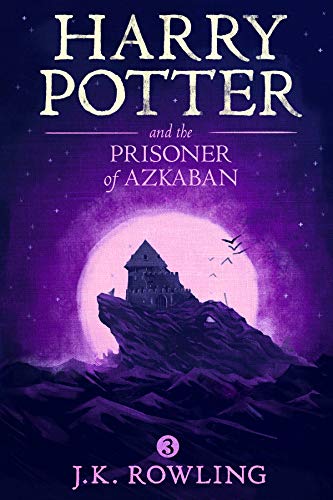
Trivia—How well do you know The Prisoner of Azkaban?
Questions
- What present did Ron get Harry for his thirteenth birthday?
- How much did Harry pay the Knight Bus to travel to London?
- Who helped Harry, Ron, and Hermione find the North Tower?
- What did the boggart turn into when it was Parvati’s turn to face it?
- Which spell did Hermione use to waterproof Harry’s glasses?
- What candy was Ron thinking of getting for Harry when Harry showed up in Honeydukes for the first time?
- What did the cracker that Dumbledore offered to Snape at the Christmas feast reveal?
- What spell was used to open the secret passage leading into Honeydukes’ basement?
- What broom did Cho Chang fly on during the Gryffindor vs Ravenclaw match?
- How far behind Slytherin House was Gryffindor House at the start of the final quidditch match?
Creative Corner – Parody poems
Hey, everyone,
Verity here! Welcome to another Creative Corner Challenge.
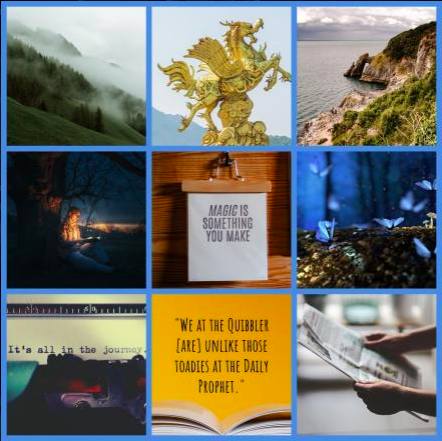
In the last issue, you were tasked with creating collages and aesthetics for Harry Potter characters. In our blog, you’ll find some of your submissions, and all of them can be found on the Potter Art page.
The winners of this creative challenge, earning an extra five points each for their schools, are:
- LoverLoverLover – Beauxbatons – Year 5
- JanieOhio – Beauxbatons – Year 4
- Glowstar – Ilvermorny – Exchange 1
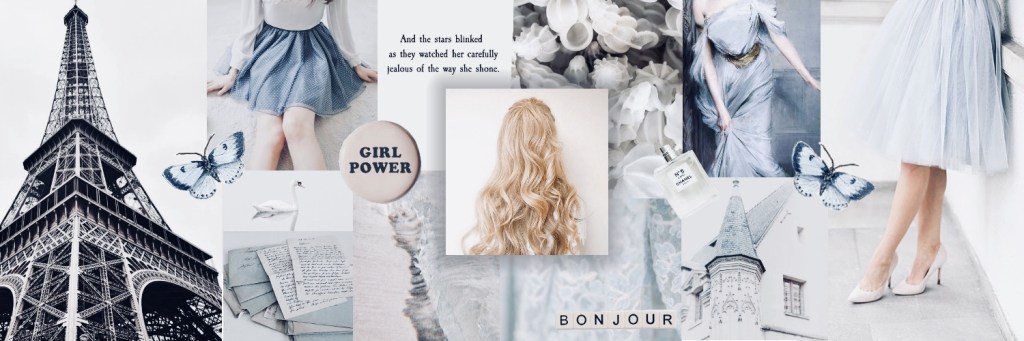
Janie-Ohio – Beauxbatons – Year 4
Glowstar – Ilvermorny – Exchange 1
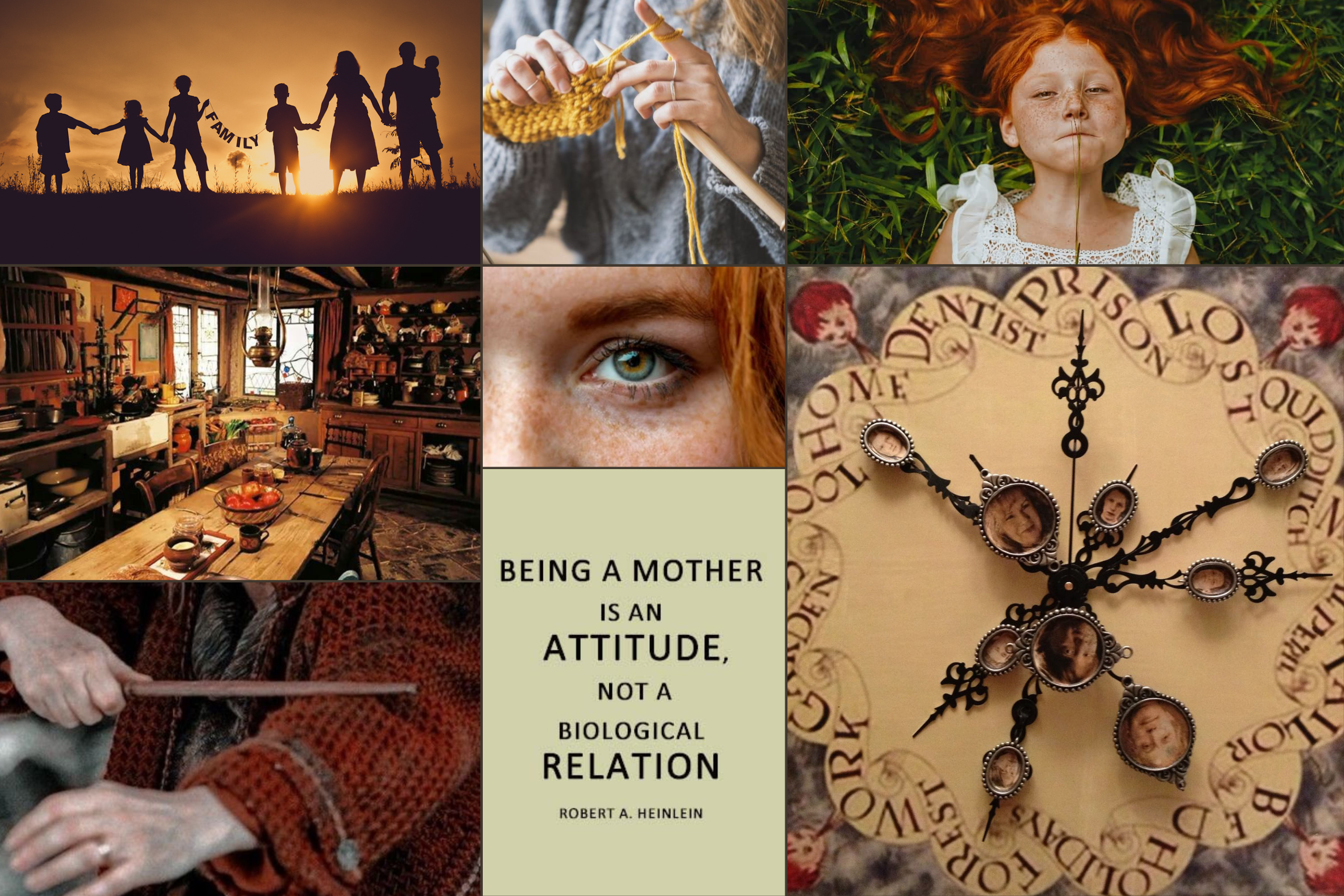
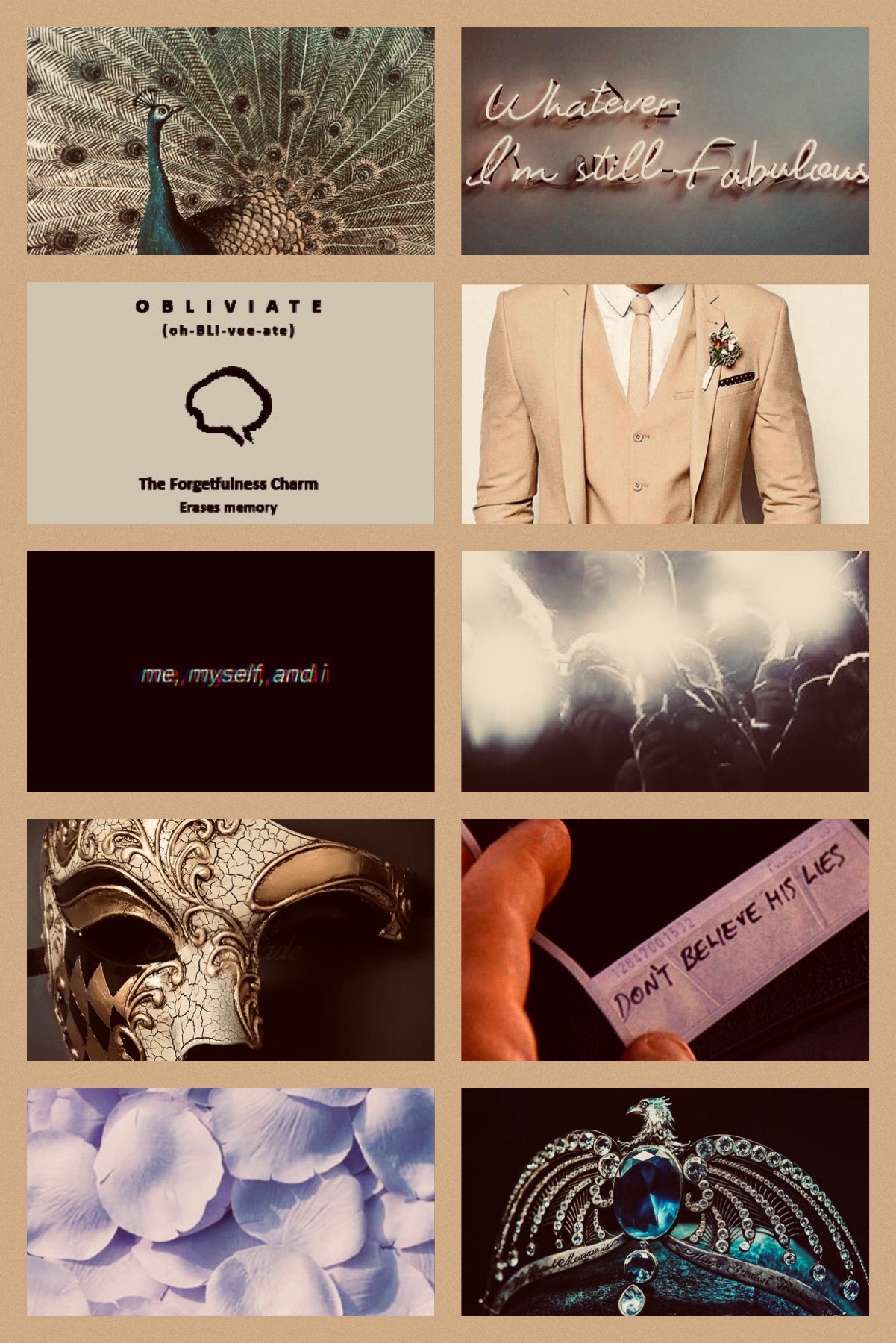
And the runners up!



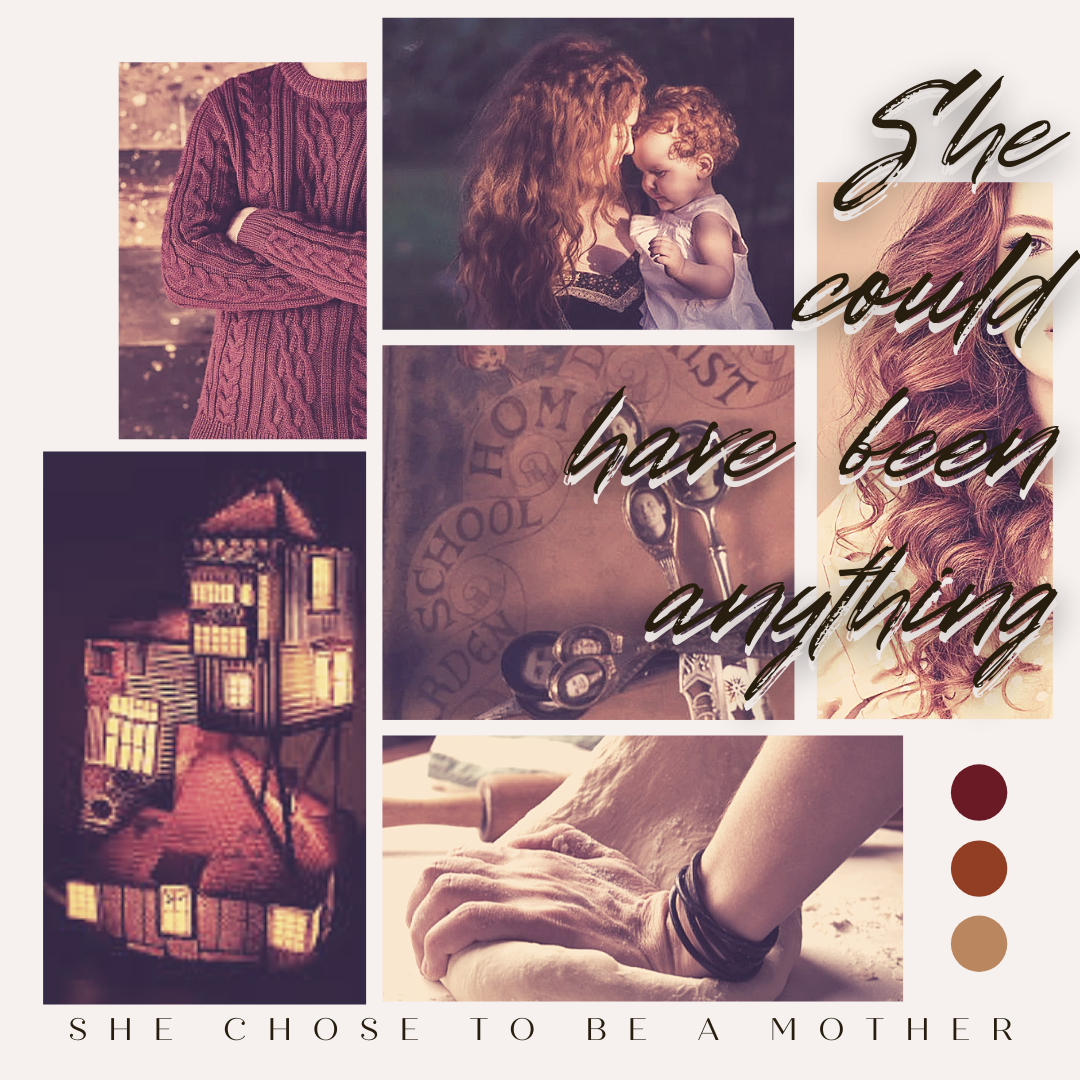
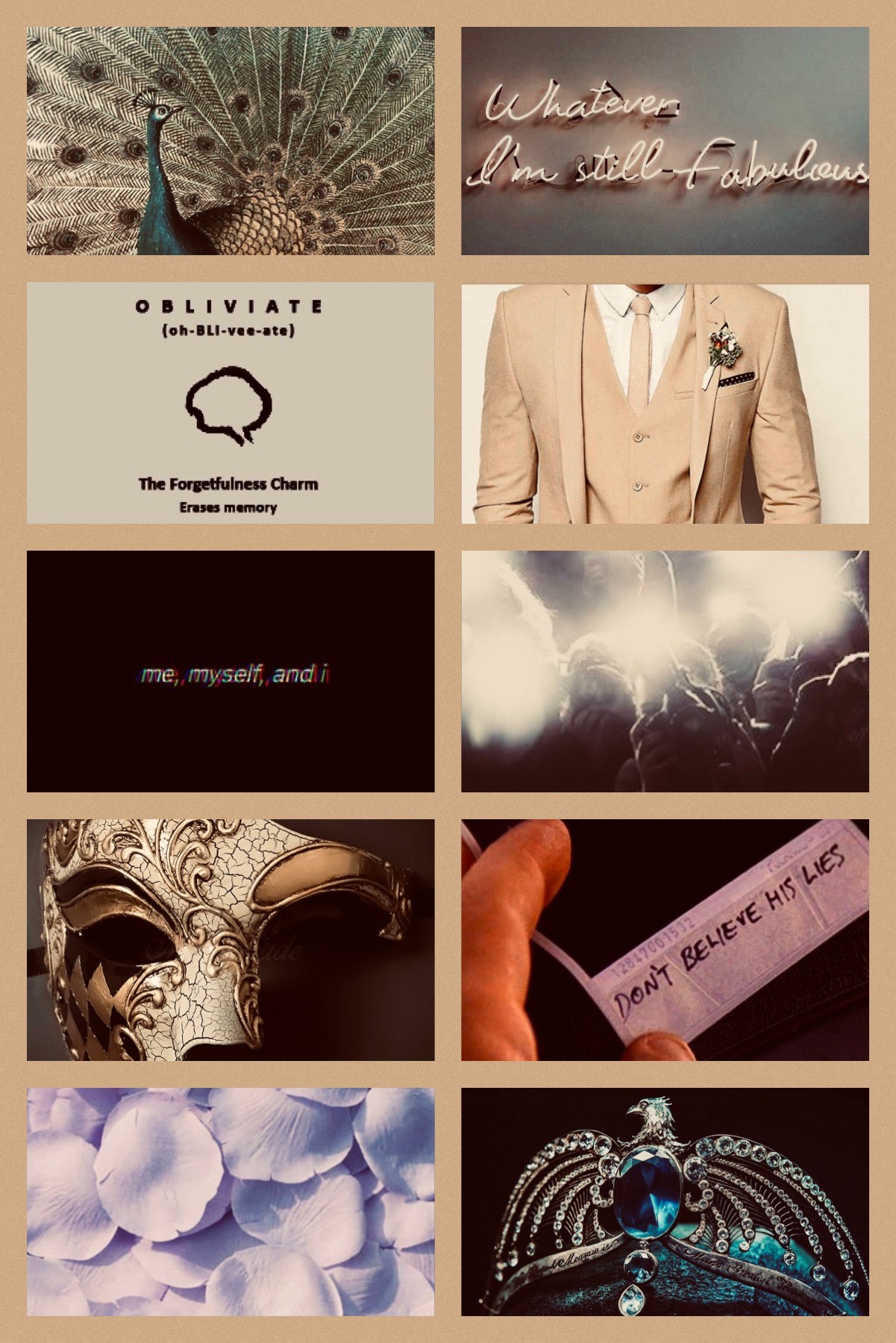
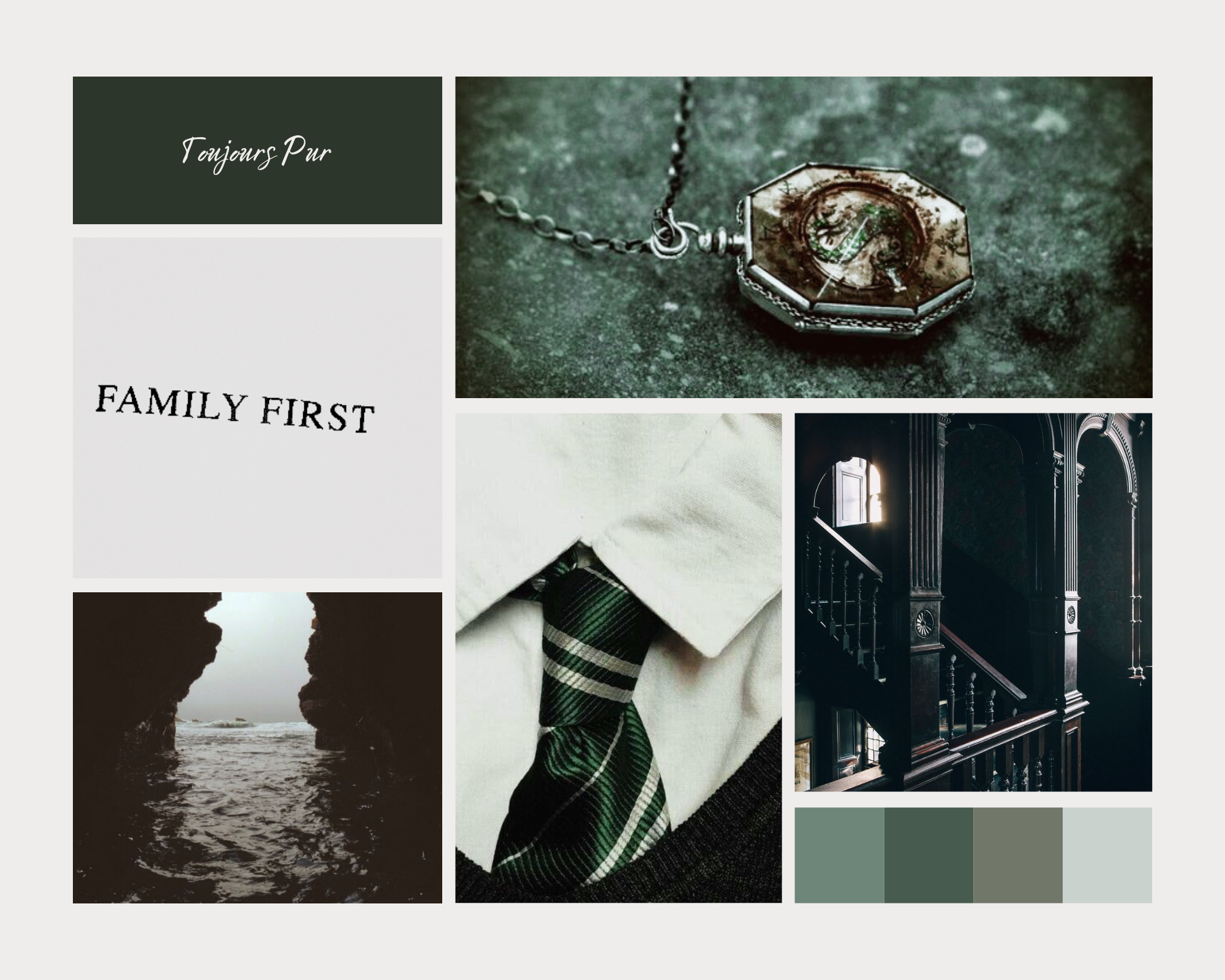
This round’s challenge requires ink, parchment, and your wit! I mean it, you need to make us laugh. We are asking for your very own Wizarding World Themed Parody Poems. I want you to send me your best comedic rhymes. I want them to make fun of plots, characters, and themes within these beloved books. As always, there are a few rules.
- Poems should be comedic and/or a parody.
- Poems should relate to the wizarding world in some way.
- Poems should be your own work.
- Word limit 150 words
Each student can submit one piece, which will automatically gain 3 points. The winning poem (or sometimes top three depending on the number of submissions) will get an extra 5 points for their team. In this challenge, you can work with other people in your team. Please note, you can only work with others when specified, and a joint contribution counts towards both students’ maximum of one submission.
Deadline: 20th February 2021 1 pm UTC
You should email them to wizardingschoolchampionship@gmail.com and include: Pen name; School; Year.
Dear Severus Snape
Welcome to purgatory. Clearly, my life has reached an all-time low, as I continue to respond to your ridiculous and inane problems.
These last few weeks I have had my eyes opened to the Harry Potter Fandom and the insanity that comes with it. I would like to know who was responsible for this:
Dear Severus Snape,
Hello sir! I’m a huge fan of yours! I recently got into writing you in pairings. I would like your thoughts on being paired with Marlene McKinnon from Gryffindor House because that’s one of my favourite pairings to write. I hope this finds you well, sir. I shall write again soon.
Most sincerely yours
a fan
Dear Fan,
Marlene McKinnon and I would never work for numerous reasons. Firstly, she’s one of Lily’s best friends. I still hold out hope for Lily and me, and dating McKinnon would cause irreparable damage to my relationship with Lily.
I know what you’re thinking: the Death Eater thing, her being married to Potter, and me bullying her child. These issues are probably insurmountable, but I live in hope. I’ve learnt my lesson. I won’t allow any more obstacles, including McKinnon, to come between us.
Secondly, I have it on good authority that women don’t like it when you pine over someone else.
Many Thanks
Severus Snape
Sn—Prof—uh. Dear Severus.
My wife is pregnant. We can’t agree on names. I want to honour two people who influenced me. I feel it would be a great legacy for my son, and I’m sure he’d love these two awesome names.
However, my wife thinks one was a manipulative bast—jerk who didn’t deserve my love, and the other was a bullying maggot who only saved my life because he wanted to shag my mum. She thinks the names suck and our son will hate us forever. I think she’s being dramatic. Can you help?
Sincerely
Bullied-for-years-so-i’m-numb-to-it
Mr Potter,
I also received correspondence from your wife. DO NOT name your child after me.
It’s creepy.
Severus Snape
Dear Severus,
What is your dream vacation? Mine is Greece, and I’d love to steal you for a stroll in Athens.
Sincerely
Your adoring fan
Hermione Granger
Dear Miss Granger,
I have recently been reading some “Snamione” fanfiction… Maybe we could peruse some together over Moussaka?
A Fan
Dear Sev,
Is your Animagus a bat? Because you are known as the Slytherin dungeon bat
A scared Hufflepuff
Dear A Scared Hufflepuff,
Firstly, fifty points from Hufflepuff! No one calls me “Sev”.
Secondly. No …
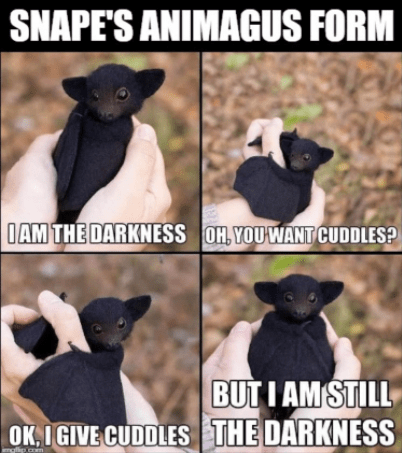
Damn you, Minerva.
Dear Professor Snape,
I didn’t want this day to pass and not wish you a happy birthday. I know some might not appreciate you, but I do.
Life has been stressful since the war. I’m trying to stay positive, but the flashbacks are hell.
How did you deal with them?
Mandancie
Dear Mandancie,
I found your wonderful birthday wishes at the bottom of a large pile of mail.
… I didn’t find a present.
Severus Snape
P.S. I deal with the flashbacks one bottle of Firewhiskey at a time.
Hello, Professor,
I recently learned that you grade on a curve, and I thought it my responsibility (as a Prefect and a competitive, fair-playing student) to inform you of everyone I know to be cheating in your class. Attached is a document that describes the questionable study habits of 27 students in my year. I’ve dated and described my observations, and I hope you find that failing potions is the only suitable punishment.
A concerned student.
P.S. Can I have an extension on the essay? This document took up a lot of my time.
Dear Mini Molly Weasley,
I find it insulting that you think Miss Longbottom’s cheating went unnoticed. Much like her father, she is abysmal, and red flags go up whenever she attains anything close to acceptable.
Your essay is due tomorrow evening, 6 pm latest, Miss Weasley! On pain of death—or detention, since murder is considered… bad.
Professor Snape
I am obligated to state that the opinions presented in no way represent the views and opinions of the Wizarding World News or its members. All opinions expressed belong to a sarky miserable old git with a propensity to skip shower day—the worst day of the year.
Interview

Today, I have with me Headmistress Verity!
Verity Grahams is renowned for many things: founding the IWSC, writing adorable baby Harry fanfics, but most of all, for being Snape’s biggest Fangirl. So much so, that she proudly frames the restraining order he has against her in her office.
I suppose with an introduction like that, I don’t need to ask you what your favourite thing to read/write about in the HP fandom is.
It’s always been Severus, Snily, Severitus (Snape as Harry’s dad). Snily will always be a favourite of mine, and therefore I frown upon any Snape pairing that’s not Snily! ‘Cause I’m hardcore like that.
I have been writing crime fics, and it’s taken me by surprise how much I love it. I like using canon characterisation to explore how far a character might go.
Do you have an example of how far a canonically good character might go?
Plenty! Haha.
I think the trick is to look at an aspect of characterisation and explore how a character reacts when pushed to the extreme. Colin Creevey, for instance, he adores Harry in a slightly obsessive way, but we all know he’s harmless. What happens if he loses Dennis and all other aspects of life he cares about and all that’s left is Harry? What if someone tried to take that away too? Could that adoration become twisted into something harmful, something Colin is willing to do anything to protect? Even murder?
A fascinating idea and so scarily plausible! I’m always a fan of creative twists. What would you say makes for a good story?
Suspense and tension. Don’t get me wrong, I love fluff as much as the next girl, but to truly be invested, I need to be biting my nails and on the edge of my seat.
On the opposite end of things, is there anything about a story that might make you want to stop reading?
Very long, slow stretches. I think purple prose can kill a story. While you need detail, I don’t want to get bored reading it. I only allow Tolkien to do that! 🙂
I also don’t like when a writer skips over details. I don’t have a chance to get immersed. There’s a sweet spot in there somewhere. I don’t want to feel like the story is in fast forward.
When you write, how do you make sure you find that sweet spot between giving too much detail and not giving enough?
I’m not confident I have found the sweet spot myself, but I reread my writing frequently just to see if it’s long and drawn-out or if I feel like I lack detail. I will also look at the overall pages, and if I can see long stretches of dialogue with minimal action, I tend to go over those sections to add some detail.
That answer speaks to more than a little experience. How old were you when you began writing?
I was young. I had just read the Hobbit and decided I wanted to write a fantasy novel. It was terrible, unoriginal, but had pictures! I believe there were seven gems to rule them all.
Seven gems, huh? That does sound a little familiar, haha. How do you go about finding original ideas nowadays?
They surprise me. I think it’s less about me searching for ideas and more about them finding me?
Prompts and one-shots I write in Fanfiction are also inspiring. For example, if I want a canon character to be something they aren’t within a plot I have, I know that the idea is more than Fanfiction. It’s something that’s got more of my own ideas in it. I’m not sure that makes sense…
When a character insists on acting in a way that’s OOC (out of character), you know that they’re an original idea masquerading as a canon character in a plot better suited for existence outside of a fandom. It makes sense.
Having achieved originality—which is perhaps one of the more difficult parts of writing—do you have a writing dream?
I want to publish an original story, and I do have a few ideas on the go. I also love it when I change someone’s mind about Snape!
I can’t say how much I look forward to reading your original works!
Oh, Snape is ever problematic, always a source of debate. In another interview, I asked Headmistress Katie what she thought Snape’s greatest quality and his greatest flaw are. What would your answer to those questions be?
His greatest flaw is probably his inability to let go/move on. It breeds bitterness in him and prevents any future happiness.
His greatest quality is his loyalty. It led him to be willing to lay down his life for those he hated. Many people lift up ‘good guys’ for how they sacrifice themselves for those they love, I think it’s much harder to make that sacrifice when you hate the person you’re dying for. Did I give him two great qualities? Haha, I am a fangirl!
Katie gave the same answer! Snape is, without a doubt, an intriguing character if someone who dislikes him and another who adores him give the same response as to his flaws and qualities.
Do you think intriguing characters are the most important element of a story? Or does a mind-blowing plot or epic settings come in first place?
For me, they are all important, but if a reader doesn’t care about your characters, plot and setting aren’t going to fix that. I think relatable and realistic characters are what make a reader care about the plot and description.
Getting characters right can be tough. In the interview with judge Leela, she mentioned that her favourite HP character is Ginny Weasley, but you’re not a Ginny fan. Why is that?
I liked Ginny earlier on when she was the sweet little sister in the Weasley family, and I loved that she was an obsessed Harry Potter fan. She was sweet, and during Chamber Of Secrets I felt for her. The problem is, she’s almost invisible throughout the middle of the series. When she pops up in a meaningful way, she’s great at Quidditch; she’s hot; and super badass. I think if we had seen Ginny develop, I would have liked her more.
With characters being so important, do you always plan out exactly how they should act?
Even with my original characters, I feel like they make all the decisions. Sometimes, I might want character A to do B, but while that might be convenient to the plot, if the character says no, I can’t do it.
Characters refusing to fit a particular action usually means that I’m trying to get them to do something out of character to accomplish plot. It’s about discovering how that character gets to point B, and where I veered off course.
In terms of Fanfiction and me writing Snape as Harry’s dad, it’s unsatisfying for Snape to change into a father figure suddenly. He needs a realistic journey to that place, and once there, he can never be a typical father.
I make sure to “repurpose” traits. I would take Snape’s biting, mean traits and turn them into a dark sense of humour, making him familiar to the audience, but also softening him.
If you need a character to be OOC, you need to give reasons for the change, and the reader needs to see the process to buy into it.
Do you have any writing advice that you think everyone should know?
I find that writing comes much easier with a pen and notebook. If I go to handwriting chapters, things come easier. It’s not always the best version of the story, but it’s a first draft that can be edited into the best version of itself.
Something I learnt recently, when researching for Handy Hints, was to ‘Kill your darlings’. It means that sometimes your favourite bits of writing might not be helping the story. Be brave and cut them out.
If you could ask a successful author three questions about their writing, writing process, or books, what would they be?
I would ask Neil Gaiman all the questions because I am a fangirl!
- I would ask how he handles writer’s block.
- I would ask how he handles the fear that you won’t get another plot idea.
- I would also want to have an in-depth chat about his sentences. Neil was the first author that I paid attention to in a “writery way”. I fell in love with the way his sentences and paragraphs flow. I still think that it’s masterful, and that The Ocean at the End of the Lane is quite frankly a stunning read.
Just to make your life difficult, what would your answers be if someone asked you these questions?
1. I handle writer’s block poorly. I panic and assume I have lost all inspiration. I will wallow in self pity. Something will cause me to pick up a notebook and somewhere I will find the words I need. I’m working on going straight to the notebook.
2. I don’t have an answer for it; it’s a real fear for me. What if nothing new comes? I have no idea how I can deal with that.
3. Having this chat with someone other than Neil, I would say his sentences have a flow that I truly envy. They are beautiful.
Time for Would You Rather! Would you rather write naked à la Victor Hugo or in a skintight Catwoman outfit?
Naked, definitely. A leather Catwoman suit would be awfully sweaty. Oh, the chaffing!
And Either-Or: tea or coffee?
Always choose coffee, preferably intravenously.
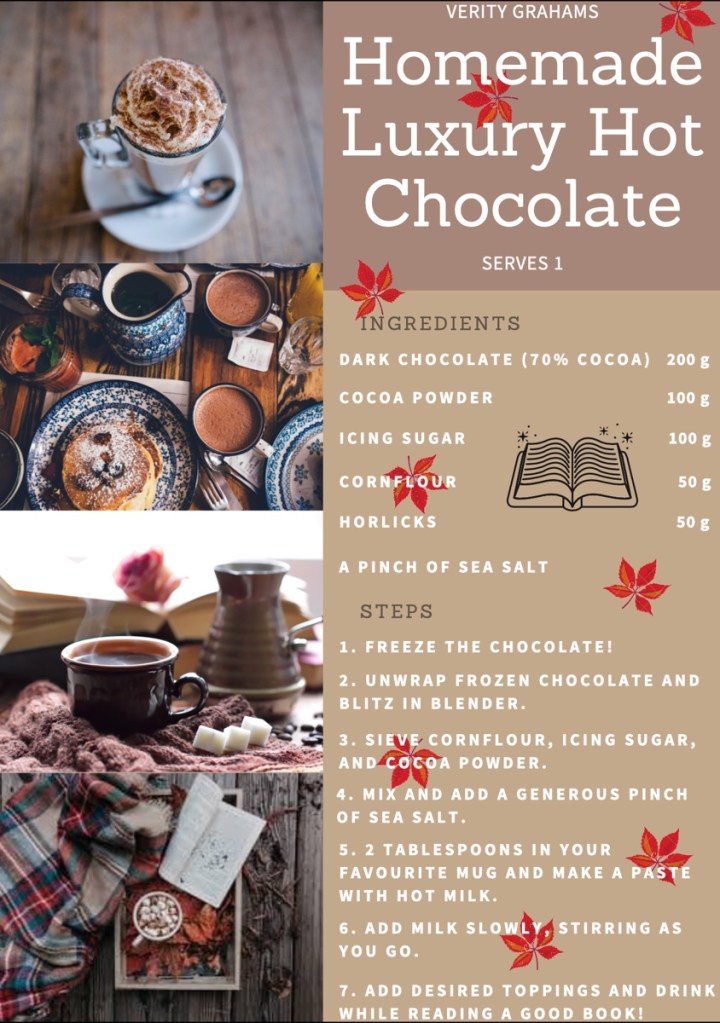
And finally, what will you be sharing with us?
How can I not share Katniss!
And here’s my Homemade Luxury Hot Chocolate.
For our second interview, let’s say hello to Claire, an emo-loving anime weebo and mother of three!
For the first two seasons of the IWSC, you were a headmistress. What made you join the students’ ranks?
I wanted to see what it was like from the other side of the competition and be able to write. As much as I loved being a headmistress, I found that I didn’t have time to write for myself, and when I did have a moment to try, I had writer’s block. So I decided to take a step back, and I’m glad I did.
Happy to hear that it’s working out for you! What has been your favourite part about being a student so far?
The team camaraderie, particularly as I don’t have the pressure of being the one in charge. Plus, just seeing what the Heads and Admins have put together for us this season. Y’all are doing an excellent job so far!
Well, thank you. It has been a lot of work, haha. You mentioned writer’s block. Do you have a method for overcoming that?
I wait until the buzz comes back, and I get an idea. I’ve found there’s no use pushing myself; it just makes things worse.
There’s no forcing creativity, that’s for sure, although going with the flow works better for some writers than for others. How do you develop your plot and characters?
I don’t. I fly by the seat of my pants and hope for the best. It’s probably not the best way to go about writing, but it’s the way I’ve always done it.
Going in without a clear plan is how it works best for some writers. Have you ever tried plotting?
It’s just something that I feel weird about doing for some reason. I have no idea why either!
Haha. So, if plotting is a non-issue, what is the most challenging part about writing for you?
If the prompts don’t inspire me, then I struggle to come up with something.
In round one, I started three different stories because I struggled to make the theme work for me. Had I had the Hogwarts theme of ‘abuse’, I would have been fine with that and would have had a story fairly quickly.
How did you eventually resolve that issue?
I kept trying until I found something that would work with the prompts.
I admire that level of persistency. Had I had to start three different stories, I may have given up, haha.
How old were you when you started writing?
I’m an old-school writer. I started writing in December of 2005 when I was 23 on the forum Metallichicks. It was a forum for the female fans of Metallica—though we did have a few guys who were honorary members.
I read the fanfics written by the other members of the forum, and I decided to try it myself. I still have three multi-chapters and a handful of one-shots over there! Then around the summer of 2012, I found fanfiction.net and the rest is history.
You’ve been writing for a long time! Have you reread any of your old stories?
I’ve avoided rereading my old stuff just because for the most part none of it was beta read, and they’re completely embarrassing to read! I did reread an old MarlenexBenji during THC last year because I had an idea for a prequel.
MarlenexBenji is a surprising pairing, although I guess it gives you a lot of freedom since you can characterise them pretty much however you want.
What are your favourite Harry Potter tropes and characters?
I’m primarily a Marauders Era fan. I have lots of headcanons for a lot of characters. I’m very much a Jily girl, though I have a few other OTPs, including Blackinnion, Starbuck, Drarry, and Dramione.
I love to write Muggle AUs as well as AUs in which Dumbledore defeats Voldemort and Harry is raised by his parents and has a little sister. I have even branched out into fantasy and written a WolfStar Royalty AU.
I can’t abide the student/teacher thing. It makes me feel a little squeaky…
We’ve just heard from Vee on the matter of Severus Snape. Why do you think that Jily is the superior pairing?
Omg, you know how to put me on the spot! Lol. I’m going to be diplomatic and say neither is superior to the other. Especially given I’ve written both pairings.
Here I was hoping to start an online fistfight, haha. It’s very good of you not to belittle other people’s favourite character.
I feel that character bashing is absolutely ridiculous. What’s the point? The characteristics of that character make them who they are, and if you don’t like that character, then don’t read them. Yes, everyone is entitled to an opinion, but bashing is just stupid. What are you achieving by bashing that character? You’re just wasting your time and energy.
That’s very well said! It’s a stance more people should adopt. Now, it’s time for Would You Rather:
Write lying on your stomach like James Joyce or standing like Virginia Woolf and Lewis Carroll?
Over the years I’ve actually done both…
Which one offered the best experience?
Neither, to be honest. Both made me fidgety.
Fair enough, haha. I couldn’t even get through an hour-long class without fidgeting. On to Either-Or: Comedy or horror?
Both.
What are your favourites from those two genres?
I adore The Big Bang Theory. I also absolutely love comedian Lee Evans; he is just so funny. My favourite horror movie is The Exorcist, and my favourite horror-comedies are Scary Movie 1 and 2.
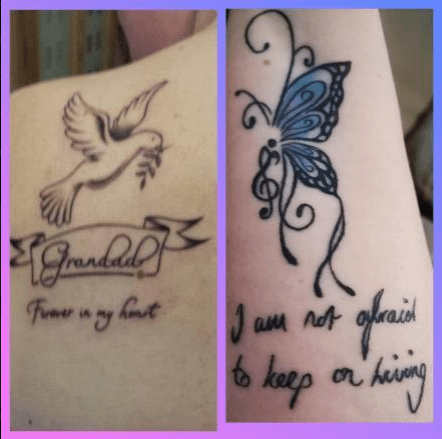
And to finish off, what will you be sharing with us?
Here are photos of my tattoos, which I designed, and my all-time favourite song is My Chemical Romance ‘Famous Last Words.’ I have their lyrics incorporated into one of my tattoos.
The lair of madam Pince
Judges picks
Round 1
Year One: The Nightmare by Cymbeline Dragon
A Seer’s dreams are a terrible place. They are dangerous because what happens in the dream, happens to the Seer in real life. Hogwarts is not safe for Seers. Something powerful, with the ability to enter and shape dreams, is trapped in the legendary Cursed Vaults, and it wants to be freed.
Year Two: The Pact by gingerdream
Charlie Weasley has asked his family for help in bringing down an illegal breeding ring, but Fleur is not acting like herself. She knows these criminals; they featured in every bad dream she had as a child, and now, she wants them dead.
Year Three: Autumn Blossoms by Lady Sloane
Magic runs in the family like a recessive gene. It skipped Petunia Dursley but favoured her sister, her nephew, and now her granddaughter. Petunia will not be jealous; she will not hate her only grandchild. But her fear has deeper roots than she realises.
Year Four: Neville Longbottom and the Merpeople’s Gift by JanieOhio
Professor Neville Longbottom has heard rumours about a relic with curative properties. His research suggests that it is hidden in an underwater cave, worshipped by those who live near it. The cave is guarded, but some things are worth the risk. This artefact could save his parents.
Year Five: Draco’s Plan by loverloverlover
The Daily Prophet loves Draco Malfoy; it loves torturing him with vilifying stories and a photo taken from his bad side. Shunned by public opinion, Draco’s rescuer comes sporting red heels and a solution he would never have considered: charity work. Oh, joy.
Year Six: Beautiful Pain by Ninja Devil
Draco Malfoy is haunted. Ghosts and regrets crowd his past, and the scar on his left forearm whispers their names and screams his guilt. He lives with the girl he met while his family held her prisoner in their cellar. Luna Lovegood is his only cure.
Year Seven: Seeking the Sun by bea writes
Neville Longbottom is his parents’ son. To some people, that’s all he is—all he can be. He knows they’re wrong, but the courage to be his own person and stand up to those he loves is more than he can summon. Or it was until he found an enchanted necklace.
Round 2
Year One: Calm My Fears by Socrates7727
Harry Potter needs a place to hide after the war. Draco Malfoy has a private potions lab. They have an unspoken agreement, one that turns hiding into healing and fear into acceptance. Harry may never be all right again, but at least he won’t be alone.
Year Two: Poisoned By The Past by Leprechaun123
Neville Longbottom’s partners keep dying. Blaise Zabini mends his friend’s broken heart, but he feels neither sadness nor remorse. If those people had truly loved Neville, they would have survived. They weren’t worthy, but Blaise is.
Year Three: Once Upon A Midnight Dreary by Carolare Scarletus
Remus Lupin has been drinking since the war ended. Ghosts visit him daily, but they rarely knock. Today, someone does. Marlene McKinnon is at his door, drenched and seething. She has accusations to make, and she isn’t leaving without a fight.
Year Four: Lift to Understanding by KeepSmiling1
It’s Hermione’s birthday, and Draco is determined to give her the best present money can buy. Some inadvertent eavesdropping revealed that Hermione’s dream gift is a trip to the cinema to watch a movie. Draco doesn’t know what either of those things are, but he’s willing to find out.
Year Five: not going to sit and wait by QuickSilverFox3
George has a ghost to live up to. He sees it in his mother’s eyes every time she looks at him, but he has no interest in becoming another Gideon Prewett. He already has a name. He is George Weasley, and his greatest wish is for his mother to see him.
Year Six: you put me on (and said i was your favorite) by ninjadevil2000
Narcissa Malfoy doesn’t want to get out of bed. The birds and the sunshine taunt her with the life they create, but her time is running out. She’s already lost two children. She won’t survive losing a third.
Year Seven: The Elevator Ride by SeleneBlackburn
Two brothers. One lift. Several hours to resolve issues left to fester for years. Both easily overlooked in their boisterous family, Ron and Percy Weasley used to be inseparable. Over time, things changed, but now they have a confined space and a whole night to figure out what went wrong.
HOW TO GET MORE VIEWS AND REVIEWS ON YOUR STORIES: THE REVIEW ETIQUETTE
How to Write a Great Review:

Writing great reviews takes a surprising amount of effort. It’s easy to say “Great job” or “I loved this story”, but those reviews aren’t helpful to the author. Saying how amazing a story is or how much you liked it is definitely encouraging, but if you want to help the writer improve (and convince them to review one of your stories in return), you need to read their story with a critical mind.
Remember that a critical mind sees the good as well as the bad, and a great review includes both.
The best advice I can give you on how to write a great review is this: take notes when you read stories. Jot down the things that stood out—good and bad—and try to figure out why they caught your attention. This will give you a list of things to comment on when you write your review.
Writing Constructive Praise:
- Make a note of everything you liked and were intrigued by. Don’t skimp on detail. Like everyone else, writers need to feel appreciated. The more you gush over their work, the easier it’ll be for them to accept your criticism.
- If the story includes insights into characters, events, or settings that you hadn’t thought of, let the writer know. It’s always nice to feel like you’ve come up with an original concept.
- Ask the questions that came to mind while reading their story, speculate over what’s to come, and discuss the fic’s plot points. The more interest you show, the happier the writer will be. (Warning: when speculating, don’t word it like this, “I hope [a specific thing] happens” or “I hope [one character] meets [another character]”. This can feel like you’re telling the author what to write).
- Above all else, let the writer know that they must keep writing. Say that you’re looking forward to the next chapter or that you can’t wait to read more of their work. Finish your review with something along these lines to take away any possible sting from your criticism.
Writing Constructive Criticism:
Before you say that you’d rather avoid giving constructive criticism because you don’t want to sound mean, remember that this will help the writer improve their storytelling. If no one ever tells you what mistakes you’re making, you’ll keep making them. Is that what you want?
If the answer is yes, then publishing your stories online is a bad idea. Even accomplished professional authors receive criticism for their work, and it’s a good thing. Constructive criticism helps us be better, and there is a way to word your criticism so that it doesn’t sound mean.
- When you’re reading a story and taking notes, write down the things that you felt were unclear, the things that could do with polishing, and the things you would have loved to hear more about. If there are a lot of these, focus on the more noticeable ones so that there isn’t a long list of criticism.
- If you point out spelling, grammar, and punctuation mistakes, make sure that the SPaG in your review is near perfect.
- Your wording is important. If you sound too harsh, you’ll ruin the writer’s day and maybe even put them off writing. Make your criticism polite and friendly. Don’t use strong words like “I hate” or “you should have” or “it would have been better if”. Instead, overuse words like “might” and “maybe” and “perhaps”. You don’t want to drag the writer, kicking and screaming, to the same conclusion you reached; you want to lead them there gently.
- Give examples of what was done wrong and go on to explain how the writer could improve. It isn’t enough to say “that’s wrong”. You need to tell the writer where the mistake occurred and how to fix it.
How to Format the Review:
- I’ve found that the best way to format a constructive review is: compliment – compliment – what could be better – how to improve it – compliment.
- It’s important to always start with a compliment (i.e. constructive praise) and then ease into the criticism.
- You can add a quote from the story if you like, but remember to put it between quotation marks and tell the writer why that quote stood out. Don’t add too many quotes. The writer already knows what they wrote. They don’t need you repeating it back to them unless you have something to add.
- Be sure to include another positive aspect after the criticism. If you have more constructive praise, fit it in at the end or tell the writer that you can’t wait to read more—or better yet, do both.
- Remember: you want to be as helpful as possible, and that means going into as much detail as possible.
Warning n°1:
If you have nothing nice to say, don’t say anything at all.
There’s a wide range when it comes to quality in fanfiction. You’ll find stories that are difficult to criticise and others that are difficult to praise. If you truly cannot find a single nice thing to say about a story, stop reading it and close the tab.
No matter how nicely you word your criticism, if there’s no praise to surround it, your review will sound harsh and will make the writer feel bad, which should never be your goal.
Keep in mind that the author may be young or new to writing or writing in a language that isn’t their own. If you feel a strong urge to help them improve, send them a PM and word it as politely as you can.
Warning n°2:
No matter how helpful you try to be, some writers won’t appreciate your criticism.
They might send you a rude PM or call you out in their Author’s Notes. The thing to remember is that it’s their problem, not yours.
When you post something online, constructive criticism is an opt-out, not an opt-in. Meaning that you shouldn’t have to ask for it to get it, but if you don’t want it, you have to say so (and maybe not post your work online). If praise is all you’re after, either be honest about it or accept the risk that you may receive criticism.
Remember that the fault is never with the reviewer who is trying to help you.
As a writer on fanfiction.net (and possibly other websites), you’re an artist showing off your work for all to see. You shouldn’t expect only praise because your story will never be perfect, and you should be thankful for any person willing to help you improve it.
How to Respond to a Review:
There’s some debate over what the proper protocol for responding to reviews is, but most writers and reviewers prefer the more polite option, which is to always answer reviews.
If you’ve just made a lovely clay pottery bowl and someone sees it and says how good it looks, you’d thank them for the compliment. If someone else praises your technique and asks how you managed to make such smooth edges, you would enter into a discussion.
The same courtesy rules apply to reviews on fanfiction.
Do you remember that email list I talked about in the last WWN issue? Replying to reviews is how you grow that list. You want to build relationships with your readers so that they keep reading and reviewing your work. If someone compliments your pottery bowl and gets nothing but silence in return, it isn’t going to make them want to compliment any of your other creations.
Be sure to reply promptly to reviewers before they forget what it is they said about your work.
Replying to Short Reviews:
For short reviews that don’t go further than “good job”, you can choose not to send a reply, or you can send a PM that is equally short—something along the lines of, “Thanks, I’m glad you liked it”.
Some reviewers won’t see the point in that reply while others will appreciate it.
The goal is to build your email list, which is difficult to do with short reviews, but there are ways of going about it. You can ask the reviewer what their favourite/least favourite part was, for example. Another option—but this one only works with multi-chapters—is to wait until you post the next chapter, and then PM the reviewer to thank them and ask what they think of this new chapter. Try to create a relationship between yourself and the reader.
You can send out a general thank you for all reviews in the Author’s Notes of your next chapter, but don’t list every reviewer. Your readers won’t appreciate a cumbersome A/N.
Replying to Good Reviews:
Replying to good reviews is imperative.
Having read how to write a good review and perhaps written a few yourself, you know how much effort goes into it. Thanking the reviewer lets them know that their review is appreciated; discussing their review lets them know that it’s valued. Both are important and will make the reviewer more likely to leave you another review.
It’s important to keep the conversation going if you can. Good reviewers are rare, so it’s best to cherish them. Interact with them and see if you can become friends.
If the reviewer is a writer, review one of their stories. Like I said in my last article: that’s how this game works. It’s give and take or take and give. The transaction is important, and it will pay off. The alternative is losing that writer as a reviewer.
Replying to Criticism:
If you’re not used to criticism (or even if you are), there’s a chance that it will upset you. The thing to do then is to take some time to calm down before responding. Leave it a few hours, clear your head, come back, and re-read the review.
The first thing to check is whether the review is constructive or whether it’s plain old flaming/trolling. The difference hinges on how detailed and politely worded the review is.
Examples:
- “This sucks” = trolling.
- “The flow of the last paragraph could maybe be improved if you …” = constructive.
If it’s a troll, you can choose to respond or ignore them, but if you do answer, there are things to keep in mind.
- Don’t let your reply sound angry. This person wants you to react to them. Don’t give them the satisfaction.
- Don’t beg for an explanation. If they didn’t have the common courtesy to give their reasoning in the review, they won’t do it in a PM. You’ll seem desperate, and they’ll have got the desired reaction from you.
- Thank them. Rise above their pettiness and be the bigger person. Or, if you don’t want to be the bigger person, know that nothing will irritate them more than your calm and reasonable response when their goal was to hurt you.
If the reviewer isn’t a troll and is aiming to help you improve, don’t take the criticism personally. Instead, consider the review and ask yourself these questions:
- Does the criticism stem from a misunderstanding? Did the reviewer misinterpret something in your story, be it a turn of phrase, a plot point, a character’s actions, the meaning behind their dialogue, etc.? If so, ask yourself if you could make your meaning clearer. Remember that if one person gets confused or misinterprets something, the chances are that they’re not the only one. If you find a way to solve this problem in your story, say so in your reply. Just saying you were wrong can sound dismissive. You could also ask for advice.
- Is the reviewer suggesting a change that would be detrimental to the future of the story (e.g. removing a detail that plays a part later on)? If so, explain in your reply why this detail can’t be removed. However, do take the time to consider why they think the detail should be removed or ask them why. Maybe you didn’t incorporate it in the right way, and it doesn’t flow well with the rest of the scene/story.
- Is the comment subjective and you disagree with it? If so, what are your reasons? If the reviewer gives details, examples, and logical arguments and you bowl up with only “I like it this way” you have the weaker argument and seem petulant. Ask yourself why you like it the way it is and arm yourself with logic. It is your story, and the final word is yours, but you’re posting it online, which means that you aren’t writing only for yourself. You have an audience, and like it or not, you need to be able to justify yourself to them.
- Is the criticism too vague? Ask the reviewer to elaborate.
If after all that, you come to the conclusion that the review, although detailed and potentially helpful, doesn’t contain anything you can use, thank the reviewer profusely. Even if everything they said is wrong, they put in the effort. Make sure that your reply doesn’t sound dismissive. This person tried to help you be better, so be grateful and explain to them why you disagree, and then to soften that potential blow, ask for their opinion or advice on something else. Show them that you value their thoughts.
In the next WWN issue, we’ll be looking at how to write a good summary that will attract readers to your story.
Couples therapy

Couples Therapy is back, and this time we’re doing something a bit different. Joining us today are two former friends turned enemies after a tragedy that shook the wizarding world. Say hello to Remus Lupin and Sirius Black.
Sirius: How did you manage to track me down?
Hope: I had plenty of help. Remus knows everything about you. He knew where you’d go, and what form you would take.
Sirius: Moony’s here? Well, he won’t stop me from finishing what I broke out of Azkaban to do.
Sirius’ tone was firm but almost weary.
Remus: You won’t be able to do anything. As soon as we’re done here, I’m sending you back to Azkaban.
Sirius: You don’t understand. If you knew, you’d be helping me.
Remus: I am not a murderer like you! You belong in Azkaban; you deserve the kiss!
Sirius: You don’t think I’ll go back so easily, do you? I’ll fight you all of the way—even you, Remus.
Remus: You speak as if you actually care about your friends. You don’t.
Sirius: If that’s what you think, why didn’t you just hand me over right away?
Hope: Entertainment, Black. I wanted to find out what’s going on between you both. You were best friends for so long. I also have a secret, one that I think Remus will find quite interesting.
Remus: It’s a poor excuse, but she was quite persuasive.
Sirius: Oh, Moony, you never could resist a mystery. It’s what we liked so much about you in school.
Hope: I did find that out, that’s why I recruited you, Remus. There were surprisingly few actual records of your friendship aside from personal account, however.
Remus: It’s not something I’m proud of—trust me. I try to avoid the subject if I can.
Sirius: You–you pretend you didn’t know me?
The injured expression was hard to miss.
Remus: Oh, did I hurt the big bad Death Eater’s feelings?
Sirius: If you’re so ashamed of having known me, how did you explain how to find me?
Hope: Well, we knew he was friends with Peter Pettigrew and James Potter, two people that you were intimately connected to, right, Sirius?
Sirius: That’s right. We knew each other for years.
Hope: I did have a different question, but now I’m curious: how did you two end up friends?
Sirius: Our group, the Marauders, ended up friends the way most first years do—meeting on the train. We chatted the whole time, and Remus was the smart one, but there was a certain toughness about him; he was extraordinarily kind.
We were all sorted into Gryffindor and had to live in the dorms together. It’s just how it is at Hogwarts.
Remus: Exactly. It was nothing but circumstance.
I’d been to Muggle schools before I started at Hogwarts, and I’d always had trouble making friends. Sirius and the others accepted me when most others didn’t. You know what they say, ‘beggars can’t be choosers’.
Sirius: … It’s not exactly the way I saw it.
Hope: Interesting. I’m almost afraid to ask, but did you ever think that Sirius would betray the Potters? His supposed best friend. He and the others had accepted you so readily.
Remus: Not in a million years! James told me about the reputation the Blacks had in pure-blood society, but Sirius always rebuffed that way of thinking. I never imagined he’d switch like that. It just proves that you don’t really know some people as well as you think you do.
Sirius: For Merlin’s sake, that’s high praise, Moony. I wonder, what made you change your mind?
Remus couldn’t form words for a moment, growing an increasingly incredulous expression.
Remus: What changed? For Merlin’s sake, Padfoot! You betrayed Lily and James. They died because of you; because you gave away their location. And what about Harry? He could have died too, a baby, Sirius! Your godson got raised by abusive Muggles, and it’s all your fault.
Sirius grew somber as he took this in.
Sirius: I don’t deny that it’s all my fault, Moony, but it didn’t happen like that. I’m assuming this is where your news comes in? I assume that you found out, but how if Remus didn’t advertise our friendship?
Hope: I did, I made a few connections through. I was on a trip to Egypt, and I found clues that helped me put things together. I just wasn’t able to make the full connection between you. Remus, there’s no gentle way to say this, but Sirius was not the one who betrayed the Potters.
Remus: What do you mean? Of course he did, who else?
Hope: Peter Pettigrew.
Remus: But–no–Peter is dead. What—
Sirius: It was a setup, Moony. It’s my fault because I convinced them to change Secret Keepers.
Peter told Voldemort. When I went to confront him, he turned the tables on me; he was acting like he was the victim. Then the murderous little traitor blew up the whole street as soon as witnesses arrived.
He’s not dead, but I intend to fix that
Remus: You’re both lying! You switched, and you didn’t tell me.
Sirius nodded, still avoiding Remus’ eyes.
Sirius: I suggested it. I would have been the obvious pick. If anyone would be targeted to get information, I wanted it to be me. I suggested that James and Lily use Peter because he was unassuming, while we let everyone think it was me. We didn’t know that Peter was spying for Voldemort.
I’m sorry that we thought it was you.
Remus: And he changed forms to escape. Why didn’t you say anything?
Sirius: Would you have believed it? No one I could have told would have. They all believed Peter was dead.
The two friends instantly got up and embraced. Your host could sense the years of hurt leave the two.
Hope: So what do you do now? Everyone still believes you’re a criminal, Sirius.
Sirius: I’m going to Hogwarts, and I am finally going to commit the murder I was imprisoned for.
Remus: I’m going to help. We can’t change the past, but we can get vengeance.
Hope: All right, then. It seems like you two have work to do, so I’ll leave you to get things sorted. To the readers, I hope you’re enjoying this, and keep your eyes out for the next article.
Writing Q and A with Ash

Welcome to another edition of Writing Q and A with Ash. As one of most thorough and knowledgable judges, and now an Admin, Ash is here to bring an answer to all your writing woes.
You can send you question to competition account or via email. Remember to check if the question has already been asked. We have a full list of already answered questions in Honeydukes.
Q
How do you become better at SPaG, especially if you’ve been out of formal English/grammar classes for years?
A
I never paid attention in English class, so my SPaG is almost entirely self-taught. Fortunately, you don’t need to buy a book or take classes; all you need is an internet connection.
I used Grammarly for grammar, GrammarBook for punctuation, and Grammar Monster for spelling, but there are many more options available if none of those grabs your fancy.
If you want to test your SPaG skills, try out the IWSC’s Crazy SPaG Quiz!
Q
FFNet does not always create a friendly reading atmosphere for italics or bold text. When transitioning to a different perspective or a flashback, what are some alternatives, and what are some tips you can give for using them effectively?
A
It isn’t just on fanfiction.net that you want to avoid writing whole paragraphs in italics or bold text. Editors working on soon-to-be-published manuscripts will change those paragraphs to a non-italic, non-bold font to make them easier to read.
1) Writing a flashback.
When writing a flashback, you need three things: the segue in, the flashback itself, and the segue out.
The segue in is the transition between present and past; it is the thought or action that incites the flashback. While wandering through Number 12 Grimmauld Place, Sirius could come across a chipped vase and remember how he damaged it.
It’s generally a good idea to follow the segue in with a line break, a visual aid to strengthen the transition.
Write the flashback scene as you would the rest of the story and make sure that it adds to the narrative. Flashbacks disrupt the flow of a scene, so ask yourself if including one is necessary to advance your plot.
You can change the story’s tense in the flashback by using the past simple if the rest of your story is written in the present tense, or the past perfect if your story is in the past simple.
Be careful when using the past perfect. It’s a bulky tense, so limit how often you use it to the first sentence or paragraph of the flashback.
The segue out needs to be more subtle that the segue in. It isn’t as simple a matter as saying, “Sirius remembered breaking that vase.” followed by a line break. The flashback needs a conclusion.
At the end of the flashback, a young Sirius could put the vase back where he found it after having fixed it, smiling despite his shaking hands. After the line break, the sentence indicating a return to the present could include present Sirius smiling and noting his steady hands.
You won’t need a segue out if the flashback ends the chapter, but the flashback will still require a conclusion.
2) Changing perspective.
Changing perspectives can be jarring for readers, so only do it if you absolutely must.
Before you write the scene, decide who your POV characters are and why. Ask yourself why you need more than one and if you can’t limit yourself to a single character’s experience.
If you need more than one POV character, try to keep it at two per chapter. More than that is likely to confuse readers.
Use a line break every time you change POV and include the new POV character’s name in the first sentence so that readers can easily follow whose head they are seeing the story from. If you find yourself with a line break between every paragraph, you’re switching too often.
“The flashbacks are parallel for me. You experience two storylines at the same time, and I’m not switching from one time to another.”
Emma Thompson
Q
Is there a preference for speech/quotation marks when used inside another speech? For example, “Hermione said, and I quote, ‘do your homework.'” Or would it be the other way around, ‘Hermione said, and I quote, “do your homework.”‘?
A
Here’s the rule: whichever quotation mark you use for dialogue, use the opposite one for quotes.
Both of the examples in your question are correct, the only issue being the placement of the full stop.
British usage favours single quotation marks for dialogue, while American favours double quotation marks. British usage also prefers leaving punctuation that belongs to the dialogue or that belongs to both the dialogue and the quote outside the quote’s quotation marks.
So the second example becomes: ‘Hermione said, and I quote, “do your homework”.’
“Quote me as saying I was misquoted.”
Groucho Marx
Q
How to show not tell? I keep getting told this, but I don’t know how to use it in my writing.
A
Telling is what you do when you inform your friends of something that happened to you (I went here and did that. Then something happened, and I felt a certain way about it). You’re sharing the knowledge of the experience without letting your friends experience it through your retelling.
One of the points of reading is escapism. We read to explore different worlds, know different people, and live different lives. By showing, you’re letting your readers become a part of the narrative.
Telling: Harry was cold.
Showing: Harry’s breath fogged the air in front of him. He hunched his shoulders against the wind and buried his nose in the folds of his scarf.
Telling is quick and dirty. It gets the point across, but it isn’t immersive. Showing is less straightforward. It leaves out information that your readers have to guess, which makes the story more interesting.
There is such a thing as overdoing it with the ‘show, don’t tell’ technique. If you add too much description, especially overly embellished details, your story will become clogged and difficult to read.
Readers don’t want you to show them mundane actions that aren’t relevant to the plot, so focus on showing what’s important (to the plot, settings, or characters) and try to vary which sensory input you use.
When you know what to look for, telling is easy to spot, but here’s a cheat sheet to get you started:
1) The conjugated “to be” verb.
“Hermione is bossy”, “Ron is being stubborn”, “Hagrid was so excited” are simple examples of information that is told instead of shown.
For the first two examples, write scenes that show these traits in action and let your readers deduce them from your writing. In His Dark Materials, Philip Pullman never says that Lyra is a compulsive liar; instead, he shows it by having scenes in which Lyra lies or in which she has to remind herself not to lie.
For the third example, describe Hagrid in his excitement by showing your readers his body language, actions, and dialogue and let them figure out what he’s feeling from there. Remember that not everyone reacts to every emotion in the same way. To make your characters feel real, personalise every physical cue.
2) The conjugated ‘to have’ verb.
“Harry has green eyes.” The statement is true but bland. Spice it up by showing ‘have’ elements within character actions:
Harry lifted his brows, green eyes flashing in the near darkness.
Or by inserting them into a more interesting description:
Purple bruises underscored Harry’s green eyes.
3) Thought/opinion verbs.
Harry thought that Hermione was mad at him.
Thought verbs include think, know, realise, believe, understand, want, remember, imagine, wonder, and so on, while opinion verbs are things like love, hate, like, enjoy.
As with all ‘telling’, thought verbs are shortcuts that steal from the readers’ experience.
Instead of saying what Harry thinks, show your readers what gives him the impression of Hermione being mad at him. Let them reach the conclusion on their own through the characters’ actions and dialogue.
Writers often rely on thought verbs when there’s nothing else going on, so don’t leave your POV character alone and immobile for too long. We’ve come a long way since Gustave Flaubert. Nowadays, readers prefer action over introspection, so fill your story with things that are tangible.
Which of these two examples is more immersive?
- Percy waited outside the Leaky Cauldron for the Ministry cars to arrive and started to worry about how long the trip to King’s Cross would take.
- The train left at 11. The Ministry had said that the cars would be here by 10:30. Percy’s watch read 10:27. Charing Cross Road stretched in a straight line in front of him with no sign of the Ministry’s old-fashioned vehicles. No doubt, the drivers had parked outside one of London’s many pubs to take a nap—or worse, to have a drink. They would show up late and drunk, and Percy would have to smile and thank them before dying in a fiery traffic accident.
The second example is more interesting to read than the first one and gives a better idea of how Percy feels and thinks without using either of those words.
4) The use of adverbs.
Option A: Harry walked away from Rita Skeeter.
→ The action is conveyed, but it lacks emotion. An inexperienced writer will add an adverb because they think that it will make the writing more descriptive.
Option B: Harry walked angrily away from Rita Skeeter. (bad)
→ It’s a simple fix but also a lazy one that clutters your writing. The problem here is with the verb. It’s too weak to convey any emotion.
Option C: Harry stormed away from Rita Skeeter. (good)
→ Using the right verb conveys both action and emotion, but some writers don’t trust themselves or their readers.
Option D: Harry stormed angrily away from Rita Skeeter. (bad)
→ When the verb is good, the adverb becomes redundant. Don’t worry about your readers not understanding what you meant to say. They’re smart people; they’ll figure it out.
Sometimes the problem isn’t just with the verb.
Option A: “Listen to me,” she said angrily. (bad)
Option B: “Listen to me,” she shouted. (meh)
Option C: She slammed her hands on the table. “Listen to me.” (good)
Some emotions require more than just a stronger verb to radiate from the page or screen.
5) An abundance of adjectives and the use of “very” and “really”.
“Very” and “really” serve the same purpose for adjectives as adverbs do for verbs, so either find a stronger adjective or a better way of describing it.
Not all adjectives should be ‘killed’—as Mark Twain used to say. Harry’s green eyes can still flash in the dark because there’s no other way of conveying his eye colour than by stating it. When it comes to the adjectives used in point 1 of this cheat sheet, though, there is always a better way.
Option A: She was very pretty. (bad)
Option B: She was beautiful. (meh)
Option C: Jaws dropped when she entered the room. (good)
6) Practise.
Read your writing. Highlight every thought verb, adverb, adjective, ‘to be’, and ‘to have’ and find a way to eliminate them. Remember that the aim is for readers to reach their own conclusion through the characters’ actions and dialogue.
How would you rewrite these sentences:
- Draco was jealous of Harry’s new broom.
- Hermione had bushy hair.
- Harry wondered why his friends hadn’t written to him.
- Luna was odd.
- Neville swayed nervously on the dance floor.
- Hagrid was a very big man.
Don’t say it was delightful; make us say delightful when we’ve read the description. You see, all those words (horrifying, wonderful, hideous, exquisite) are only like saying to your readers: Please will you do the job for me.
C.S. Lewis
The International Wizarding School Competition League Table
| School | Place | This Round (not inc JP’s) | JP Points | Overall Points |
| Beauxbatons | 1st Place | 217 | 5 | 592.5 |
| Ilvermorny | 2nd Place | 212 | 10 | 488.75 |
| Mahoutokoro | 3rd Place | 196.5 | 10 | 440.5 |
| Durmstrang | 4th Place | 183.5 | 10 | 429.5 |
| Hogwarts | 5th Place | 133.25 | 0 | 326.25 |

Feel free to contribute to the paper by sending us a message. We are always looking for fanart as well as your thoughts and recommendations. Even if you want to send a message to someone in the competition whom you think has excelled, or maybe they helped you out? Send it to Aunt Molly! Anything else should be sent to the Wizarding School Championship. In the Subject should be Wizarding World News: [the section of the paper you are writing for].
 Wizarding World News