
- Prompts
- Handy Hints
- Writing School
- Trivia and Puzzles
- Creative Corner
- Dear Aunt Molly
- Interviews
- Lair of Madam Pince
- Character Interviews
- Writing Q and A with Ash
- League Table
Follow all important events of the International Wizarding School Championship here in the Wizarding World News. We also have a live Twitter feed, Facebook and an Instagram account for you to get day by day updates!
Prompts
This article is all about helping you to understand how points are awarded and how you can get maximum points. Not all areas of judging are based on the quality of your writing, for example, you can write a beautiful story, but miss the theme. In this article I will be outlining different prompts, how you can interpret them, and how to get maximum points.
Quote
Of all of the prompt types used throughout the competition, quotes are arguably one of the most versatile. However, while it may be easy to fit a quote into your story, it may not be as easy to ensure that it is significant enough to earn full points.
A quote can be used within the dialogue or narrative, or it can be paraphrased to fit with the character. It can also inspire the plot or theme of your story. Make sure it’s significant and recognisable.
There are four distinct ways that you can use a quote prompt within a story:
- Word-for-word as dialogue.
- Word-for-word within the narrative.
- Paraphrased as dialogue.
- Inspiration for the theme of the story.
To demonstrate each of these, I will be using the following quote prompt from last season’s final.
It is not a lack of love, but a lack of friendship that makes unhappy marriages.
Friedrich Nietzsche
Word-for-word as dialogue
Of all of the ways to use a quote prompt, this can be both the easiest and the hardest, depending on the quote. The above quote lends itself to dialogue; however, others may be difficult to incorporate. If it does not flow naturally as a piece of dialogue, it will feel awkward within the story and may affect pacing and flow, as well as prompt usage. If you are finding it difficult to fit a quote into dialogue, you can paraphrase it to suit an individual character or situation. We will discuss this further below.
The above quote could be used in many ways. Perhaps the Ministry is introducing a new Marriage Law:
“How can I marry someone whom I don’t even love?” she asked.
“He is your friend, is he not?” I asked in return. At her nod, I continued. “It is not a lack of love, but a lack of friendship that makes unhappy marriages. A marriage between two friends is a marriage built on a strong foundation. I don’t think you will find it to be nearly as unpleasant as you are expecting it to be.”
Alternatively, your main characters could be experiencing marital disharmony:
“I thought you loved me,” she screamed.
“I do love you,” you replied, shocked at the weariness in your voice. “I have always loved you.”
It’s the truth. You remember the passion, the raw chemistry between you. You remember the grand gestures and gifts, the thrill of sneaking away from the group to be alone together. As you look at her, however, at this woman that you barely recognise, you remember something else. You remember the shallow conversations, the presents that had nothing to do with your interests. You remember how the only time you have ever spent together lately has been purely physical.
You look at her, and you can see that she knows the same truth. “It is not a lack of love, but a lack of friendship that makes unhappy marriages. We have always loved each other, but we have never been friends.”
“I know,” she whispers. “I’m sorry.”
Word-for-word within the narrative
In this technique, a quote prompt is used word-for-word within your story without being spoken by a character. It could be your opening line, to set the scene of the story, or your closing line, to tie everything together. With our example, it could be used within the narrative while a character muses:
He looked around the room, taking in the various couples, young and old. Some swayed to the music, heads bent close as they whispered to each other. Others also danced, standing stiffly, barely touching. More couples were dotted around the room’s edges, some alone, some in groups. Couples were talking animatedly, some stiffly, others sitting in either companionable or cold silence.
Taking them all in, he came to a sudden realisation. All of the happy couples were friends, and all of the unhappy ones were not. In that moment, he knew the ultimate truth: it is not a lack of love, but a lack of friendship that makes unhappy marriages.
Paraphrased as dialogue
As I mentioned above, sometimes a quote doesn’t flow as dialogue. Unlike dialogue prompts, however, you can paraphrase quote prompts to suit a specific character or situation.
For instance, while our example quote sounds like something Hermione may say, Ron or Harry are likely to be less formal, for example: “not being friends is what makes a marriage unhappy.” While the tone and style of the quote has changed, the meaning has not.
Inspiration for the theme of the story
Finally, a quote prompt can be used to inspire a plot. For our current example, the story might focus on a couple struggling in their marriage, who rediscover how to be friends, as well as lovers. Alternatively, you may have a Marriage Law fic contrasting the unhappy marriage between two people in love who rushed to marry prior to the law, and a happy marriage between an unlikely couple brought together by the law who have found deep friendship with one another. While the quote is not explicitly stated in the story, it is clear that it has informed the plot.
If you use this option, it is recommended that you make a note of it in your Author’s Note, although the quote’s influence should still be clear within the story.
As with all prompts, a quote needs to be significant to the plot regardless of how you choose to incorporate it. For more tips on how to increase a prompt’s significance, see the prompt article from issue one.
Handy Hints
Authentic Dialogue

Welcome to another Handy Hints article. In this issue, we will be looking at dialogue.
Dialogue is important. A story that doesn’t have dialogue doesn’t relate as well to readers because they want to care about the characters, and dialogue helps us get to know them.
“In my view, stories and novels consist of three parts: narration, which moves the story from point A to point B and finally point Z; description, which creates a sensory reality for the reader; and dialogue, which brings characters to life through their speech.”—Stephen King.
Tip one: authentic but not too authentic
We want character dialogue to sound and feel realistic because it makes our characters feel real and substantial, and therefore relatable.
If your speech doesn’t connect with the character, it won’t connect with the reader. This kind of dialogue sounds contrived and robotic. The best way to avoid that is to pay close attention to human speech in your everyday life.
Sometimes, we are too realistic, which leads to things getting dull. When we speak in real life, we fumble, repeat ourselves, and we don’t listen to the other person, which just doesn’t translate well in books. Think realistic, but polished.
How your dialogue looks is relevant, too. Overly authentic dialogue doesn’t look good. To fix this, think about spacing, and how the dialogue looks on the page.
Tip two: effective use of tags and beats
Your dialogue will lose it’s power if readers cannot follow who is saying what. Clarity is key. Dialogue tags and action beats are great tools for attributing dialogue to characters. There are specific punctuation rules for these which were covered in our article here.
Methods to consider are:
- Said is not dead
- Adverbs
- Action beats
The common phrase ‘said is dead’ lies. The truth is that many published writers favour this simple attribution; it’s clean, simple, unobtrusive, and doesn’t sound forced.
Readers will often skip over dialogue tags. We notice them as we need to—for attributing dialogue—but we do not register them more than that. For that reason, there is little benefit in spending time on overly descriptive dialogue tags.
A more straightforward way of attributing dialogue is with adverbs, for example: “‘Hey,’ she said angrily.” J.K. Rowling favoured this method. Adverbs tell us something about the character. These worked well because Rowling initially wrote Harry Potter for children. For a more grown-up audience, this can be grating, as they prefer to be shown, rather than told. You can do this by portraying your character’s emotions instead.
Actions are a great way of showing and of avoiding the monotony of dialogue tags. They add movement to the story and are an integral part of making dialogue authentic because communication is made up of far more than the words we say.
When talking, most people aren’t solely focused on what they are saying and what the other person is saying. Use action to capture the spirit of a real, living conversation and avoid monotony.
How to do this:
- Infuse dialogue with snippets of small action
- Characters eating, brushing their head, fidgeting—think about the tone you are trying to convey.
- Use them to replace ‘Dialogue Tags’—these are known as ‘Action Beats’
- Beats can indicate who is speaking and their attitude.
- Beats can help with the pacing of your story, adding shorter snappy beats or longer stretches of action can slow down the pace to highlight something important.
Top Tip: Use balance in the various ways you attribute dialogue. Too much of any method can be tedious.
Tip three: different characters, different styles
Every character in canon has their own quirks; each one has something that makes them stand out from the crowd. This is important when writing good dialogue as the best exchanges are driven by the character’s speaking. If you were to give a character’s dialogue without the tags, would readers be able to know which character is speaking?
When you write Ron Weasley, make sure it sounds like him and only him. If you can infuse the dialogue with his attitude and turns of phrase, your dialogue will do exactly what it needs to do.
I have some snippets of dialogue for some specific characters. Each piece of dialogue is trying to achieve the same goal: to insult or argue.
Ron Weasley: “Shut up, you foul git!”
Ron isn’t precise and can be pretty vulgar in his language. He isn’t very eloquent or well-spoken. He gets right to the point. His point of view and the way he is feeling is always very easy to understand.
Albus Dumbledore: “You are blind. You fail to recognise that it matters not what someone is born, but what they grow to be.”
Dumbledore is exceptionally intelligent, and he’s a ninja when it comes to clever word-use. He doesn’t often insult people, but when he does, it’s not mean. He’s trying to drive an important point home.
Lucius Malfoy: “I am sure this is the best your father can do. It doesn’t pay well to be a disgrace to the name of wizard, does it?”
The Malfoys are upper class. They often look down on those who don’t have similar or better social standing than themselves. This should come across in their word choices. Malfoys tend to pronounce everything, so I wouldn’t use a contraction like ‘I’m’ and instead write ‘I am’. Notice, the Malfoys are a close family, but they choose the word ‘father’ over the more colloquial ‘dad’.
Minerva McGonagall: “There are a great many things I would like to say.”
Some characters don’t insult people, but they have ways of showing how they feel. The fact that they choose to speak this way shows them for exactly who they are. Minerva is like that. She’s smart about what she says and in the quote I took from the film, as much as she’s showing distaste for Umbridge, she’s well aware that it’s smarter to keep her mouth shut.
Using beats and tags should only support the dialogue you have written. If the tag or beat has more punch than the dialogue, go back and think about the following:
- The tone of the chapter.
- The character’s feelings at that moment.
- The keywords in the sentence.
Tip four: punctuation
Punctuation can make or break any form of writing and dialogue is no different. Below are a few top tips to help use the full power of punctuation to make your dialogue pop.
- An exclamation point can heighten the dialogue.
- Question marks, where it’s not a question, add confusion.
- Dashes can add stutters or cut off dialogue.
- Punctuation not to overuse:
- Overuse of exclamation points leads to ‘loud dialogue’.
- Connecting too many clauses can lead to run-on dialogue.
- Semicolons should highlight something important and using them too often can make writing feel disjointed. This can apply to most punctuation, aside from commas and full stops.
- Embrace the Oxford Comma
- E.g. ‘I want to thank my parents, Harry and Hermione,’ said Ron. —This sentence implies that Harry and Hermione are Ron’s parents.
- E.g. ‘I want to thank my parents, Harry, and Hermione,’ said Ron. — This sentence has the Oxford Comma—it’s red and bold—in it, Ron is thanking his parents, along with his friends, Harry and Hermione.
Tip five: balance between narration and dialogue
Dialogue and narration work together to create the best story. Like Stephen King says, narration moves the story from A to B. Putting all that on the dialogue will render it useless. Each aspect of a story does its own job, and forcing tasks on another element is only going to weaken its ability to do the job it’s supposed to do.
If you don’t have enough description or narrative to back up your dialogue, your dialogue will suffer. You characters will have to speak the movement and do the describing, and pretty soon your dialogue will be lifeless.
TOP TIP: Read authors who are renowned for their dialogue
There is nothing more helpful to a writer than reading. When it comes to dialogue, some writers stand out. Take the list below. Each author mentioned has their own style, but all of them write excellent dialogue.
Read and notice what they do, but be mindful of their era. Jane Austen wrote during the 1790s, Oscar Wilde wrote during the 1800s; you should be aware that some of the things they did are not relevant to today’s audience. Take what they do well and let it improve your style.
Imitation is the beginning of learning, and that’s why fanfiction is so useful for those who are practising their writing.
- Elmore Leonard
- John Steinbeck
- Ernest Hemingway
- Raymond Carver
- J. D. Salinger
- Oscar Wilde
- Jane Austen
- Cormac McCarthy
- Zadie Smith
Ash’s Quick Tips

What’s the past tense of the past tense?
– Use the past simple (preterite) when an action happens in the past.
Example: “I wore a dress.”
– Use the past perfect (pluperfect) for an action that happens before another action, both of which occur in the past.
Example: “I wore a dress that I had bought the day before.”
Be careful: You can sometimes forgo the past perfect when a timestamp marks the action as a past event.
Example: “He loved the sea. When he was young, he learnt to dive through the waves.”
Writing School
Tenses

When writing stories, you can choose between two tenses: past and present (and no, don’t bring up the future tense. It’s not going to work. Please, believe me, and leave it alone).
Why most writers choose the past tense:
The past tense comes more naturally when you’re writing fiction as it is the more socially accepted conjugation. We are used to reading stories in the past tense, so any divergence from that standard feels off and might distract from the story.
Simple Past: action finished in the past
- Example: We were at the Ministry and visited Hermione at work yesterday.
Past Progressive: action was in progress at a special time in the past
- Example: Luna was writing a letter at 5 o’clock yesterday evening.
Past Perfect Progressive: how long something had been happening before something else happened
- Example: She had been waiting for Harry for ten minutes when he arrived.
Past Perfect: an action in the past that is still important afterwards / was recently completed
- Example: She had read a potions book before she went to bed.
Advantages of the past tense:
You can tamper with the passage of time all you want: you can slow it down or speed it up depending on when the action is happening. On the other hand, with the present tense, everything happens in real-time (more or less), unless you’re skipping random chunks of it. The past tense is more flexible, it feels more literature-like, and it comes naturally to most people.
Uses of the present tense:
Some literary works feature both tenses and use tense change between chapters to accentuate certain passages. You can use the present tense for scenes that are not part of the general flow of your story, and make them stand out all the more. That is a useful tool at times, though be cautioned not to use it too frequently, since it will lose its magic.
Present Perfect Progressive: action beginning in the past and still continuing (focus is on the action)
- Example: They have been waiting for him for two hours.
Present Perfect: The result of an action in the past is important in the present/recently completed action/state beginning in the past and still continuing
- Example: He has lived in London since 2010.
What to avoid:
Never, under any circumstances, change tenses within a scene, or Merlin forbid, within a sentence. Stick with one tense, and you’ll be good to go.
Writing School Challenge
DRABBLE:
For this round’s drabble, we want you to play with time. Use at least two different tenses correctly to prove your skills!
Please state the tenses you use and want to be judged on in the A/N!
Your prompts this round will focus on topics surrounding time in the magical world:
- (Occupation) Seer
- (Object) Time Turner
- (Event) Anniversary
- (Quote) “Those who cannot learn from history are doomed to repeat it.”
Find the rules for this challenge in our rules and regulations thread!
Deadline: 13th March 2021 2 pm UTC
Trivia and Puzzles
Welcome to the fun Trivia and Puzzles section of the WWN. Have fun and win points!
These quizzes and puzzles will always follow the books over the movies, so in case of disparity, the book-correct answer will be the right one. The answers to Trivia and Puzzles can be sent to the competition account on FFN: The International Wizarding School Championship, or emailed to the competition at wizardingschoolchampionship@gmail.com, until the end of the round.
The Trivia and Puzzle are worth 5 points each. The winners will be drawn by an admin from a magic hat and announced in the following issue. If we receive up to 10 entries, 1 winner will be drawn; if we get more than 10 entries, 3 winners will be drawn!
ROUND 3 WINNERS!
It seems that the trivia was a little tougher this round, so with under ten names, only one winner was drawn from Ruhi’s magic hat.
Trivia:
- Janie-Ohio – Beauxbatons – Year Four
Puzzle:
- NightSiripticious – Hogwarts – Year Six
- BellatrixTheStrange – Hogwarts – Year Five
- NinjaDevil – Mahoutokoro – Year Six
Deadline: 13th March 2021 2 pm UTC
The Puzzle — Weasley-Doku
The puzzle—which can be found in our blog—is similar to a sudoku, but with the initials of our favourite family members: The Weasleys! A family member can only appear once in a row, a column, and a block.

How well do you know The Goblet of Fire?
Questions

- What book did Harry look at, after his nightmare at the start of Goblet of Fire?
- What did Harry receive from Molly when he sent out pleas for help due to the Dursleys going on a diet?
- What wizarding prank-sweet did Dudley eat when the Weasleys came to pick Harry up for the summer?
- What did Bill Weasley’s pen-pal from Brazil send him when Bill said he couldn’t come for the exchange program?
- What amount did Fred and George bet on Ireland winning and Krum catching the Snitch in the Quidditch World Cup?
- By what name did Barty Crouch call Percy Weasley?
- Who was the first student amongst the first-years to be sorted in Gryffindor in Goblet of Fire?
- In their first Divination class of fourth year, Harry’s class was given complicated charts to fill in with the positions of various planets at their time of birth. Harry found himself having two Neptunes in this chart. What was Ron’s response to this?
- What was Hermione originally planning on naming S.P.E.W.?
- What had Fleur come to borrow from the Gryffindor table during the Halloween Feast?
Creative Corner
Hello, all,
Welcome to the Creative Corner.
Everyone who submitted for the Parody Poems deserves an Order of Merlin. Every single one was fantastic, and all of them were truly hilarious. All of them can be found on our Creative Corner page.
As there were less than ten submissions, there is only one winner. Choosing was especially difficult, but DrarryMadhatter, Ilvermorny Year Four, takes the five points!
My Poor Poor Nose – By DrarryMadhatter
O, how I do miss my poor, poor nose,
That I did leave behind;
For although I searched both near and far,
My conk I could not find.
So straight and true was my poor nose,
So noble and so fine;
And never has there ever been,
As nice a schnozz as mine.
Though I have power never known,
Mastered the Elder Wand;
Despite Horcruxes by the pile,
It’s my beak that I’m fond.
Come back to me, my nose, my love,
To your own rightful place;
What I would give for you to be,
Back here, upon my face!
This round is more about thinking than drawing, although a little art goes a long way.
The challenge is to write a character profile for an original Harry Potter character. Be sure to check out Ash’s Q&A on creating a good OC below for some top tips! Your OC can be Muggle, Magical, or Creaturely, but either way, the profile should be in-depth. We also want to know what the character looks like, so creating an image to go with your profile is a must.
As always, make sure you pay attention to the rules.
- There is a 150 word limit on the profile.
- Images should be of your own creation.
- Muggle characters should have a connection to the wizarding world.
Each student can submit one character, which will automatically gain three points. The winning character (or sometimes top three depending on the number of submissions) will get an extra five points for their team.
For this challenge, you can work with other people in your team. Please note, you can only work with others when specified, and a joint contribution counts towards both students’ submission.
Creative Corner fanart submissions
We’ve had a few general fan art submissions, and shame on me because I forgot to show them off! So, here’s the general art that we’ve received in the last few rounds. Congratulations to Mahoutokoro for providing such fantastic work!
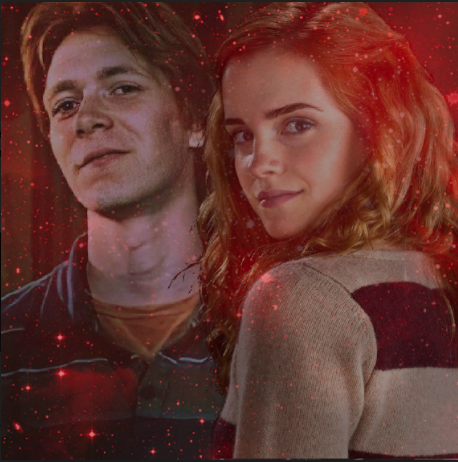

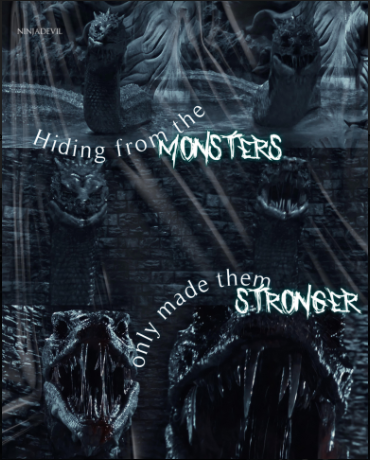

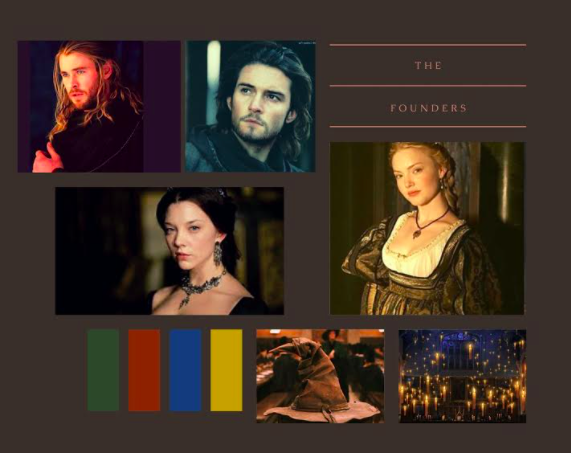
From top left, moving clockwise: Fremione by Liz Jean Tonks; Basalisk by NinjaDevil; The Founders by Selene Blackburn; Remus and Sirius Reunited by Ninja Devil; Neville: Before and After by Liz Jean Tonks.
Email your submissions to wizardingschoolchampionship@gmail.com and include: Pen name; School; Year.
Dear Severus snape
Welcome to the “Valentines” edition of Dear Severus Snape. I’ve been saving up all your pathetic and desperate questions about love for this sickening edition. I vomited more than once while replying.
I have to admit it’s comforting to know the wizarding world is full of so many lonely, miserable people. In fact, nothing has brought me such pleasure since Lockhart brought those ridiculous Valentine’s Day trolls! Harry squirming over the loathsome poem from Ginny Weasley was just the tip of the iceberg!
Dear Professor Snape,
I’m currently facing a personal dilemma. I’ve been asked to go on a date to Hogsmeade by a friend. Apparently, he’s liked me and wanted to be more than friends for a while now… I never suspected.
However, I’ve already sent a note to someone that I’ve been, um, crushing over for a while… and he said that he would love to go on a date with me.
I’ve gone from being a totes dateless Ravenclaw nerd to having too many dates!
What should I do?
Hopelessly clueless fifth year Eagle.
Dear Hopelessly Clueless,
Oh, boohoo, you’ve got two dates. Isn’t that a shame!
Some students don’t get asked out at all and are forced to watch the love of their life go to Hogsmeade with bespeckled, self-righteous dunderheads! They aren’t complaining, are they?
They have to put on their big boy pants and get on with it. They go to their dorms, cuddle their snake plushie and cry, knowing that they can’t trust love again.
From
A Potions Professor who just wants to be loved
Hi Professor,
While on a date with my girlfriend, I noticed that her perfume smelled strangely familiar, so I mentioned it. I asked, “Did you borrow your sister’s perfume?”
Apparently, she bought some new perfume that’s supposed to mimic Amortentia. Now she’s quite cross with me…
How do I fix this?
Dear Idiot,
Spew out some romantic Erumpant-dung to the sister. Tell her you can’t help it if it’s true love. You’ll have a date for at least Valentine’s day unless she realises what a prat you are before then.
Severus Snape
Dear Professor Snape,
Everyone agrees that you are a master of Potions, but I am among the few who have noticed that you are also a master of posture. The way you carry yourself through the halls of Hogwarts makes me speechless.
Unlike you, I’m very clumsy. I feel like my brain isn’t communicating with my appendages; they have their own mind. Naturally, I’m pants at dancing. I need to master this skill in the near future for reasons I’d rather not share.
I hope you have some useful advice.
Thank you!
Dear Nymphadora Tonks (A good guess, but did I get it right?),
There is zero hope for you. You stumble even on a path that is straight and without any obstruction. I can only assume you will be dancing with Lupin, and who cares if you tread all over his toes?
Here’s a clue: not me.
The Master of Poise and Grace
Dear Professor Snape,
With February now upon us and Valentines around the corner and all… I wondered if you had any advice on how to survive the biggest couples day of the year single?
It can be anything from mental mantras to potions—yes, I realize how desperate I sound, but that’s because I am that desperate for help.
~A nervous and single witch
Dear Nervous and Single,
I have a very well thought-out coping mechanism: Snily Fanfiction. Some call it pathetic and reading about what could have been makes the pain of not having it that much stronger. For that reason, use a numbing agent—Aberforth’s home-brewed Whiskey is the strongest—and lots of tissues.
From a Hopelessly Romantic Professor
Dear Professor Snape,
I am writing about a recent obsession a friend of mine (let’s call him Dragon) has developed. He’s become intensely fixated with a fellow classmate, constantly staring at him during meal times, complaining about his facial scar, going out of his way to bump into him so that they can argue.
I’m getting tired of this. How can I get him to stop before I either drown him in the Lake or take a page out of my mother’s book?
Yours,
Blaise Zabini
Dear Mr Zabini,
It is clear that your friend, “Malfoy”, has a crush on “Potter”. I fear that due to Potter being single, Malfoy cannot move on. Take Potter out on a date. It would work best if Malfoy could see you mid-kiss. Once Malfoy sees that Potter is out of reach, I’m sure he’ll get over it and move on.
Thank me later,
The Smartest Slytherin
P.S. Oh dear, you didn’t intend this to be anonymous, did you?
Dear Severus,
A simple question but one I believe to be important: what is your favorite potion to brew?
– an aspiring potions master
Dear Aspiring Potions Master,
I enjoy brewing a batch of Amortentia and tricking students into spiking each other’s drinks. For example, I tricked Potter into giving Malfoy Amortentia cupcakes. It’s the best entertainment I’ve had in years.
The Funniest Head of House
I am obligated to state that the opinions presented in no way represent the views and opinions of the Wizarding World News or its members. All opinions expressed belong to a miserable, depressed old git with a with a shampoo allergy.
Interview

This week we welcome admin Hope!
Hope is a veteran of these types of competitions. She’s come a long way from her first stories when she was fifteen. From a lowly Little League player and Hogwarts School of Witchcraft and Wizardry student to a prominent member of several competitions, the now twenty-two-year-old writer always does her best to help out where she can.
So, Hope, you’ve participated in a lot of Harry Potter fanfiction competitions over the years. How old were you when I first read the books?
I was about thirteen, shortly after I changed schools from Indiana to North Carolina. I reread them all the time, but it’s been a while now, several months at least.
What would you say makes this series so addictive?
I think what makes it stand out is that there is always something new to find out about a character, or there’s a moment that I never paid attention to before. A recent example is when I reread The Prisoner of Azkaban. I gained a new appreciation for Ron as he is one of the people who sends Harry a gift, despite being poor. Harry would have totally understood if he’d just given him a card or a letter, but Ron made an effort to find a gift. I really think Ron deserves more credit for the little things he does.
Ron is definitely underappreciated by readers who overlook the parts of his character that aren’t outright stated.
What are your favourite things to read about in Harry Potter fanfiction?
My favorite HP thing to read is a good Dramione story. When done well, it’s my favorite version of Romeo and Juliet. Funnily enough, though, I think I’ve written only one or two Dramione stories.
What does a Dramione story have to do to be done well?
For a good Dramione, the writer cannot just have the characters completely overlook Draco’s past. He did some pretty bad things to several of Hermione’s friends and herself. There should be a slow change to Draco’s worldview and Hermione realizing that this isn’t the bully she knew in school.
I have read a couple of stories that have avoided doing this. The Bespoke Witch by Glitterally (M rated) is the best example of one that doesn’t slowly change Draco’s worldview but still works. In general, that’s what makes me like them.
Another good Dramione is the Pureblood Princess Diaries by WickedlyAwesomeMe. It’s a ‘Hermione!Pureblood AU’, but the story is quite well written. Also, the author AnneM.Oliver deserves a huge mention as my all-time favorite Dramione-exclusive writer (but most of them are M rated).
I relate them to Romeo and Juliet because they are from opposing sides and are supposed to hate each other, but they end up falling for each other (just leave out the mutual suicide, please)!
If Dramione isn’t what you most like writing, what is?
My favorite things to write are missing moments from the series. What happened to Neville while the Trio were gone; what happened with Luna in the Malfoy basement, etc.
My favorite thing about fanfiction is the expansion of the story that we all love. As much as we want to believe the best of the story, there are plenty of gaps in time—logic—and fanfiction allows us to fix these areas.
What would you say are the most significant gaps in the Harry Potter series?
The biggest gaps for me are in The Deathly Hallows: moments such as when the Trio is unable to return to Grimmauld Place, to when Ron leaves the group.
I understand that the main point is to draw tension between Ron and the others, but nothing happens; it’s quite abrupt when he leaves. I know that it’s because of the locket Horcrux, but honestly, I think there could have been an event which added enough tension to justify Ron’s actions.
As for logic, lots of people bring this up, but I’ll reiterate—why does Nearly Headless Nick only petrify when he sees the Basilisk? I can understand Justin being petrified as he sees it through a ghost, but Nick should have either died again or had nothing happen. It’s also never explained what Nick saw the Basilisk through. No mention of water, a mirror, a window, etc.
Also, why was Justin, a Hufflepuff, talking to the Gryffindor ghost? I like to think he was asking Nick about Harry, who would have made Justin feel better, but that’s not confirmed.
The Harry Potter series does have flaws, but I suppose that the same can be said of all works. What is your all-time favourite book?
Aside from Harry Potter? I would have to say either the Atlantis Grail series by Vera Nazarian or the Pendragon Adventures by DJ MacHale. They’re both amazing adventure stories, so if you’re looking for something new to read, those are my recommendations!
So you’re a literary adventure junkie, haha. What’s the best thing about that genre, in your opinion?
I do like adventure. My favorite thing about the genre is the energy, I think. Their worlds are so vivid, and the events are so epic that there is seldom an adventure story that I will pass up. In these stories, there are lots of little details, and when you look back, you see exactly how everything comes together, why every bit of prior tension led to that specific ending, and that always makes me happy.
Adventure is all about adrenaline and rising tension. When writing adventure stories, how do you ensure that the story is exciting enough?
I actually rarely write adventure stories, but when I do, my trick is just to imagine what might be the worst-case scenario, and do my best to make the reader believe that’s what’s coming. Even if it doesn’t, the tension will build. One example is my story, Challenges at the Dam, and it’s a western adventure. I took lots of inspiration from a section of one of the Pendragon books, so every time I was stuck, I went back to that and thought, “How can I make that Harry Potter?”
Always looking for the worst possible thing that could happen will definitely keep your readers on the edge of their seats and drawing inspiration from the books you love can add flavour to your writing!
How old were you when you began writing?
My first piece of writing was what you would most likely call a Harry Potter fanfiction. I wrote it in a notebook the winter of 2013, basically right after I moved. The writing gave me a space to go because I had no friends after the move, and school hadn’t started yet to give me the chance to make any.
Writing is a great escape. What’s your favourite story that you’ve written?
The best story that I’ve written, in my opinion, is the one called Love Rachel and Ginny. It’s a Percy Jackson and Harry Potter crossover. I wrote it almost a year ago. As soon as the prompt was given to us, I knew exactly the story I wanted to write. It’s one of the only stories I’ve written in letter format, and it allowed me just to say outright things I would have to only imply or delicately weave into the story.
I pitch it as “Rachel and Ginny discover they are cousins through their parents and connect over the years through letters. Over the course of these letters, they both realize there’s something not quite right about the other.”
Do you have any advice for the students on how to deal with inspiration—or lack of inspiration—from prompts?
I’ve had several instances where I had an amazing idea from the prompt, but the specific wording meant that that idea needed to be shelved.
My advice is to be open to writing whatever comes your way. While there are certain things we all like and don’t like to write, if we’re open and receptive to any prompt given, ideas will flow. When there’s a lack of inspiration, I go back to the books. What character seems like they could fit in this prompt? What event? What moment? Then I write that.
I’m sure students will find that useful in the coming rounds. Something else they might find useful is your method for choosing titles. Love Rachel and Ginny is a good name for an epistolary story. How do you generally come up with story titles?
When there’s a particularly memorable final line, I go with that. Other times, I will use a bit of dialogue or text that is a running line through the story. If there aren’t any of these, I go with something that describes what is going on in the story. Some of my favorite story titles have been Hospital Intrigue and Spanish Inquisition.
Those are intriguing titles. I’m going to come out of this interview with a whole reading list.
Time for “Would You Rather”! Would you rather write one amazingly popular story and never find the inspiration to write again or write endless stories that are marginally to moderately popular?
I would say that quality is better than quantity, so I’m probably going to pick the one-story option. It’s sad that I’ll never be inspired to write again.
Quality over quantity is a good stance that I’m sure your readers will appreciate, but it’s a shame you would have to lose your creative outlet.
Now for “Either-Or”: original or fanfiction?
Fanfiction.
Does that answer apply to reading, writing, or both?
I am always reading new original stories, and also always waiting for my favorite fanfiction authors to post new stories.
Last but not least, what would you like to share with our readers?
My favorite song at the moment is Battle Cry by Skillet. Listen to it, it’s amazing!
Please welcome Mandy, coming to us from the unexciting American state of Ohio. She works full-time in Software Development where she manages multiple teams of programming geeks. She’s a mum of two crazy kids, 9 and 12, and loves to write Harry Potter fanfiction in her free time.
Tell me, Mandy, what made you want to take on the role of deputy this season?
I had such a great experience last year with Esme as our deputy. She really made everyone feel like a part of the team and made sure to hold the newbies’ hands throughout the competition.
When she took over as Headmistress, I wanted to step up and make sure others had as awesome of an experience as I did. She set the bar high.
Based on your team’s performance, I’d say you’re doing a pretty good job. Beauxbatons is a force to be reckoned with. What’s your team’s secret?
100%, it’s about teamwork. We are constantly bouncing ideas off each other, checking in, and when it comes time for beta work, every story is getting at least 4, or sometimes as many as 6 pairs of eyes on it. Everyone makes suggestions on how to make it better, not just grammar tweaks.
And we’re a little competitive when it comes to the bonus points. But trivia, puzzles, aesthetics, and such are so much fun anyway, it’s hardly a chore.
Beauxbatons often have the highest story scores, so all that beta reading is obviously paying off. What would you say makes a good beta reader?
A good beta experience comes from both sides. The writer has to tell the beta reader what they need, and the beta reader’s responsibility is to read deeply into the story. If there’s a correction they have to make often or that is obscure, they should add a comment to explain it so the writer can learn.
The best experience is when you develop a relationship with your beta reader. The reader can learn your idiosyncrasies and know what to watch for, and you learn to trust their opinion and not feel bad when they make a lot of suggestions.
In general, the more marked up a story is when it comes back, the better. Even the best writers get a ton of edits, so it’s good to remember that getting a lot of helpful suggestions isn’t a sign of poor writing quality, but the mark of a good beta reader.
Beta reading can be tough, but you guys seem to have the hang of it.
How old were you when you read the Harry Potter books?
Oh Geez. Here’s where I age myself entirely. I remember when the first couple of books came out. I avoided them because I was a cool college student/English Major, and they were just ridiculously popular.
I was 24 when the first movie came out and some of my friends were going to see it. I went with them, and immediately after, I went to the bookstore to buy the series. I reread them many times, but the last reread of the entire series was in 2015. In the end, I wanted more and decided to turn to fanfiction for an “after the final battle” story. I found The First Day by Little0bird and never turned back.
What about the film drew you in?
It wasn’t so much the film, but the characters and the world. It was rich with a seemingly open magic system and interesting characters. I wasn’t really hooked until Prisoner of Azkaban, but the movie and early books made me want to see more.
The Harry Potter world is an addictive one. What is your favourite thing about it in terms of tropes or pairings?
It took a while, but after several years, I stumbled onto Harry/Draco stories. It remains my favorite pairing to read and write, though I tend to stick to post-Hogwarts stories about their adult lives. I like to write about Harry having a “Happily Ever After”. Anything Harry-centric works for me.
Harry is rarely anyone’s favourite character. What makes him yours?
That’s something I’ll never understand, when people like the HP world but don’t like Harry.
Harry is my heart. He tries to do the right thing, but he’s human. He makes mistakes, and he has a temper, but he’s always willing to do better. He’s dealt with so much, and instead of letting the trauma hold him back, he straightens his shoulders and keeps going. I guess I identify with that, and my heart goes out to him.
Oh, and the sass. I love his sarcasm.
And your favourite pairing is Harry/Draco?
They are like two sides of the same coin. Both of them were thrust into roles in the war that they didn’t have any choice over. Both of them did things in protection and love of their friends and family.
It’s easy to write Draco off as a jerk because he was, indeed, a jerk, but he was also a product of his upbringing. I love the idea that over the course of the war, he’d see the error in his parents’ narrative and would try to make it right. I think he’d always be a sarcastic git, but I think it’d be something that Harry would enjoy.
He’s never treated Harry as special, and that’s something Harry always wanted.
Draco often gets a redemption arc in fanfiction, far more often than any other Death Eater. What are the requirements for a character to deserve forgiveness?
Choices. I don’t think Draco (same with the other Slytherin students) was given a choice, and he wasn’t given the information to make better ones…not really.
It’s easy to see that he’s trying to do better in Deathly Hallows, that he’s realizing that the choices he made at the prompting of his parents aren’t right—even if it’s for selfish reasons. I can see him continuing to evolve after school into a, at least marginally, better person.
Along those same lines, while I don’t love Snape as a person, as a character I can see a slight redemption arc being valid. He’s tried to make changes, even if they aren’t enough. He’s still a terrible teacher and a nasty person, but he does try to make better choices, no matter the motivation.
Redemption for characters like Bellatrix and Voldemort only work for me if there’s an issue of sanity involved. They made those choices, they continued to make those choices, and they’ve not earned, nor would they like, in my opinion, redemption. They’d do it all again. As teenagers, maybe, yes, they could be excused, but as adults, they’re responsible for their heinous actions.
Having said all that, how do you feel about character bashing?
I’ll be honest and not sugar coat it. I hate it. It’s lazy writing.
Make me dislike a character for their legitimate traits, sure, (Dumbledore, anyone?) but don’t just make them absurdly evil, going against everything that makes them who they are just because you have an agenda. Specifically, Molly/Ron/Ginny bashing and love potions/manipulations/trying to steal Harry’s money, etc.
If you want to make an evil character do those things, make an OC or use a character we don’t know much about. Everybody has flaws like jealousy and short tempers, etc, and picking at a normal flaw that makes a character well-rounded and using that flaw to make them a flat, one-sided villain, well, gah, I hate it.
Some would say that writers who give Draco a redemption arc strengthen his qualities. Why is that more acceptable than strengthening a character’s flaws? (Please don’t hate me—I’m genuinely curious)
LOL, no hate, I promise. It’s a good question.
Seeing and working with a character’s potential (good or bad) isn’t the same as exploiting one trait, forsaking all others. A good writer is going to leave Draco’s selfish streak and his tendency to say something hurtful (you know, the things about his personality that make him who he is), but they can allow him to grow as a person. He might learn to curb his tongue eventually, but he may still think the less than nice things. The person we are at 30 is very different, in most cases, from the person we were at 17.
Let’s take Ron’s flaws as the alternate example. Writing Ron’s jealousy getting out of control, letting it consume him, etc, isn’t bashing. It’s doing what I said earlier and working with their legitimate character traits to write an alternate storyline.
Writing Ron as someone who only ever befriended Harry for his money and whose family is actively trying to steal and cheat Harry is out of character for everyone involved. It makes no sense within the realm of who we know them to be. If you want the Weasleys out of the picture for the sake of your story, then come up with something better. There are a hundred valid reasons Harry and Ron could grow apart that would fall into their actual character traits without inventing something so completely ridiculous.
That’s a great explanation of things.
Would-You-Rather time! Would you rather write one amazingly popular story and never find the inspiration to write again or write endless stories that are marginally to moderately popular?
Ouch. It’s like you’re peering into my life. I have a good number of stories that are moderately popular, but I YEARN for one to be very popular. Still, I guess moderately popular and lots of them is better. More love to spread.
It takes a modicum of talent and a lot of luck to write a story that’s very popular. You’ve got the talent, so I’ll wish you the luck!
And now Either-Or: original or fanfiction?
Ack. Both. Uhhhh, fine. Fanfiction.
Why?
At this particular moment in my life, I’m tired. I’m a full-time working mom, run a household, run two teams of software developers, deal with 3 pets, 2 kids, 1 husband, and I just don’t have the mental energy to get lost as easily in new characters and worlds.

I still read some of my favorite authors when they have new stories published, but generally, I’ve been sticking with fanfiction more often than not because it requires less of a mental investment. When I do pick up non-fanfic stories these days, they’re usually audiobooks so I can listen while I’m doing other things.
It’s nice that even when life gets busy, we’ll always have fanfiction, haha.
What will you be sharing with us?
This is my doggo, Daisy. When I’m writing, she’s usually curled up next to me.
Cute!
The lair of madam Pince
Judges Picks
Year One: The True Menace by Liz Jean Tonks
Severus Snape dreams of running away but never does, because there’s one thing he fears more than his father’s temper: children’s homes. When a social worker knocks on the front door, Severus sees his nightmares coming true, but Mrs Evans has promised that nothing bad will happen to him.
Year Two: Dear Petunia by Leprechaun123
At what point do you give up on a sibling? Lily dreams of rekindling her relationship with her sister, but she can’t find the words, and the more she writes, the less certain she is that this bridge can be fixed. She needs someone to talk to, and in walks Sirius Black.
Year Three: He Did Not Summon The Death Eaters by TheJediViking
The Hogwarts professors do not trust the ex-Death Eater in their midst. When a group of You-Know-Who’s followers attacks the school, the professors lock their number one suspect in a dungeon cell. But Severus Snape is innocent, and only Minerva McGonagall is willing to prove it.
Year Four: When the Lost are Found by KeepSmiling1
Greyback’s alliance with Voldemort has doomed every werewolf in Great Britain. Packs are disappearing in the dead of night, and every alpha is on their guard. Harry Potter has a plan, but who it benefits is yet to be seen.
Year Five: The Interrogation by Notyou21
Caged animals are dangerous. A caged Bellatrix Lestrange is worse. Alastor Moody knows this better than anyone, but he needs answers. He isn’t looking for a conviction; he’s looking for leads. The Veritaserum would help with that if only Bellatrix stopped babbling nonsense about You-Know-Who’s most valuable possession: a cup.
Year Six: Rite of Passage by Ash Juillet
Scorpius Malfoy doesn’t want to wear a suit, he doesn’t want to dance, and he certainly doesn’t want to go to another stupid party. His father isn’t happy about it, but perhaps, as they both huddle together behind a familiar bookcase, Draco will be able to see Scorpius’s point of view.
Year Seven: The Lost Village of Turnopolis by DarylDixon’sgirl1985
Bill Weasley has a talent for uncovering the desert’s secrets. It’s dangerous work, but he’s always careful—or he was until his boyfriend showed up. Draco Malfoy is too nosy for his own good, but he didn’t expect a turnip to be his undoing.
How to get more Views and reviews on your stories: the importance of a good summary

A summary’s job is to convince potential readers to give your story a shot.
Unless you have a gaggle of adoring fans who devour everything you write, your story’s summary is the only thing that will make people want to read your fic. No matter how unique your story is, the synopsis is the gateway, and it has to be just as good as—if not better than—what’s beyond.
That’s a lot of pressure to put on 50 words or less, so here are some DOs and DON’Ts for writing your summaries.
DO:
– DO keep it brief. Imagine that you have less than thirty seconds to explain to someone why they should read your story.
– DO start by identifying your main character or characters. They become your readers’ body and mind within the story, so you need to introduce them quickly.
- If you’re writing about an OC, don’t mention their name. An unfamiliar name may turn off potential readers, but a description of who or what your OC is may entice people to read on. Make it brief and interesting.
→ e.g. A young witch isn’t unique enough in this fandom to catch anyone’s eye, but a con artist or even a widow would do the job so long as that aspect of the character is relevant to the plot.
- Don’t focus on superficial details like physical appearances and don’t make the character out to be a total badass.
→ e.g. “Mary grew up in California. She is the epitome of a normal teen witch: 5‘6”, blond hair, blue eyes. But when her parents move to the UK, she has to adapt to a new school: Hogwarts.” This doesn’t tell us anything about who the character is, why we should be intrigued, or how we can relate to her.
→ e.g. “Alex is easily the best student at Hogwarts. Even the professors know it! But when the next Dark Lord rises, Alex has to find a solution to stay at school.” This summary gives a better idea of who the character is but not enough to make him relatable or intriguing.
- Broach one of your OC’s weaknesses, something that will affect the plot.
→ e.g. “Hogwarts’ top student works hard to be the best wizard at school, but when the castle closes its doors to half-bloods and Muggle-borns, he has to risk a deadly game of subterfuge to finish his education.” Notice:
a) the lack of a name,
b) something we can all relate to (working hard to be good at something), and
c) stakes: what he’ll lose if he fails.
– DO include the conflict your characters will face and the actions they may take.
- Are your characters going to face off with a villain? Run away from an abusive home? Meet the love of their life only to have them taken away? If you have several plot points, pick the main one so that your summary doesn’t become confusing.
→ e.g. In the “Mary grew up in California” example, the conflict mentioned is too vague. Adapting to a new school can cover anything, which means that potential readers aren’t guaranteed to find something we may like in your story.
“People have started to go missing. When a crime buff from California moves to Hogwarts, she decides to follow the clues, but the closer she gets, the more danger she’s in.” Notice:
a) the lack of a name as well as something that makes the character unique,
b) the main plot point, set up in a way that indicates the genre without giving too much away, and
c) the promise of further conflict.
- Stories without conflict (i.e. slices of life, character studies, fluff, or humour) are easier to summarise because there’s less going on.
→ e.g. “On a summer afternoon, Harry and his friends enjoy a picnic by the Great Lake”, “Ron ponders what he knows about Professor Dumbledore”, “Peeves catnaps Mrs Norris, and Filch’s hilarious search ensues”.
- If the pairing is important to the story, include it in the summary as well as in the tags. Remember that a romance story should not be without conflict unless it’s a slice of life.
→ e.g. “Voldemort has been defeated, but once again the Golden Trio’s lives become entangled in a web of confusion, love, and danger. Many daring adventures await.”
a) People read romances for the pairing. If you don’t at least allude to who gets with whom, you won’t get very far.
b) See the bullet point about conflict being too vague.
→ e.g. “A cryptozoologist moves to Scotland to prove the existence of the Loch Ness Monster. She joins the team of an eccentric blonde who wears turnips as earrings, but the closer she gets to Luna Lovegood, the more inexplicable things she witnesses.”
a) The OC/Luna relationship is heavily implied and will be even more so with a genre and pairing tag.
b) We can tell from the summary that the conflict will revolve around a Muggle discovering magic and possibly the Loch Ness Monster.
– DO focus on what makes your story unique. Figure out what sets your story apart from others like it either in terms of plot or character.
- Getting this right means doing research and reading stories that are similar to yours.
→ e.g. Carry On by Rainbow Rowell has the same general premise as Harry Potter, but she sets it apart in her synopsis by making her central character the “worst Chosen One who’s ever been chosen”.
– DO make your summary read a bit like a rollercoaster.
- An easy formula for this is: incident – solution – bigger or worsening incident.
→ e.g. “When Luna accidentally wakes a cave monster, she seeks help from Harry and his friends, but Hagrid’s love for dangerous creatures gets in the way of saving the school.”
– DO pay attention to spelling, grammar, and punctuation. If you can’t write a summary without riddling it with SPaG mistakes, potential readers will assume that the entire story is of the same quality.
– DO include extra information, but only if there’s room for it (without surpassing 50 words). By this, I mean “drabble”, “one-shot”, “AU”, “complete”, as well as trigger warnings. These things can be helpful in a summary, but they aren’t necessary and can easily be put in an Author’s Note.
DO NOT:
– DO NOT give too much detail. The purpose of the summary is to whet the reader’s appetite, not to spoil the meal.
- Avoid spoilers, don’t explain every detail about your OC, and don’t describe everything in your alternate universe.
→ e.g. Returning to our Alex example, we don’t need to say in the summary how the new Dark Lord rose to power. Nor do we need to mention that Alex bakes with the house-elves to relax or explain how he’ll fake his identity to get back into Hogwarts. Readers will discover all of that once they start reading. Do not ruin the discovery.
– DO NOT ask questions.
- You can turn your summary into a question, but it has to be an interesting one that makes readers think and wonder.
→ e.g. “Hogwarts is in trouble again. Will Harry and his friends survive?” Readers will assume that the answer is ‘yes’ and will most likely be right, so it isn’t interesting.
→ e.g. “Sirius Black, Remus Lupin, Minerva McGonagall, and Albus Dumbledore are alone in Grimmauld Place. Only one of them is dead. Who is it? And which of the others killed them?” The question has to incite curiosity.
– DO NOT use a quote from your story.
- I’ll admit that this can work, but it has to be one hell of a quote. The problem with this method is that it doesn’t tell potential readers anything about the story, so unless the quote is all kinds of brilliant, it won’t work.
→ e.g. “Remus’s skin stretched taut over muscle and bone, his heart beating fast, the rush of blood deafening in his ears. The restlessness had come out of nowhere, uncompelled and unexpected but impossible to ignore. The usual suspect hung above the city skyline, a waxing crescent visible even though the stars were not. Something was wrong.” It’s a good opening sentence (I wrote it, so I’m biased), but it doesn’t work as a summary because:
a) it’s too long. 5 words over the limit may not seem like much, especially when 50 words is only a recommendation, but as a summary, it will look like an unappealing block of text.
b) it gives no indication as to what the story is about. The mystery may attract certain readers, but there’s no guarantee that they’ll stick around because the plot may not appeal to them.
– DO NOT say “I suck at summaries”. Potential readers will assume that you suck at writing, too.
– DO NOT talk about yourself. Your summary should be about your story, not about your unusual sleep schedule that had you writing at 3 AM or the class assignment or weird dream that inspired you.
– DO NOT give your opinion on your story. You wrote it; your opinion is biased. No one is going to believe you if you say that your story is “incredibly unique” or “the best fanfic ever” or “my first, not bad”.
– DO NOT include negative information. “I just finished and wanted to post so excuse my spelling and grammar errors”, “No beta”, “Character bashing”, “OOC characters”, “not my proudest work”. Stating that you know that your story can be better but that you couldn’t be bothered putting in the extra effort is a sure way of convincing readers not to give you a chance.
– DO NOT say “full summary inside”. If you can’t fit your summary within the allowed character count, it’s too long. If you can but don’t want to, rethink your decision. Your synopsis is what incites potential readers to give your story a chance. They won’t waste the effort of clicking on your fic only to read a summary they may or may not like.
– DO NOT beg for reviews or for potential readers to give your story a chance. The only thing this will achieve is making you seem desperate (you may well be desperate, but your readers don’t need to know that).
– DO NOT include “I’m not sure if I should continue” because it suggests three things:
a) the lack of a plan for the story, which generally means plot holes and no update schedule,
b) the threat of a story that will never get past the first few chapters, and
c) a writer who’s unsure of themself.
– DO NOT substitute tags for a summary. Too many tags can convince a potential reader not to give your story a shot (this is more of an AO3 problem).
– DO NOT overuse a specific type of punctuation. Even if the use is correct, too much of it can be off-putting. This rule doesn’t apply to commas and full stops because they’re basic enough to become invisible.
– DO NOT use question marks (unless it’s a brilliant question), exclamation marks, or ellipses. Exclamation marks are often viewed as childish, and ellipses don’t convey the sense of mystery that the people who use them think they do.
Practical exercises to help improve your summaries:
- Look at summaries on the browsing page. Study the ones that appeal to you. What is it that attracts your interest? Is it the mention of a character or pairing that you love? Does it have a turn of phrase that incites your curiosity? Does it indicate a genre you’re fond of?
- Do the same thing with summaries that you dislike. What’s wrong with them? Try to rewrite them.
- Fill in the blanks: “[character] must [verb] when [situation happens], but [obstacle].” This template will be the skeleton upon which you build your summary. You can also write “In which …” and complete that sentence.
- Ask your beta reader or a friend who has read the story to tell you how they would summarise it. Sometimes another eye can see better than yours, and there is nothing wrong with getting advice from a trusted source.
- Write a detailed summary of your entire story. Remove the spoilers. Condense it. Rewrite it using the tone and style used in the story.
In the next issue of the WWN, we’ll be looking at how to make a good first impression on potential readers.
Couples Therapy

And welcome yet again, my wonderful readers! It’s time for another Couples Therapy session. This time, we have two legendary guests here. We’ll see if they can iron out their differences, or if their arguing will provide solid entertainment. Welcome, Alastor Moody and Bartemius Crouch Jr! *note, this is sort of going to ignore the fact that Barry Crouch was Kissed.
Moody: Before we start, lass, I’d like to know how you managed to get permission for this villain to be here? Wasn’t he supposed to have been Kissed by the Dementors?
Hope: He actually has Harry Potter to thank for that. The boy made sure he was returned to Azkaban, where he belongs. As for why he’s here, well, it took some doing, but he is quite sedated and therefore, as safe as we can make it. It helps that you’re a powerful wizard. The Ministry figured that he wouldn’t be able to pull anything with two fully trained wizards there.
Crouch: Don’t act so superior, blood-traitor. I still have all my faculties.
Moody: They’re right. He won’t get past me again. I promise you. The last time was pure luck. Why did you want us to meet, anyways, missy? I suppose you have a good reason?
Hope: Since you brought up that incident, let’s start there. How in the world did Crouch manage to get the drop on you?
Crouch: The old man was easy to overpower. However vigilant he claims to be, no one is perfectly aware first thing in the morning. A quick Stunning Spell was all I needed.
Moody: Like I said, he was lucky. Any other time, you wouldn’t have stood a chance. But yes, he did manage to take me by surprise by using underhanded tactics. This is why I promote CONSTANT VIGILANCE!
Hope: Moody, how did you deal with being imprisoned for so long? I can imagine it was quite traumatic. Have your daily routines changed since?
Moody: I don’t sleep. I won’t be snuck up on again, I’ll tell you that. I check my Secrecy Sensors much more frequently—about three times an hour—and have included some new, more interesting, items. The experience, well, obviously it was not pleasant. Took me several months to properly recover. I barely managed to stay sane in that place.
Your host wanted to inquire more on this subject but decided it would be a bit insensitive to do so. Moody seemed quite uncomfortable, which we thought was impossible. He definitely hasn’t totally recovered.
Hope: It’s behind you now. My next question is for Crouch: How did you first get involved in the Death Eaters? How did a society boy end up in that situation?
Crouch: I had several Slytherin friends at Hogwarts. Once I realized that the Dark Lord was going to take power, I saw an opportunity to get revenge on my father. He never truly cared about Mother and me—only to the extent that we made him appear acceptable in society.
Moody: He worked in the Auror office for a while. He was good, too. I never noticed anything amiss. Nothin’ to show he was a bad apple until Kingsley Shacklebolt and I went to investigate the Longbottom case.
Hope: Yes, the Longbottoms. You had a hand in their fate, didn’t you, Crouch?
Crouch: I was their way into the house that day. Frank and I had worked together before, so it wouldn’t have been suspicious for me to drop by. I got the others in, and the rest is history.
Hope: How can you be so impassive about driving two people insane? You left a baby alone in the world.
Moody: The Death Eaters don’t care who gets hurt in their Pure-Blood fanatics, lass. I thought you’d figured that much out?
Crouch: Any means were to be used to find information on what had happened to our Lord. You and the Ministry speak of justice, but only if it suits you. You delight in the deaths of Death Eaters. You laud Harry Potter, but he was the one who sent the Dark Lord into exile in the first place.
Hope: I can’t believe you had no remorse over leaving an orphaned child alone in the world. You have no regrets at all? Not even about betraying your former friend?
Crouch: Frank was never really my friend. We had reason to believe they had information, and we had every intention of getting it. They simply refused to hand over the information.
Hope: I would send you straight to the Dementors, but you’re heading back to Azkaban soon enough. Anyway, thank you for agreeing to do this with me, Alastor, and to Harry Potter, for allowing it to happen. To the readers, I’ll see you soon!
Writing Q and A with Ash

Welcome to another edition of Q and A with Ash. You’ve been sending in all of your writing woes, and I have been hard at work answering them. Remember, if there is anything you have a question about, ask Ash!
Q
Could you possibly give a brief rundown of the differences between Suspense, Drama, and Angst? They seem to run rather parallel to each other.
A
Suspense = 😨
Drama = 😯
Angst = 😭
The goal with suspense is to have readers on the edge of their seat, worrying about what will happen next. An example that you’ll find in most stories is the hide-and-seek scene, in which the protagonists must run away and hide from an antagonist. In Harry Potter and the Philosopher’s Stone, that scene happens when Harry, Ron, Hermione, and Neville run away from Mr Filch and end up in the forbidden corridor.
Drama wants readers either to grab some popcorn, sit back, and enjoy the fireworks or to break down in tears. It comes in different flavours (comedy, tragedy, romance, etc.), and its objective is to cause a strong emotional reaction, positive or negative. You’ll find this genre in most death scenes and love confessions, for example.
Angst done right should have readers suffer at least one existential crisis. It should create a sense of dread and anxiety. Harry Potter and the Order of the Phoenix has a lot of angst because Harry is dealing with what happened at the end of his fourth year.
Q
How would you structure a sentence that ends with or has speech in the middle of it?
A
Voices shouted, “Stop!” but he kept running.
She said, “Good morning,” and then sat down.
If the quote is embedded in the middle of a sentence, place a comma between the dialogue tag and the opening quotation mark. Begin the quote with a capital letter and end it with either a comma, an exclamation point, or a question mark depending on what the quote says. When the non-quote sentence resumes, begin it with a lower-case word, unless said word is a proper noun
If the quote marks the end of the sentence, end it with a full stop (or an exclamation point or a question mark).
His world ended with a murmur of, “You should have done better.”
Q
I want to write an OC, but I don’t want her to be a Mary Sue. Any tips?
A
The definition of a Mary Sue varies from one person to another. You can do everything right by most people’s standards, but there will always be someone for whom any OC is a self-insert Mary Sue.
It’s a byproduct of sexism. Many YA books meant for a female audience have been accused of having a Mary Sue by people who tend to enjoy characters like James Bond, Batman, Aragorn, and Luke Skywalker and haven’t picked up on their double-standard.
My advice is not to worry about creating a Mary Sue and instead concentrate on writing a good original character. The former focuses on things not to do (which can still lead to a flat character), while the latter pays attention to what you ought to be doing. If you do it all well, even if your OC does turn into someone’s definition of a Mary Sue, she’ll be an in-depth character whose actions make sense and whose purpose in the story is clear.
Be warned; it isn’t a simple matter of slapping some traits together, sprinkling in a few flaws and mannerisms and calling it a day.
Step 1: Who is your OC?
You probably have a vague idea of who your character is, so start by writing down general information: age, gender, career, socioeconomics… This is the kind of blurb you would use to describe your character in one or two sentences.
Let’s say our character is a fifteen-year-old Muggle-born from a lower-middle-class background. She’s just received her Hogwarts letter because she was born in 1998, and someone working at the Ministry destroyed all records of Muggle-borns to protect them from Voldemort.
Step 2: Get to know them.
You’ve got to ask your character questions. There are a lot of character interview sheets online, but I find those counterproductive. They include too many questions, most of which are too general to allow you to dig deep enough into your character.
It’s best to come up with your own questions. Follow a single line of questioning until you reach a conclusion. Don’t answer the questions with only “yes” or “no”; you’ve got to expand if you want to get anywhere. The conclusion you reach will be one of your character’s inner values.
For our newly discovered witch: How does she get on with her family? (This is a basic but important question that you can ask most characters.)
Let’s say our OC and her family are close, but it’s only her, her siblings, and her father. That answer leads to more questions.
→ What happened to her mother? She died a couple of years ago from a heart defect.
→ Did our OC take care of her ill mother? Yes. As the eldest child, she felt it was her responsibility to pick up the slack when her mother was at the hospital and her dad was at work.
Three questions in, and we already have an inner value: She feels responsible for taking care of her family.
That feeling of responsibility will likely play a significant role in the story. How will our OC feel about being asked to leave for Hogwarts? Will she choose her family or magic? What choice does her family want her to make?
The things you learn through this series of questions will add a possibility for more conflict in your story. Maybe our OC will find out that the wizarding world can easily cure the heart defect that killed her mother. If only she’d received her Hogwarts letter earlier, her mother could still be alive.
People don’t have only one inner value and neither does your character, so you have to keep going.
Was our OC good at Muggle school? Is she good at making friends? What future does she dream of for herself? Ask as many questions as you can think to ask, and remember that not every answer needs to be complimentary. Maybe our OC, because of her feelings of responsibility, is controlling.
If you don’t like one of the inner values you find (either because it doesn’t fit your idea of the character or because it doesn’t work with the plot), start over. Go back to the initial question and pick another answer. Our OC doesn’t have to get along well with her family. She could hate the responsibility thrust upon her when her mother died, or her mother could still be alive.
Step 3: Figure out their mannerisms.
Just as your character’s inner values will affect their personality, they’ll also affect their mannerisms.
You want your character’s actions to reflect who they are, and that starts with their physical tics. If you add mannerisms without knowing where they come from, they’ll feel hollow and superficial. Don’t decide that your OC often grinds her teeth, chews her nails, or can’t sit still. Instead, use her inner values to figure out what little habits she may have.
Our controlling Muggle-born might have got into the habit of folding discarded blankets, picking up forgotten toys, and straightening crooked frames—exerting control over her environment.
Step 4: Understand their motives.
What does your character want?
Their objective will be the driving force of the story. If they don’t have a goal or aren’t proactive in achieving it, readers probably won’t like them very much.
Take Harry Potter. He’s the main character of his series, yet he’s rarely anyone’s favourite. A reason for that is that he’s reactive instead of proactive. He only acts when the plot forces him to (the story leads him; he doesn’t lead the story).
Make your character’s objective something specific. It can be general or vague when the story begins, but the sooner your OC knows what she wants, the better. Harry’s objective in every book is to make it to the end of the school year and/or defeat Voldemort—an admirable but broad goal, not to mention repetitive.
Heroic objectives can work, but they’re harder for readers to relate to because they aren’t personal. No one is so selfless that saving the world is their main objective solely because it’s the right thing to do.
In Guardians of the Galaxy, Peter Quill gave a more realistic reason for why he wants to save the galaxy: “Because I’m one of the idiots who lives in it!” That reason is refreshing and relatable.
As a rule, the bigger the plot, the more personal your character’s objective should be. Objectives will ground them and will narrow the scope of their actions.
A goal that has the potential to end badly for your character is more interesting to read about because of the risk (stepping into a war zone to save a loved one, going against deeply ingrained societal norms to protect a friend or a belief…)
Writing a compelling character and plot is a game of risks and stakes. What does the character want (the objective)? What will get in their way (the risks)? What happens if they don’t achieve their objective (the stakes)?
Answer those questions for all your main protagonists and antagonists (and anyone else who plays a deciding role), and you’ll have characters capable of leading your story. Remember to use their inner values, or else they may as well be cardboard cutouts.
So what does our Muggle-born want?
From the little we’ve found out about her so far, we know that her family is important to her, so keeping them safe will undoubtedly play into her objective (and possibly become a major plot point). As far as goals go, protecting loved ones isn’t too bad. It’s specific and personal, but we can do better.
Why does she want her family safe and happy? Does she have an even more personal and less altruistic reason?
Maybe she wants them to be happy so that she no longer has to look after them. That can be an interesting plot point, and it opens doors to a character arc through her inner conflict. Will her selflessness or selfishness win out? Why? What will she learn along the way?
For our OC, the risks and stakes will emerge from the plot, and the story will take form based on the characters’ inner values and objectives. If planning a novel were a linear exercise, it would be a lot easier.
Step 5: Set them loose.
It can be tempting to pursue every line of questioning with your OC, to have pages and pages of information about them, but that will only get you so far. You have to write your story.
Set your OC loose and trust that you’ve done enough research to know how they will act and react. Keep a loose grip, and remember that no matter how much planning you’ve done, your OC may diverge from the path you’ve carved. They may only be chasing butterflies, but keep writing and decide whether or not the scene is worth keeping when you edit.
Read stories featuring original characters in the fandom you want to write one for, and give yourself an idea of what works and what doesn’t.
If you need a story recommendation, Headmistress Hemlock (who was a big help with coming up with the example character for this article) has written some of my favourite original characters in her stories The Estranged Convict and A Squib at Hogwarts.
It begins with a character, usually, and once he stands up on his feet and begins to move, all I can do is trot along behind him with a paper and pencil trying to keep up long enough to put down what he says and does.
William Faulkner
The International Wizarding School Competition League Table
| School | Place | This Round | JP Points | Overall Points |
| Beauxbatons | 1st Place | 190.00 | 5 | 788.5 |
| Ilvermorny | 2nd Place | 177.75 | 5 | 672.5 |
| Mahoutokoro | 3rd Place | 169.75 | 15 | 625.25 |
| Durmstrang | 4th Place | 155 | 10 | 597.5 |
| Hogwarts | 5th Place | 110.5 | 0 | 439.75 |

Feel free to contribute to other aspects of the paper by sending a private message to the Competition account. We are always looking for pieces of fanart, and even your thoughts or recommendations. Even if you want to send a message to someone in the competition that you think has excelled, or maybe they helped you out? Send it to Aunt Molly! Anything else should be sent to Wizarding School Championship. In the Subject should be Wizarding World News: [Name the section of the paper you are writing about] depending on what you’re messaging about.
 Wizarding World News