
- Prompts
- Handy Hints
- Writing School
- Trivia and Puzzles
- Creative Corner
- Dear Aunt Molly
- Interviews
- Lair of Madam Pince
- Character Interviews
- Writing Q and A with Ash
- League Table
Follow all important events of the International Wizarding School Championship here in the Wizarding World News. We also have a live Twitter feed, Facebook and an Instagram account for you to get day by day updates!
Prompts
Setting Prompts
Setting prompts are one of the easiest prompt-types to incorporate into a story; however, some writers may find it difficult to use a setting prompt in a significant way. Unlike some prompts, which have more open guidance as to their usage, the guidance is quite specific.
This setting should be the location of the story for a good portion of the plot. If the characters are only there for the opening or in passing, you will not get full points. Similarly, if the location has no impact on the story, you will not get full points.
Of particular note are the phrases “in passing” and “no impact on the story.” Let’s break those down for a moment, using “[Setting] Unused classroom” as our prompt.
If our story begins with Harry sitting in an unused classroom to read a letter, and then he leaves without any mention of why he chose that particular room, that would be a passing mention. If he later goes back to that classroom—perhaps because it has become his hideaway where he reads all of the letters Sirius writes to him—then the prompt would be significant to the story.

In the same scenario, only using the setting in the opening few lines of the story would not cause the setting to significantly impact the plot. However, using the room as a getaway for Harry to read and write letters and escape from the pressures of the Triwizard Tournament would significantly impact the plot. The story would not make as much sense if you swapped the unused classroom with the Gryffindor common room.
A good way to test whether your setting is essential to the plot is to swap it out for another one. An unused classroom would make a good venue for a mixed-Houses party, but one of the common rooms would not be as suitable due to locations and passwords.
Another critical factor is how much of your story takes place in that setting. Even if it is the most suitable setting for your plot, only spending one-quarter of the story there risks its significance, and takes us back to a “passing mention.”
If you spent most of your story focusing on the party’s planning, and only show the party in the final scene, it would not be enough to gain you full points for the setting. If, however, part of that planning involved going to the classroom to assess its suitability and decorate the room before the party, the prompt would be used in a significant way.
Settings can also be used more subtly as long as we keep significance in mind.
Perhaps this room is unused due to the decrease in year sizes after the war, and McGonagall is seen musing on all of the students she has lost and hoping for a better future for her current charges. This story may not take place entirely in the room itself. Perhaps she first starts her musings as she walks past it and goes to her office to reminisce in peace. However, the setting is at the centre of her thoughts, through memories of lessons taught there, pranks pulled by the Marauders there, and visions of future classes filling it once again. If, however, McGonagall only muses on the classroom for a short portion of the story and then moves on to other topics, it would decrease the prompt’s significance.
As a final example for you, think about how Rowling used the Room of Requirement. We first hear about the Room in GoF at the Yule Ball, although we do not know what it is. It is only a passing mention and is not significant to what Harry is going through then. In OoTP, however, the Room of Requirement becomes one of the most significant settings in the book as a lot takes place there, not only relevant to the plot of OoTP but also for future books.
When using settings prompts, don’t be afraid to get creative, always keeping in mind how your environment impacts your plot.
Handy Hints

One of the first questions we should ask ourselves when starting a story is this: ‘Whose perspective am I writing from?’ Perspective is an important decision when plotting because the point of view sets the limits of what your reader knows. Sometimes, writers use more than one point of view, it’s a risk, but this article has some great tips on making it work.
Research is always a good idea. Try reading novels that use multiple points of view.
- The Children of Blood and Bone by Tomi Adeyemi
- Heroes of Olympus by Rick Riordan
- Song of Ice and Fire by George R. R. Martin
- Six of Crows by Leigh Bardugo
- The Raven Cycle by Maggie Stiefvater
- The Lunar Chronicles by Marissa Meyer
- Carry On by Rainbow Rowell
I’m also going to shamelessly plug some fanfiction that uses this technique. Read a lot, and find what works or doesn’t work for you.
- Locked in a Vault by Verity Grahams (M rated)
- The Estranged Convict by x Hemlock x (T rated)
What’s your reasoning?
It is crucial to have a reason for having multiple points of view in a story. In Gone Girl, Flynn uses one perspective to give you a specific idea of her characters and setting and set the atmosphere. Then, she shifts the point of view and everything you thought you knew changes. It’s one reason this book is so popular.
While I felt that Allegiant broke faith with the reader, J.R.R. Tolkien kept faith when he used multiple points of view in The Lord of the Rings: The Two Towers. It is Frodo’s story, but the reader needed to follow Merry and Pippin too, just as they had to see Aragorn, Gimli, and Legolas through to the end.
Tip: Don’t introduce multiple points of view for the sake of it.
In my story, Locked in a Vault, I used this technique to illustrate the different sides of a conflict. I wanted to show that there wasn’t a single innocent character. I also tried to create tension by shifting the point of view to give or restrict specific information.
Distinct character voice

Blended character voices cloud things, but a reader should always know which character they are reading. When writing Locked in a Vault, I worked with established characters, and I dodged this pitfall by ensuring each character’s voice was distinct. Ron Weasley’s chapter had a different tone and language than Hermione’s, Lucius’, or Draco’s. You can check out Tip 3 in Issue four’s Handy Hints article for more information.
Tip: Try using distinct characters that you know inside out, and to make it easier, characters that contrast each other.
Third and First Person
Deciding between a first or third person point of view can help you create the distinct character voices that you need.
Writing in the first person might be easier for some. The first person uses the pronouns: I, me, we, us. It provides direct insight into the characters’ thoughts and feelings, making their voice clearer.
Other writers might find that they can create a more distinctive voice using a close-perspective third person (close third) narrative. This perspective uses pronouns such as she, he, they, them. The narrator’s voice is limited and neutral, and direct thoughts are in italics. The Harry Potter books use the close third. As such, it’s a common perspective used in Harry Potter fanfiction.
Too Many Points of View
A story can become muddied with too many points of view. When I wrote Locked in a Vault, I included an unnecessary POV. Everything the character (Severus Snape) knew or said, was witnessed by a principal character. Snape didn’t play a huge role in the plot, but having a chapter from his point of view gave the readers a different impression. Snape suddenly disappeared from the story, which was jarring for the reader.
Other drawbacks:
- It confuses your readers.
- It’s harder to connect with characters.
- It dilutes the core story.
- It makes your job harder.
Tip: You need to keep track of the voices and the threads of the story. If you can’t follow it, neither will your readers.
Limit yourself to a maximum of five character POVs. This enables you to give each a distinct voice. You need that to keep track of and let the readers develop an intimacy with your characters.
One POV per Chapter
Clarity is essential. If a reader doesn’t understand something, it’s not their fault; the onus is on you to communicate your story. When using multiple points of view, you have to be extra careful. You can do this by limiting ‘head-hopping’.
‘Head-hopping’ mid-scene is a bad habit to get into. If it is something you are going to do, you need to ensure that the switch is clear. Use page breaks between perspectives. Be aware that this will also affect the flow of your story.
At the start of each chapter, ensure that your reader is oriented straight away. There are no chapter titles in The Children of Blood and Bone, but each chapter is named for one of the three point of view characters. If this isn’t something you want to do, make it clear within the first paragraph, if not the first sentence.
One Main POV
Multiple points of view can take your story in many different directions, so it’s important to focus your plot. One way of doing this is by choosing one point of view that takes precedence over the rest. Similar to a single perspective novel, like Harry Potter, one character has ownership of the story. The main character has to achieve a goal, and the other points of view help to tell the main character’s story.
Multiple points of view are high risk, but they have a high reward when you get them right. A different perspective can change a reader’s opinion or feelings about a character, story, or moment. It doesn’t have to be throughout the entire story; it can be a single moment. My last example comes from Harry Potter and the Deathly Hallows. The Prince’s Tale chapter changed everything. It was a glimpse into one of the most despised characters in the franchise.
Ash’s Quick Tips

Always get your “who” and “whom” right:
– Use “who” to refer to the sentence’s subject.
Example: “Nobody knows who will live.”
→ If you can rephrase the sentence and insert he/she, use “who”. “She will live.”
– Use “whom” to refer to the sentence’s object.
Example: “Nobody knows whom they will save.”
→ If you can rephrase the sentence and insert him/her, use “whom”. “They will save her.”
Be careful: before using “whom” in dialogue, ask yourself if the character would know or care about the difference between “who” and “whom”.
Writing School –Kinship Names

Welcome to another Writing School. This issue, we have two shorter topics for you! Capitalisation of kinship names, and compound words.
Like the titles brother and sister, aunt and uncle, kinship names are sometimes capitalised and sometimes not. Let’s take a closer look at the rules.
Rule 1:
Capitalise a kinship name when it immediately precedes a personal name or is used alone, in place of a given name.
- Draco loved Aunt Bella’s apple pies.
- Rose adores Uncle George because he always gives her sweets.
- Grandma and Grandpa were married in a chapel in a small French village.
- Let’s go ask Mom if we can go to Diagon Alley.
Rule 2:
Do not capitalise a kinship name when it is not part of the personal name but describes the personal name, when the kinship name is preceded by articles such as the, a, or an; or possessive pronouns such as his, her, my, our, your, or their.
- Draco loved his aunt Bella’s apple pies.
- Rose adores her uncle George because he always gives her sweets.
- My grandma and grandpa were married in a chapel in a small French village.
- Let’s go ask my mom if we can go to Diagon Alley.
Rule 3:
Do not capitalise a kinship name when it follows the personal name or is not referencing a specific person.
- The Weasley brothers were notorious for pulling pranks.
- There’s not one mother I know who would allow her child to enter Knockturn Alley alone.
Compound words
Note: There may be regional differences in the examples used below.
When two words are used together to yield a new meaning, a compound is formed. Compound words can be written in three ways:
- Open compounds: spelled as two words, e.g. high school.
- Closed compounds: joined to form a single word, e.g. doorknob.
- Hyphenated compounds: two words joined by a hyphen, e.g. long-term.
- Sometimes, more than two words can form a compound: e.g. mother-in-law.
Open Compound Words
An open compound word is created when the describing adjective is used with its noun to create a new noun.
Sometimes it can be hard to identify as a compound; however, if the two words are commonly used together, it’s considered to be a compound word.
- living room
- full moon
- coffee mug
When adverbs ending in -ly combine with another word, the resulting compound is always spelt as two separate words.
- largely irrelevant
- newly formed
Closed Compound Words
Closed compound words weren’t always used together, but evolved to be accepted as a “real word” in the English language. Closed compound words are usually made up of only two words.
- notebook
- waistcoat
- bookstore
An example of the ‘birth’ of a closed compound can be found in the beginning of the internet. We used to say going on-line. Now, the spelling online has become commonly accepted.
Hyphenated Compound Words
These are the basic rules you should follow when hyphenating:
Rule 1:
Generally, hyphenate two or more words when they come before a noun they describe and act as a single idea.
- an off-campus apartment
- state-of-the-art design
Rule 2:
A hyphen is frequently required when forming original compound verbs for vivid writing, humour, or special situations to avoid confusion.
- The slacker video-gamed his way through life.
Rule 3:
The adverb very and adverbs ending in ly are not hyphenated.
Incorrect: the very-elegant witch
Incorrect: the finely-tuned watch
- This rule applies only to adverbs. The following two examples are correct because the ly words are not adverbs:
Correct: the friendly-looking Niffler
Correct: a family-owned shop
Rule 4:
Hyphens are often used to tell the ages of people and things. Whether writing about years, months, or any other period of time, use hyphens unless the period of time (years, months, weeks, days) is written in plural form:
With hyphens:
- We have a two-year-old child.
No hyphens: The child is two years old. (Because years is plural.)
Exception: The child is one year old.
Note that when hyphens are involved in expressing ages, two hyphens are required. Many writers forget the second hyphen:
Incorrect: We have a two-year old child.
Without the second hyphen, the sentence is about an “old child.”
Rule 5:
Some established compound adjectives are always hyphenated—Double-check with a dictionary or online.
- The design is state-of-the-art.
It is often necessary to consult the dictionary to determine whether these terms should be hyphenated or not.
DRABBLE:
There are two topics for this issue’s drabble. Use each compound word-type at least once. and use one self-made, creative example of the hyphenated compound! Additionally, add at least one kinship address to your plot.
The prompts lean towards fun and comedy this issue (You aren’t required to write comedy, though):
Prompts:
- (Perspective) First person narrator
- (Dialogue) “Where do I find Dumbledore’s Army?” / “Up his Sleevy”
- (Dialogue) “How many centaurs does it take to light up a single wand?” / “Two… one to say the spell and the other to keep remarking how bright the wand is tonight” (You are free to add another answer to this as long as it remains a joke)
- (Negative pairing) Fred/George Weasley
Find the rules for this challenge in our rules and regulations thread!
Trivia and Puzzles
Welcome to the Trivia and Puzzles section of the WWN. The best part? You can win points!
These quizzes and puzzles will always follow the books over the movies, so in case of disparity, the book-correct answer will be the right one. The answers to Trivia and Puzzle can be sent to the competition account on FFN: The International Wizarding School Championship, or emailed to the competition at wizardingschoolchampionship@gmail.com, until the end of the round.
The Trivia and Puzzle are worth 5 points each. The winners will be drawn by an admin from a magic hat and announced in the following issue. If we receive up to 10 entries, 1 winner will be drawn, but if we get more than 10 entries, 3 winners will be drawn!
Due Date: Saturday 10th April 2021 1pm UTC
ISSUE FIVE WINNERS!

Trivia and Puzzles have begun to get tougher! For last issue’s trivia, we received only ten correct entries, meaning there is only one trivia winner. The puzzle received eleven correct entries, so there are three puzzle winners.
And the winners are … *drumroll*
Trivia Winner:
Janie-Ohio from Beauxbatons
Puzzle Winners:
- Ash Juillet from Beauxbatons
- ViolaMoon from Durmstrangs
- Leprechaun123 from Ilvermorny
Congratulations to all the winners!
TRIVIA — How Well Do You Know Harry Potter and the Half-Blood Prince?
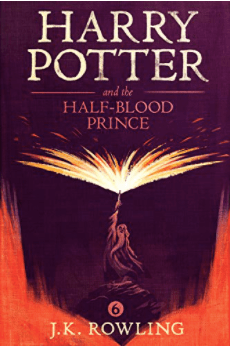
- What drink did Dumbledore conjure and offer the Dursleys?
- What is Arthur Weasley’s dearest ambition?
- Where were the owners of Slughorn’s residence in Budleigh Babberton in HBP?
- What O.W.L. subject did Augusta Longbottom fail?
- Who was Katie Bell’s friend with whom she had gone to the Three Broomsticks?
- Who was Arnold?
- What did Snape make Harry do for his first detention?
- Who were the Gryffindor beaters in Harry’s sixth year?
- How did the portrait of the Fat Lady get drunk?
- What did Lavender give to Ron at Christmas?
PUZZLE—It’s Shopping Time!
https://crosswordlabs.com/embed/its-shopping-time
Creative Corner
Hi, guys!
Welcome to the Creative Corner. Last round we asked you to dig out your paint brushes, and we received so many spectacular submissions, picking a winner was difficult. There was almost an art war in the Headmistress Server at one point! I think we can all agree that the final winners truly deserved the prize!
First Prize: LoverLoverLover – Beauxbatons – Year 5
Second Prize: DrarryMadHatter – Ilvermorny – Year 4
Third Prize: Bea Writes – Beauxbatons – Year – Year 7
We have also included two more runners up. These submissions were great and were very close to stealing the points. So, well done to KeepSmiling and Glowstar!


This round’s challenge has been inspired by the less-than-enthusiastic response to our bonus rounds. The thing about creating a special round is that it looks good in theory, but gets complicated in practice, leading to writers having to force too much information into one story.
We at the IWSC are able to admit when something doesn’t quite work, and we aren’t above asking for help. So, instead of the usual round design challenge, we want you to create a brand new template and example for a bonus round! Show us exactly what you think should be included.
There are, as always, rules as to what you need to include.
- Create 5 themes with 10 prompts.
- Each theme should have 4 buzzwords to help with interpretation.
- Add something unique to make this round ‘BONUS’.
Each student can submit one round. Each submission will automatically gain 3 points. The winning round (or sometimes top three depending on the number of submissions) will get an extra 5 points for their team.
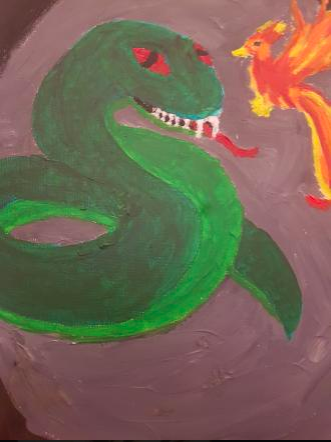
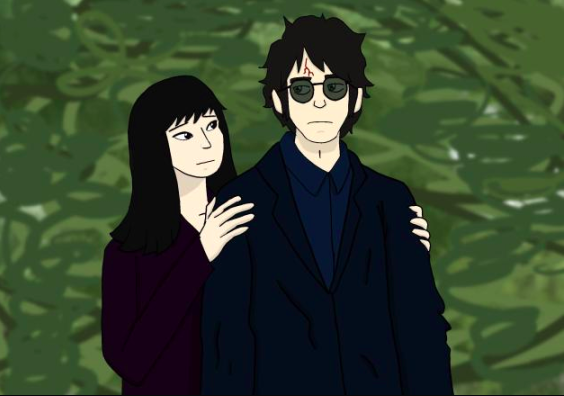
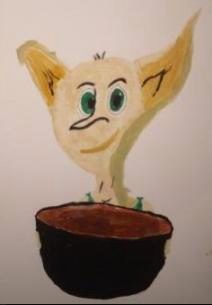
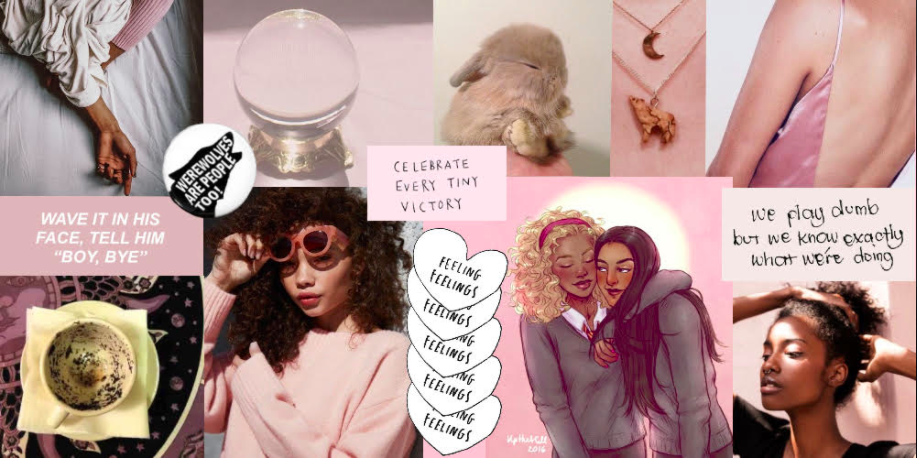
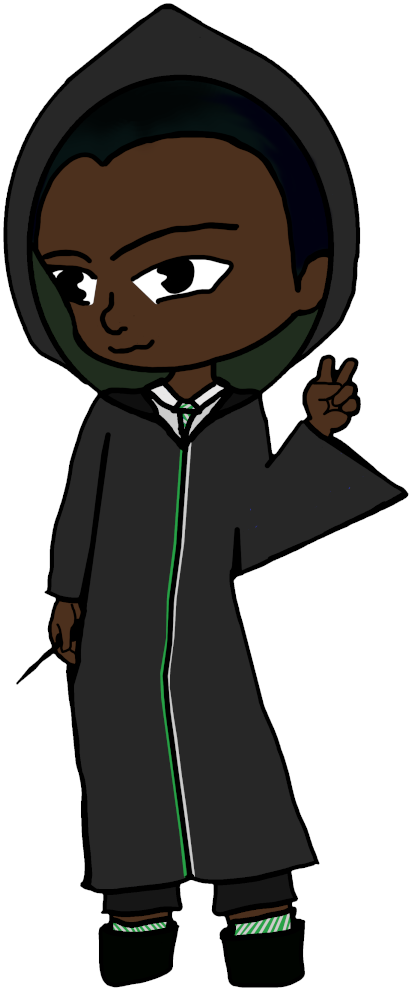
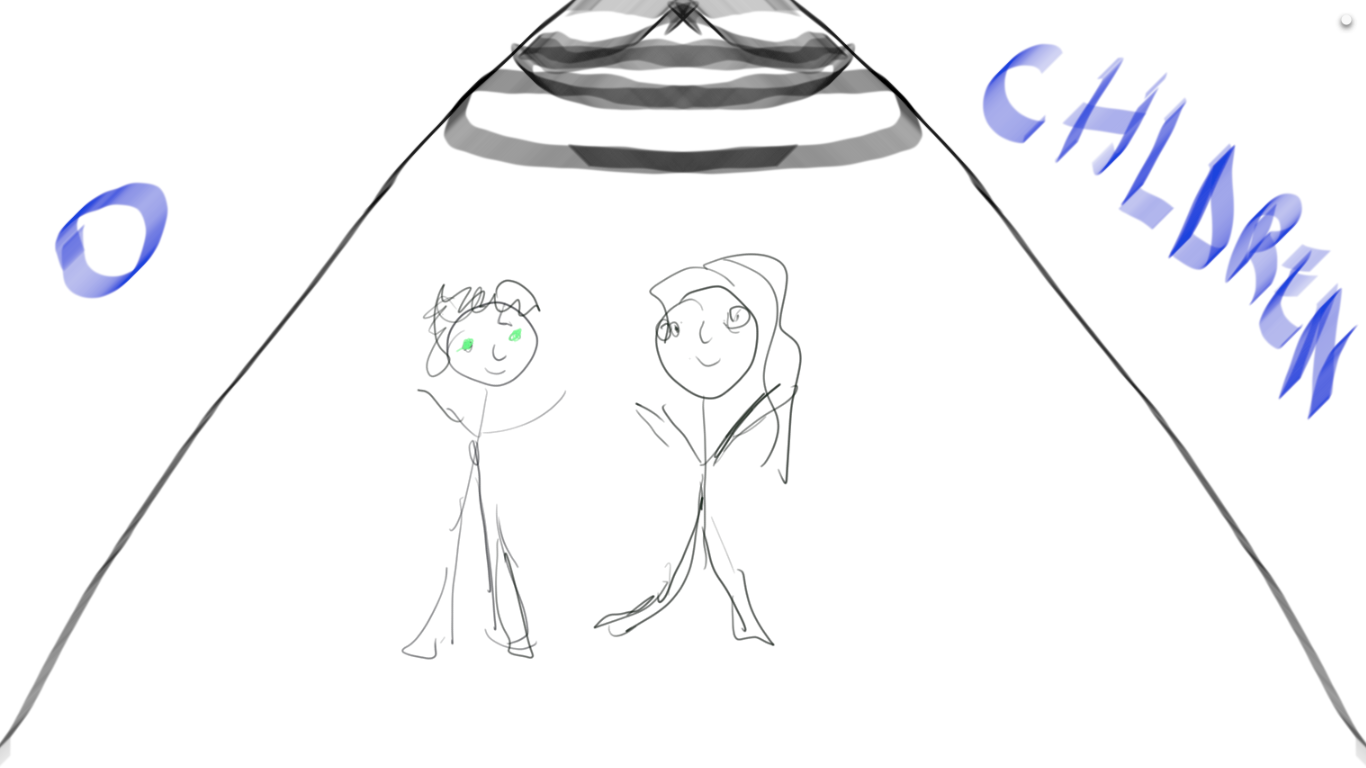
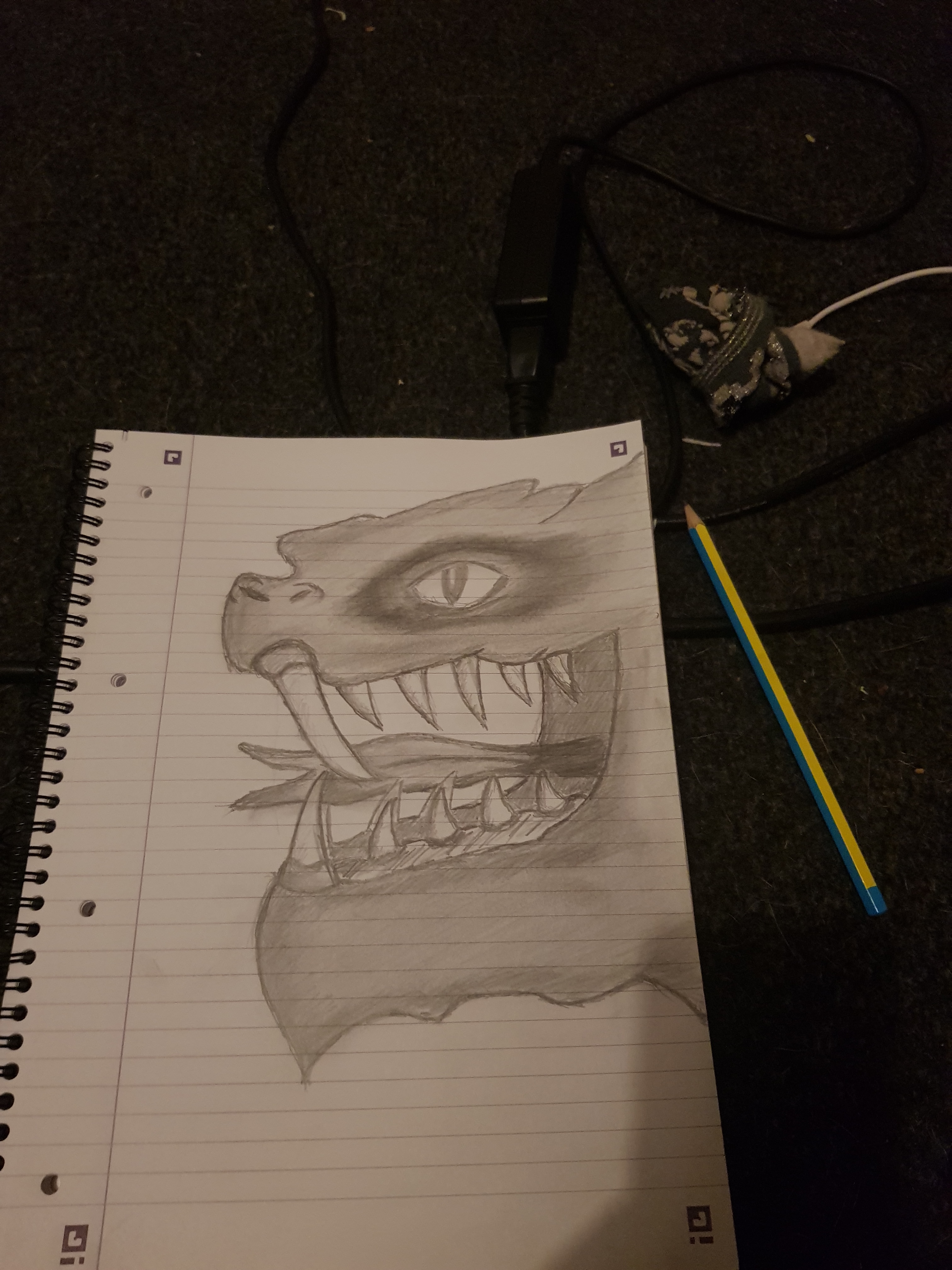
I have started recieving a lot more general art submissions. This round, I have published LoverLoverLover’s Lavender Brown Aesthetic, LittleTee’s Blaise Chibi, Claude Amelia Song’s scene depiction, and StarryWriter’s Basalisk. Everyone got 5 points!
You should email them to wizardingschoolchampionship@gmail.com and include: Pen name; School; Year.
Dear Severus Snape
I have decided to round up my hate mail and pay it forward. I have special permission to be as mean and uncouth as I wish. It’s only for one edition, so I thought I would make the most of it.
Dear Half-Blood Prince,
Do you still use that absurd nickname? Now that I’m dead, you cannot get to me in any which way, which means I can inform the public that you wasted hours developing these to look cooler (yet failed).
The Melancholy Prince, Potions Prodigy (You really were full of yourself.), and Bat-Man. The name seems Muggle, but I’m not the one embarrassing myself with it.
I also recall you were dressed in a feathery neon-pink bathrobe my brother and his friends transfigured your uniform into. Although… the bathrobe did wonders for your vampire-like complexion.
Toodles,
R.A.B
Dear R.A.B,
At least I didn’t cry over my house-elf. ‘B-b-but S-severus, the D-D-Dark Lord wants to use K-K-Kreacher. H-He’ll die!’
You’re a pathetic, whiny baby, just like your big brother
The Potions Prodigy
Dear Snivellus,
Why are you always stalking me and Lily when we’re out on a date? I’ve seen you the last three Hogsmeade weekends following us everywhere we go. It’s really rather annoying and I wish that you would stop. So does Lily if that helps? In closing, please don’t follow me and Lily any more or there will be trouble.
An Annoyed Prankster Boyfriend Who Has Your Number
Dear Annoying Prankster,
You call me a stalker, but you harassed Lily for years, despite how clear it was that she despised you. I, her best friend, clearly grew suspicious when she took an interest in you. I know you did something.
I’m merely watching for symptoms of a curse, potion, or hex—whatever it is that’s clouding her judgement. I’ve even read up on Stockholm Syndrome.
Trust me, I will set her free!
From Lily’s BEST friend.
Dear Sni – Sev,
Quick question, who’s your tailor? I fancy getting myself some robes like yours so I can flounce around like an overgrown dungeon bat…
Yours not so sincerely,
The gorgeous Marauder
Dear the mangy mutt-like Marauder,
A clue: it’s the man in the robes, not the tailor that cuts them. Not that you would know. They wouldn’t match your flea collar.
Severus Snape
Dear Severus,
What are you doing on this news column? You are an over-grown, greasy dungeon bat. You hate children and people, so why are you of all people giving advice?!
A disgruntled Ronald Weasley
To the Ginger One,
As my therapist says regularly, you’re deflecting. Clearly, you’re more upset about people’s perception of your own heroics and intellectual prowess. Don’t take it out on me because you’ve done nothing useful since getting knocked out by McGonagall’s chess set!
Professor Snape
Dear Severus Snape,
Turns out Harry Potter’s having a baby with Ginny Weasley. DO YOU KNOW HOW MUCH QUIDDITCH TALENT THAT CHILD HAS IN ITS GENES? As soon as that child is in Gryffindor, get ready to kiss the Cup goodbye. For good.
Dear Minerva,
Can’t wait to see your face in eleven years.
Sincerely,
A Proud Gryffindor Mama
I don’t know if you’re aware, but I am now Headmaster of Hogwarts. I can ban anyone I like from playing Quidditch, and we all know I am not above playing dirty to win.
Your Boss
P.S. How long has it been since Gryffindor won the Cup… ?
Interview

Welcoming the most optimistic realist in the nation, writer of tales that will intrigue and amaze, friends call her a pseudo-shrink who needs to get the degree: Miakoda from Durmstrang!
So, first question: Was being a writer your dream job when you were a kid?
First, I wanted to be a pediatric neurosurgeon (with a side of teaching at med school and raising six kids lol).
When I discovered that, as much as I enjoyed math and science, I sucked at those subjects in class, I shifted my interests to teaching, focusing on elementary/special ed. This further shifted to the PreK-Kindergarten setting—something I would never have imagined when I was younger.
Ambitious! How did you get into fanfiction?
I was looking up alternatives to HP canon when I first found fanfic. I love how deeply fanfic authors delve into what interests them. I can read a summary and then find myself right in the thick of things because of presumed background knowledge. Done right, this can be splendid. Done poorly, I back away slowly, lol.
Knowing that, what is your favourite Harry Potter thing to read about?
I love anything that digs further into the cultures of the magical world. This can vary from creatures (fics with goblins, house-elves, or werewolves as main characters) to looking at pureblood society from a different angle. I love character build-up, originality, twists on familiar tropes…
The series did leave us with a wide world to discover. What has been your favourite story twist?
Mine or someone else’s, haha? Check out my Who Killed the Charms Professor one-shot.
Will do!
Who are your favourite and least favourite Harry Potter characters and pairings?
There was a time when Umbridge would have solidly made the list of least favourite. Then I wrote a fic giving her a backstory, and I can enjoy her if done correctly. I’ve yet to see a Pettigrew centered fic that I can swallow, but I’m not willing to say never.
Remus and Dobby are probably some of my favorite characters, as is Severus in the right circumstances (depending on the fic, ya either hate or love him, lol). I would never have imagined accepting a Dramione headcanon, but my fic for round 2 was just that.
If the author writes it in a way that makes sense (especially if it plays to my hurt/comfort interest), I’ll give it a try (just no teachers with current students, please).
What do you think is needed for the kind of character arc you gave Umbridge to make sense?
Internal consistency and backstory is the main aspect. Umbridge is very nearly a blank slate. Nothing (barring going massively AU) is going to stop her evil actions. However, explaining why those actions take place can make for a more sympathetic character. In my case, I used a mixture of an abusive childhood, forced behavior for a good cause, and a magic spell to turn her into who we see in canon.
A friend of mine used an abusive childhood as the primary trigger alone. Both can work to make audiences somewhat sympathetic (for example, think how some people seek to redeem Voldemort).
There are definitely elements that can explain a person’s behaviour without excusing it. You also mentioned Dramione. What would you say are the pros and cons of that relationship?
Starting with cons: Dramione within the canon setting (meaning as Hogwarts students) does not make sense without a massive rewrite of characters and situations. If you go AU enough, it can work (for me) but can be tricky to do while keeping characterization consistent/similar enough at heart to avoid turning one or the other into an OC with a familiar name.
Post-war, there are scenarios that could bring it about, but I personally would be unable to write a story from beginning to end about their relationship.
Without a bit of post-war maturity or an AU setting, it does stretch the enemies to lovers trope a bit far.
Other than student/teacher relationships, is there anything about a story that might make you want to stop reading it?
Outside of things that I wouldn’t click on purely due to the summary, my biggest issue would be a lack of plot and character building.
I am big on having characters do things that make sense for their headspace at a given time. In some of my main stories, Harry is significantly different than in canon, but I take the time to show and explain how he becomes the way he is. Give me the why, and you can shift things quite a bit for me.
Writing summaries can be tough. On that note, what pitch would give the favourite story you’ve written?
I Know You’re a Were Verse (on my ao3 account) is a series of stories about an AU Harry whose unconventional childhood (with house-elves and goblins abound) leads to his making changes left and right for the betterment of the magical world.
If we’re talking one-shots, Angel Wings, on my fanfiction.net account, tells the tale of Helga Hufflepuff’s House of the Forgotten, a home she ran for kids before the creation of Hogwarts. Be warned, I’ve been told that it is quite sad.
I’m trying to cut down on fanfiction, but I’m going to end up reading those. How do you come up with creative ideas like that?
Prompts from competitions help. My brain tends to look at an idea, think about how everyone else is going to use it, and then takes two hops, skips, and jumps in a different direction.
Clever brain. With an advantage like that, what is your writing dream?
What isn’t my writing dream? I’m working on multiple original works that I’m in the process of getting published and am addicted to receiving reviews on my pieces.
I think the best compliment I could get would be being told that my stories shifted someone’s perspective on something—be it a real-life issue or just how they perceived a character.
Given what you’ve told me, I’d say that your stories have probably shifted quite a few perspectives. Is that something you look for in the stories you read?
It depends a lot on the situation/mood I’m in.
Let’s go with a mystery that keeps you guessing but technically gives all the relevant clues as it goes along. Something with a nice side helping (or main dish) of hurt/comfort with lots of character development and consistency. I don’t need to know every character’s backstory, but I expect the author to keep the details straight for a consistent psychological profile.
If we’re talking about classroom use, I want to see more stories that feature minority characters (especially as concerns disability) in ways that feel realistic while maintaining age appropriateness. Kids want to see themselves in the books they’re given, even if the character has something that makes them distinctly different.
Are those the kind of stories you want to write, children’s stories that focus on minority characters and disabilities?
They are one of the areas that I focus on. One dream is to write a series of stories that push for the normalization of what the world would call abnormal (regardless of statistics).
Let me know when those hit the shelves! I look forward to reading them.
How would you describe your perfect book hero or heroine?
Someone who isn’t perfect but wants to help and change the world around them, that’s the hero/heroine for me. They won’t ignore a situation if someone is being marginalized or treated poorly even if everyone expects them to.
There’s been a surge of late, especially in YA, of morally grey characters, like in Six of Crows or Mistborn. How do you feel about those characters?
It depends on how they’re done. YA, in my opinion, should have elements of the real world (including morally grey behavior), but it should not lift it up as the ideal.
Fair point. That isn’t the kind of example writers should be setting for young people.
We’ve learned a lot about you today. Are there any other behind-the-scenes tidbits in your life that would surprise your readers?
I have spina bifida and a variety of comorbidities. As a result, I’ve had somewhere between 15-25 surgeries.
Wow. That’s a lot.
Time for Would-You-Rather: Would you rather write in the future tense or use the second person POV?
I’m gonna go with the future tense, but to be honest, it depends on where the story takes me. If it wants to be written in the second person, that’s fine. If it wants the future tense, that works, too. If it wants one character in the present tense and the other in the past tense, I’ll do that.
That kind of adaptability is a real skill!
Either-Or: TV show or movie?
Now that’s just not fair! It depends on the day and the shows/movies in question, don’t you know!
I do know, haha!
Last, but not least, what will you be sharing with us?

This is a picture of the thylacine, a presumed extinct animal that is one of my favorites. It’s a carnivorous marsupial that can unhinge its jaw like a snake.
Lovely, but I wouldn’t want to come face-to-unhinged-jaw with it!
Now everyone, say hi to Be11atrixthestrange! She has 3 harry potter tattoos, is obsessed with dogs, and still doesn’t understand how to use commas.
This is your first season at the IWSC. What has your favourite part been so far?
Definitely the unique prompts! Trying to fit multiple prompts into my stories has challenged my creativity and forced me to write about characters I would never have considered before. I used to exclusively write about the trio, and now I’ve written about the Marauders, Petunia, and even Ludo Bagman!
And written them well. I always enjoy reading your stories! What is the most challenging part when writing characters like Ludo Bagman?
We don’t get a ton of information about characters like Ludo, so there’s a lot of freedom when writing them. Sometimes they can feel like an OC, which comes with its own challenge of extra characterization.
That’s very true.
So, we did a good job with the prompts, but is there something you would change for season 4?
Honestly, I’ve been really impressed so far! I might suggest incorporating some more light-hearted themes, but other than that, I’ve found this competition to be extremely well organized.
We have favoured darker themes this season, haven’t we? What has your favourite theme been so far?
Hogwarts’ ‘abuse’ theme was dark, but it allowed me to write difficult content, and it challenged me. I liked that round a lot. I was nervous because there’s a lot to consider trigger-wise with stories like that, so I had to put some thought into how I approached it. I also loved the lies/secrets round because it was pretty fun to explore how a few white lies can spiral out of control!
How did you get into fanfiction?
I’ve been reading fics since I was young (10 or 11!) but just started writing it last year. I love how pure of an art form it is. People anonymously write entire novels for free simply because they love writing. It’s such a gift!
I see writing fic as a way to contribute to the fandom. Since I’ve devoured so much content, I feel like I should pay it forward by creating my own.
That’s a lovely way of putting it. I’ve noticed that your writing is entirely focused on Harry Potter. How old were you when you read the books?
I was 8 when my dad started reading them to me, and we read them all together as soon as they came out! Since then, I’ve probably re-read the series six or seven times, and I’m currently finishing up another re-read.
What makes these books so pleasant to reread?
I definitely escaped into the HP world as a kid, and it’s a comforting place for me to go back to. It’s so immersive, and I always discover new information during each re-read.
What do you look for when you switch to fanfiction?
So many things… I love reading/writing post-war stories because we never get to see that in canon. The trio would need a lot of time to recover from their trauma, and all we get is, “19 years later”, and everything is great! I need to know what happened in between!
I also love the interaction (or lack of interaction) between Muggles and Wizard-kind. One of my favorite chapters in HBP is the opening chapter from the Muggle Prime Minister’s point of view. I love how much it expands the scope of the story. I like challenging myself to incorporate Muggles into my stories!
It is a huge universe to explore. What are some of your favourite post-war improvements you imagine the wizarding world would make, or do you prefer stories that focus on characters healing?
I love stories that focus on characters healing. The Weasley family healing after Fred’s death, Hermione seeking out her parents, and Harry figuring out how to be “normal”. It’s all so real and human for a fantasy world.
Who are your favourite and least favourite Harry Potter characters and pairings?
My favorite pairing is Romione, followed closely by Jily. I prefer canon pairings (although I love Wolfstar!) because we already have some context about how they’d interact romantically.
I love writing couples that aren’t perfect because there’s room for them to grow and adjust their dynamic as they mature. Both Romione and Jily are left pretty open to exploration—there’s a huge gap from Ron and Hermione’s first kiss all the way to 19 years later, and we are told (not shown!) how James and Lily progress from enemies to lovers, but this is through Snape’s (maybe unreliable?) perspective. There’s just so much to explore!
You seem like a fan of the opposites attract dynamic. Why do you think that kind of relationship works so well in stories?
Ships that are pleasant all the time kind of fade into the background for me, and I need a little bit of conflict. I also love seeing how two people can slowly fall in love by getting to know each other.
So is your favourite fanfiction story Romione or Jily?
Romione! It’s To Know You Is To Love You by CoyoteLaughingSoftly. It opens with the pair at couples’ counseling. They’re on the brink of breaking up, and it’s a last-ditch effort to save their relationship. They try a new counseling method where they watch the other’s entire life through memories in a Pensieve, and we get to witness their reactions.
It gets interesting when we see moments they both experienced from two different perspectives. We also explore a lot of “missing” moments. Ultimately, they develop a better understanding of each other and get more context for each other’s actions throughout their relationship.
Sounds interesting!
What do you think makes a good story?
Characterization!! I’m obsessed with it. If characters are written accurately and given lots of depth, count me IN. I especially love stories that make me sympathize with characters I wouldn’t normally want to. Also, originality… Sure, I will read 5000 post-war or tent angst Romione stories and will love every single one, but give me a fresh take, and you’re my new favorite writer!
What is the freshest take you’ve seen recently?
An older fic, but the story Horcrux by Alternatively explores how the trio’s dynamic shifts after the war when Harry’s no longer a Horcrux. The locket affected all three of them, and they find that Harry had a similar effect on those around him. Poor dude! But it was an interesting idea.
Sounds like it! Fresh takes and great characterisation aside, what else do you love finding in stories?
Unique imagery and cool facts! I recently devoured a Muggle!AU where Hermione was the manager of a jewelry shop, and not only did the author describe Hermione’s hair like a ‘drunken octopus’, but I learned so much about gemstones! I was a very happy reader. (For context, the fic is Diamonds in a Rhinestone World, by unablearethelovedto_die)
While you’re giving reading recommendations: What is your all-time favourite book?
I can’t name one, so I’ll call out a whole genre… I’m a sucker for psychological thrillers!
That’s not an easy genre to write. Have you ever tried?
I’m currently trying. I’m plotting and outlining, but trying to work my way out of plot holes… those are easy to come by in that genre.
I can imagine!
What is your favourite story that you’ve written?
Probably 12 Fail-Safe Ways To Charm Hermione Granger. I found my voice through this one and am quite proud of my characterization.
Elevator pitch: Ron re-reads his infamous book ‘12 Fail-Safe Ways To Charm Witches’ and reflects on how he implemented the tips to charm Hermione. This fic tells part of their post-war story mostly through Ron’s flashbacks and explores both their developing and established relationships.
40,000 is impressive! You’ve already mentioned how amazing it is when people write novel-length stories for fandoms, so I won’t reiterate it. Do you have plans for writing an original story?”
I do dream of writing a novel!
Nice! Do you have any ideas for it?
I do! I have a setting, a general plot, and some characters outlined. I’d say more, but it’s top-secret! 😉
Let me know when it hits the shelves!
What is the most difficult part about writing for you?
Probably the physical discomfort of staring at a screen. I work from home on my computer, so at the end of the day, it’s a lot of screen time…
Have you thought about writing your stories by hand?
Honestly, I think that might be worse! Writing by hand is kind of a use-it-or-lose-it skill, and I’m definitely losing it. I also heavily edit while I write… I might edit a sentence 3-4 times before deciding what arrangement of words I like best. Writing by hand makes that harder.
Do you have any writing advice that you think everyone should know?
Just keep writing. Every word you write helps you improve. If you have writer’s block, then read! Reading improves your writing too.
Words of wisdom right there!
We’re on to the Would You Rather question, so: Would you rather read an excellent story that is poorly written or read a poor story that is excellently written?
Probably an excellent story that is poorly written. I value a writer’s creativity more than their technical prowess.
And Either-Or: Romance or adventure?
Romance is an adventure (for your heart).
You’re not wrong, haha. What will you be sharing with us?
I’m currently playing “Dance With Me” by Shockley on repeat!
The lair of madam Pince
Judges Picks

Year 1: It’s Hard to Love a Narcissist by Socrates7727
Lucius Malfoy taught his son what it is to love and be loved. The trick is to lie, to break promises, to reminisce over every failure and flaw. The trick is to never apologise and to never admit to a wrongdoing. Draco does not want to be loved like this.
Year 2: Finding Family by Leprechaun123
Theodore Nott is on a quest to prove to the world that he is not like his father. It’s been a boring quest so far, involving nothing more exciting than working in a Muggle café. But when Luna Lovegood meets with a Squib, Theo’s curiosity is piqued. How can he say no when Luna offers him a purpose?
Year 3: A Madness Most Discreet by Lady Sloane
Lucius Malfoy kissed Molly Prewett during their prefect rounds. That alone is bad enough, but then Molly kissed him back. She knows it’s a bad idea; she knows that a war rages and that she and Lucius will end up on opposite sides. What they have cannot last, yet still, she hopes.
Year 4: The Narcissism of Lucius Malfoy by DrarryMadhatter
Draco Malfoy is to receive the Dark Mark. To Lucius, it’s a chance at redemption, an opportunity for the Malfoy name to rise above all others. Narcissa has no such delusions. She knows that her son will not survive this, and she won’t let that happen. But disobedience has a price.
Year 5: Waiting For You by Notyou21
Cheating is a given with Slytherins—cheating at cards, during arguments, in relationships. It forces your opponent to adapt and evolve. Narcissa Malfoy is unhappy with her marriage, so she does the only reasonable thing. She runs into Arthur Weasley at the Leaky Cauldron. He isn’t perfect, but he’ll do.
Year 6: Cupid, Thy Name Is Blaise by Ash Juillet
Blaise Zabini does not always understand his best friend, but if Theo has a crush on Hermione Granger, then Blaise will help. Whether Theo appreciates Blaise’s help is another matter. Spellbook in hand, Blaise devises a plan. After all, what girl doesn’t love a boy who only speaks in puns?
Year 7: A CottageBy The Sea by SeleneBlackburn
The Delacour women’s Veela heritage was born from a curse. Bill Weasley will do anything to make his wife happy, even find a way to break a curse that runs deep within her veins. But Bill forgot the most important rule of curse-breaking: Know everything before you attempt anything.
How to Get More Views and Reviews on Your Stories:
Keep the Ball Rolling
Form—What Will Turn Readers Off at a Glance:
Did you know that editors can tell if a manuscript is worth their while with only a glance at the first page and a quick read-through of the first paragraph?
That process may take a little longer for the average reader, but they’ll catch on sooner than you think, so don’t get the idea that you have the time to ease into your story.
- Bad paragraphing.
More specifically: paragraphs that are huge walls of text, stories whose paragraphs are all only a line or two long, and paragraphs that are all the same length.
If you aren’t sure how to properly paragraph your story, check the writing school article in issue 2 of the WWN.
Walls of text are hard on the eyes and give the impression of a slow-moving story. A paragraph should be no more than five or six sentences long (although this isn’t a hard and fast rule). Most readers will see one long paragraph or, worse yet, a text without paragraphs, and they’ll backtrack before you can get a word in.
They’ll also stop reading if there’s a monotony is the story’s structure (i.e. every paragraph being the same length). If every paragraph is three sentences long, it gives the impression of sameness and creates a repetitive flow that isn’t pleasant to read.
Too many short paragraphs gives the impression of a lack of detail and depth within the story.
- Chapter length.
2,000 to 7,000 words is generally the best length for a one-shot or a chapter. If it needs to be longer or shorter, that’s fine. Don’t force yourself to respect that word count.
The goal is to give readers enough content without cramming a novella into a single chapter.
Each chapter should move the plot forward. If you can delete the chapter without there being consequences (the story becoming incomprehensible), you need to rework it to make it essential to the plot’s advancement.
- Paragraphs written in italics.

Italics aren’t pleasant to read, so use them sparingly.
Use italics when there’s an emphasis on a word, or you’re directly relaying a character’s thoughts (one sentence maximum).
Avoid using italics for flashbacks or dream sequences because those italicised paragraphs may make readers change their minds about continuing with your story.
- A lengthy Author’s Note.
Readers want to read stories; they don’t want to read paragraph upon paragraph of the author explaining one detail or another about their story. Keep your A/N short and personal.
→ A/N at the beginning of the chapter:
- A brief summary of what happened in the previous chapter (highly recommended).
- Give the reader a heads-up about previous chapters that have been changed.
- Trigger warnings (specific to the chapter).
- Give the reader a brief summary of what will happen in the chapter (one sentence max; written like a teaser).
- Specific definitions that readers need to know about.
- Special shout-outs to readers/beta readers who helped with specific plot points in the chapter.

→ A/N at the end of the chapter:
- Posting-schedule changes.
- More info/links about information presented in the chapter.
- A statement saying that you hope readers enjoyed the chapter and that you’d love to hear their thoughts (ask them a specific question for more pointed feedback).
Competition or challenge related information can go either at the beginning or at the end (check the rules and regulations in case one is preferred over the other).
Remember to use proper spelling, punctuation, and capitalisation in your A/N, and try not to copy and paste the same general A/N into every story you write. You don’t want to appear repetitive or unoriginal.
Content—What Will Turn Readers Off in a Matter of Words:
Readers have had a quick look at your story and haven’t spotted anything at a glance to make them run for the hills. Let’s keep it that way by giving them content that won’t make their inner English teacher cringe.
- Spelling.
You owe it to yourself and to your readers to spell-check your story before posting it. It’s one of the clauses in fanfiction.net’s Rules and Guidelines.
Run your text through Grammarly or Hemmingway or Scribens or any other of the dozens of websites like them, but don’t rely on these programs too heavily. They occasionally suggest things that are incorrect. Always make sure to reread your story before posting it.
- Grammar.
Certain grammar errors are more easily noticed than others, but it’s best to avoid them all so that you don’t turn off any potential readers.
Grammar Bytes is a fun website with interactive exercises to test your skill.
- Punctuation.
You don’t need to be a punctuation god to write a good story, but it does help. I like using the grammarbook website. It’s straightforward and doesn’t underestimate examples.
- Consistency.
Don’t waver between past and present tense—pick one.

The same goes for the POV. Don’t change it at random. You can switch the POV character from chapter to chapter or after a line break, but do not do it without a visual aid. Check the Handy Hints article for more tips.
Also, don’t mix British English and American English.
If possible, find a beta reader who’s better at SPaG than you are, but do not use that as an excuse not to improve. Any decent beta reader will tire of helping you if you don’t learn from your mistakes.
The First Paragraph—i.e. the Kill Zone:
When it comes to views and reviews, fanfiction is a competitive market, so you need to be better than your competitors from the very start.
Here are a few things to do and to avoid doing if you want a killer opening.
- Introduce your main character.
The POV character becomes the reader’s eyes and ears in the story.
If you start your story with several paragraphs of description or background information, the reader will feel detached from the plot and they will lose interest.
Your POV character’s name or pronoun doesn’t have to be the first word of your story, but it should be present in the first paragraph or at the start of the second paragraph so long as the first one isn’t too long.
- Don’t start slow.
Your first paragraph has to introduce a detail that shows conflict. There has to be something unusual for your POV character to react to because people don’t want to read about day-to-day life.
You don’t have to start your story with an explosion.

Conflict can be anything: unexpectedly waking up to an empty bed, a small child running unsupervised through a crowd, flocks of owls flying during the day. Your first paragraph should be an interruption, however small, of ordinary life.
An intriguing first paragraph does not mean a long first paragraph. It’s best to keep it short so that readers don’t get put off.
- Let your POV character react to the conflict.
Show (don’t tell) the character’s emotions, and try to make their reaction interesting.
The sooner the reader understands how the POV character ticks, the sooner they’ll become emotionally involved in that character and your story. That involvement will happen faster if readers find your character’s reaction intriguing.
Keeping in mind that J.K. Rowling wrote a book for children and that a lot of it is therefore told instead of shown, Mr and Mrs Dursley being proud of how perfectly normal they are works well as an opening sentence. That detail stood out and made readers curious about those two characters. It also helped to build up the interruption of their normal lives, what with the owls, the witches and wizards on the street, and the child left on their doorstep.
If your first paragraph sparks curiosity, readers will want to read more. They’ll want to solve the mystery or find out more about these unusual character/s.
- Don’t info dump.
Readers want action. They don’t want an explanation of the story’s concept, main character, or setting. They want to live the story, which they can’t do if all you’re giving them is a history lesson.
Don’t world build or AU build in an expository paragraph. Showing the character interacting with the world around them is more interesting to read than a story that is being told.
You could start your story with a list of things that changed after Voldemort’s defeat, or you could have your main character walk down Diagon Alley and let readers see those changes. The latter option is more interesting because it is character and action-driven.
Don’t give a rundown of your character’s background, whether it’s a canon character or an OC. Readers want to discover characterisation as the story progresses, which means you should avoid using adjectives to describe them and instead introduce aspects of their personality bit by bit. Readers should feel like they’re getting to know someone.
We all know that Hermione is studious, not because it is ever outright stated but because she always knows the answers to teachers’ questions and likes going to the library and doing homework.
Readers don’t need to know every little detail straight away. Trust your readers and don’t spell it all out. Let them discover the story.
- Set the tone.

Your story’s theme, genre, and energy should be present from the very start and remain consistent from that point onwards.
Don’t make false promises. If your story has an angsty beginning, readers will expect that to be the overall tone. The tone can evolve, but it has to do so naturally in a way that readers can follow and understand.
- Don’t introduce too many characters at once.
This rule is more flexible with fanfiction because other than potential OCs, your readers already know all the characters, but it’s best not to overwhelm them right from the start.
How Not to Start Your Story:
These story beginnings tend to turn off readers.
- Prologue.
A prologue either serves as a flashback, an info dump, or as a teaser for action to come.
– The flashback: It’s more acceptable than the others so long as it’s essential to the story. Make sure that you write it as you would the rest of the story so that it isn’t immediately apparent to your readers that it is a flashback. I would recommend doing what J.K. Rowling did and call the flashback “Chapter One” so that readers won’t immediately turn away at the sight of the word “prologue”.

– The info dump: Don’t do it. No matter how necessary you think it is, you’re wrong. Start your story with action and feed the information to your readers bit by bit as you go.
– The teaser: It’s more acceptable than the info dump, but it’s risky. If you feel the need for this type of prologue, there’s a chance that your main story starts too early, that there’s not enough going on at the beginning of your fic to keep readers interested.
- Dialogue.
Starting with dialogue can confuse readers because they’ve only just begun reading and don’t know who the characters or what’s going on.
- Dream sequence.
Including your character’s dreams is a cheap trick at the best of times, but it can ruin the beginning of your story. It’s easy to make a dream interesting, but your readers want the character’s reality to be interesting.
- Waking up to an alarm clock.
There is nothing about this kind of opening that is exciting or unusual enough to grab the readers’ attention.
Side Note—End Your First Chapter With a Bang:

It doesn’t have to be a literal one, but if you want readers to keep reading, it’s wise to end your first chapter on a pivotal moment. This doesn’t apply to one-shots; those require resolution.
If the last sentence of your first chapter doesn’t spark your readers’ curiosity, they may stop reading and forget all about your story.
You need to leave a lasting impression.
In the next issue of the WWN, we’ll be looking at how to work with a beta reader.
Couples theapy

Are you ready for another round of Couples Therapy? We have something a bit more fun this time, as I have brought together two former lovers: Ron Weasley and Lavender Brown! Let’s get started!
Hope: I have a question right off the bat, and it’s for Lavender. The last time anyone saw you, you had been mauled by Fenrir Greyback. What happened afterwards?
Lavender: Well, Madam Pomfrey fixed me up, didn’t she? My injuries weren’t so bad because Greyback wasn’t transformed. I do sometimes prefer uncooked meat, rather like that brother of Ron’s, what’s-his-name.
Ron: Bill. His name is Bill. I didn’t know that—that you went through what he did. I’m sure he’d offer to help you if you needed to talk or something…
Ron trailed off, leaving an awkward silence that your host picked up quickly.
Hope: Let’s not beat around the bush then, shall we? You two ended your relationship on an extremely bad note. Have you seen each other since you left school?

Ron: Well, there have been parties that we’ve both been invited to, and sometimes I’ll see her at the Ministry, but it’s been from a distance. I’ve been too nervous about facing her until now.
Lavender: It was very hurtful when you broke up with me, Ron, and it’s been awkward seeing each other, even just casually. I work in the Obliviation Office, so sometimes I get called to a scene where Aurors are working. That’s been the extent of our interactions so far.
Hope: So, things are strained still. Are you still jealous of Hermione, Lavender?
Lavender shakes her head.
Lavender: I was pretty jealous of her for a while, but none of us were properly ready for relationships back then, we were so immature. That, and I started dating again. It helped me see that I could move on from one relationship we were pursuing for selfish reasons.
Ron turns red and avoids our eyes.
Ron: I am sorry about that, Lavender. I was stupid and immature and… well, you know it all. I stuck with you because I couldn’t deal with Hermione possibly liking someone else. I should have got up my courage to ask her out instead of staying with you as a coping mechanism. I should have apologized a while ago, I know, but there you are.
Lavender: I’m sorry, too, Ron. I was glad you liked me because you were Harry’s friend, and I thought some of that popularity would rub off on me. It was silly, but I suppose it was expected of a teenage girl.
Ron: Yeah, that’s why I plan to keep my children out of the dating circle as long as possible. Maybe try and keep them from making my mistakes.
Hope: Well, all you need to do is teach them the proper things to value in relationships, you know. Use your experiences to teach them better.
Ron: That’s true, of course. I’m just glad that’s still a while off!
Lavender: I have to agree on that. Dean and I are nowhere near ready for children.
Hope: Kids are a big decision. I did have one more question, but you kind of answered it, so I guess I’ll modify it. Lavender, how is your relationship with Dean?
Lavender: It’s wonderful! He is so sweet, and he pretty much can read my mind and know what I’m thinking. It’s a great relationship, and I’m glad we’ve come together.
Hope: That’s wonderful! I hope to hear more from you guys in the future. I’m glad we could help you two make amends. As for the readers, stay tuned next week for the final Couples Therapy of the season! Who will it be? Read to find out!
Writing Q and A with Ash

Q
What are your top tips for editing a story?
A
Tip n°1:
Wait until you’ve finished the first draft before you start editing. The editing process will be more beneficial if you know how the story plays out.
Tip n°2:
Take a break after you finish the first draft and let your story sit for a bit. This trick will help you spot problems with consistency and readability that you’ll miss if the story is still fresh in your mind.
Tip n°3:
Have editing rounds and decide what each round’s goal will be.
For instance, you can choose to focus your first editing round on fixing all “show, don’t tell” issues, your second round on making all characterisation consistent, and your third round on getting rid of repetitiveness, redundancy, filter words, and overused phrases (overused phrases happen a lot with body language; keep track of how often your characters sigh, shake their heads, etc.)

If you try to focus on too much at the same time, you’ll miss something, so go slow and make sure that you love your story enough that you won’t mind rereading it a few times.
Writing without revising is the literary equivalent of waltzing gaily out of the house in your underwear.
Patricia Fuller
Q
Would it be better to use or not to use italics for character thoughts if you already used singular quotation marks?
A
There are three ways you can relay your POV character’s direct thoughts.
- Use italics: This is a bad idea.
- Use dialogue tags: This is a bad idea, he thought.
- Use dialogue tags and quotation marks: “This is a bad idea,” he thought.
Using single quotation marks for thoughts and double quotation marks for spoken dialogue isn’t a recognised technique because it isn’t consistent.
Although the Chicago Manual of Style favours the quotation marks method, many readers dislike it because the thoughts can easily be confused with dialogue, so I recommend using either italics or dialogue tags.
Q
How do you write good dialogue that’s not boring and conveys a character’s personality, attitudes, etc?
A
Dialogue is one of the more complicated aspects of creative writing because it has to sound like a real conversation without imitating how real people talk. When we speak in real life, we repeat ourselves, go off on tangents, and lose our train of thought, all of which are best avoided when writing.
1) Writing dialogue that isn’t boring.
Step 1: Avoid “normal” conversations.
Small talk is dull, so dispose of it in your writing. Dialogue, like the rest of your story, should be interesting.
Real-life:
“You look lovely today.”
“Thank you.”
This scenario doesn’t make for great dialogue because there’s no conflict, and it’s too predictable.
Fiction:
“You look lovely today,” she said.
He didn’t look at her as he muttered a brief thanks and kept searching the room, looking for a more interesting conversationalist.
That scenario adds tension to the scene.
The best dialogue is indirect, meaning that when character A says something, character B doesn’t respond in a “normal” way. Certain statements and questions do require a direct answer, but whenever possible, favour something more interesting and more rife with conflict.
Step 2: Avoid repetition.
Real-life:
“It’s good to see you.”
“It’s good to see you, too.”
Not only is this exchange repetitive, but it doesn’t say anything about the characters. It’s more interesting if character B responds in an adversarial way.
Fiction:
“It’s good to see you.”
“You’ve finally had your eyesight checked, then?”
Notice that a negative response does not have to be hostile. If your character responds with humour or a strained smile, that says something about them and their relationship with the person to whom they’re speaking.
Don’t repeat information. If something has been made obvious by the narrative or a previous conversation, don’t repeat it several times. You’ll lose your readers’ interest.
Step 3: Avoid monologues.
For dialogue to be efficient, it needs to be brief, which means you need to keep your writing tight.
If you use dialogue to sneak in some exposition, keep it short and realistic. How often do you and your closest friend discuss the detailed history of your backgrounds?
Step 4: Keep this in mind.
Keep in mind that dialogue is an action sequence in your story. It’s used to move the plot forward and should have an impact on the readers’ emotions.
For every piece of dialogue, ask yourself these questions:
- What is the purpose of this exchange?
- Does it stimulate the reader’s curiosity?
- Does the exchange create or heighten tension?
- Does the dialogue build to a climax, or a turn of events in the story, or a change in relationship of the speakers?
Good dialogue should feel like eavesdropping to the reader. We get to hear what is said, and we get to see through body language what goes unsaid, all without the characters knowing we’re there.
To add conflict, give the characters different agendas. Hermione wants to talk about homework, but Harry’s only interested in Quidditch. The agendas can also be directly conflicting. Harry and co want to join the Order, but the adults disagree.
2) Writing dialogue that conveys characterisation.
Step 1: Understand speech markers.
Ideal dialogue allows readers to identify each character by the way they talk, even without dialogue tags, which means that you need to give each character their own voice.
To do that, you need to decide each characters’ speech markers: vocabulary (polysyllabic words, professional jargon, etc.), throwaway words and phrases (e.g. actually, maybe, I think, you see, I dare say, anyway), run-on sentences, sarcasm, poor grammar, omitted words, levels of energy and formality, humour, confidence, speech quirks (e.g. ending every sentence as if it were a question, stuttering, etc.)
“Beat it.” vs “I would appreciate you leaving now.”
Both sentences mean the same thing, but each gives a different impression of the person speaking.
When deciding on a character’s voice, keep in mind their background. How we grow up plays an important role in how we speak—the words and expressions we use, the grammar rules we know, how confidently we talk, etc.
Step 2: Talk to your characters.
The key to good dialogue is honesty. If this character were a real person, how would they sound? To figure that out, a lot of writers have conversations with their characters. Listen to them and take notes.
Does your character use figures of speech and expressions?
What are their mannerisms (conscious and unconscious)?
Are they self-deprecating? Are they arrogant? Remember that it’s best to show your character’s arrogance instead of saying, “He was arrogant.”
Do they use big words? If so, are they using their extensive vocabulary to show off or because they’re talking to someone whom they assume has the same knowledge as they do. The difference will show itself in their mannerisms and what they’re saying. Maybe they use those big words in the wrong context or use the words correctly but stumble over them a bit.
Step 3: Study real people.
If you aren’t sure how certain people talk, study them.
Let’s say you want to write about a politician. The best way to get their speech right is to study actual politicians. Watch their speeches, notice how they often use clichés and sentence fragments, how they talk in a roundabout way to avoid speaking hard truths.
Do not study fictional characters for this. Your dialogue should imitate real life, not fiction.
3) Dialogue tags and action beats.
Even if you get your characters’ voices right and make them say interesting things, your dialogue can still fail because of the dialogue tags and action beats that you use.
Step 1: Know which is which.
Gasping or sighing can be used as either, but keep in mind lung capacity. A person can gasp or sigh a word, not a whole sentence.
A dialogue tag uses “speaking” verbs like said, groaned, muttered, shouted. An action beat is a description of what the character does while they’re talking. Laughing, smiling, pacing, etc. are action beats.
Step 2: Said is not dead.
Keep dialogue tags simple. Whoever wrote that “said is dead” is unlikely to gain much success with publishers. You want the dialogue to speak for itself, which means that the dialogue tag needs to be non-intrusive.
“Said” is a great verb because readers barely notice it. When you start using tags like hissed, grumbled, exclaimed, spurted, cautioned, lied, etc., first off, you’re telling instead of showing, and second, you’re proving that your dialogue isn’t good enough to stand on its own.

Step 3: Avoid adverbs.
Do not use adverbs in dialogue tags. They cause the same problems as “said is dead”. A) you’re telling instead of showing, and B) you aren’t trusting the dialogue to do its job.
“You can’t be serious,” she said unbelievingly.
In this sentence, “unbelievingly” is redundant because the dialogue already shows her disbelief.
“You can’t be serious,” she said angrily.
The problem here is that the verb isn’t strong enough to convey the writer’s meaning. Change it to “shouted” or use an action beat.
Step 4: Using action beats.
Action beats are more interesting than dialogue tags. They cover facial expressions, physical movements, and internal thoughts and are useful if you want to avoid a long list of he said/she said.
However, they’re longer than tags and can, therefore, clutter your dialogue.
James grinned. “I promised you a mystery, didn’t I?”
Albus shuffled from one foot to the other, glancing around the corner at the courtyard as though the open space might swallow him whole. “I thought you meant a new secret passageway, not this.” He gestured at the courtyard but withdrew his hand quickly.
James chuckled. “Let’s go.”
Using too many action beats makes the dialogue messy and convoluted.
Step 5: One speaker, one paragraph.
Remember that one person’s speech, tags, and actions can all fit in the same paragraph, but anyone else’s speech, tags, and actions must have their own paragraph.
Step 6: Variety is key.
Try to vary your dialogue’s structure. Don’t always put the beats and tags in the same place. They can go at the beginning, middle, or end of the dialogue. Mix it up to keep it interesting.
Step 7: Know that you can sometimes forgo both tags and beats.
“How are you? Hey!”
“Sorry. I didn’t see you there.”
“I asked you how you were.”
“I heard you the first time.”
Notice how the dialogue conveys feeling even without dialogue tags and action beats? This example isn’t ideal because we don’t know who the characters are, what their relationship is, or where they are, but forgoing tags and beats is often a good idea so long as it’s clear who is speaking. It focuses readers’ attention on the dialogue.
5) Final tips.
Don’t spend too long on dialogue during your first draft.

The more you write the characters and their dialogue, the more familiar you’ll become with it. Editing it during the second draft will be easy, but if you block yourself during the first draft because you can’t get their voice right, you’re screwed.
To make sure that the dialogue sounds natural, say it aloud or mouth it. To get the most out of this exercise, read it in a monotone voice, keeping your body still and your face expressionless. Doing that will show you if you got the characters’ voices right.
Dialogue should convey a sense of spontaneity but eliminate the repetitiveness of real talk.
Elizabeth Bowen
The International Wizarding School Competition League Table
| School | Place | This Round | Judges Picks | Total Points |
| Beauxbatons | 1st Place | 234.75 | 15 | 1300.25 |
| Ilvermorney | 2nd Place | 221.5 | 10 | 1216.5 |
| Mahoutokoro | 3rd Place | 173.75 | 10 | 1156.75 |
| Durmstrang | 4th Place | 187 | 0 | 1110.5 |
| Hogwarts | 5th Place | 96.5 | 0 | 693 |

Feel free to contribute to other aspects of the paper by sending a private message to the Competition account. We are always looking for pieces of fanart, and even your thoughts or recommendations. Even if you want to send a message to someone in the competition that you think has excelled, or maybe they helped you out? Send it to Aunt Molly! Anything else should be sent to Wizarding School Championship. In the Subject should be Wizarding World News: [Name the section of the paper you are writing about] depending on what you’re messaging about.
 Wizarding World News