
- Prompts
- Handy Hints
- Writing School
- Trivia and Puzzles
- Creative Corner
- Dear Aunt Molly
- Interviews
- Lair of Madam Pince
- Character Interviews
- Writing Q and A with Ash
- League Table
Follow all important events of the International Wizarding School Championship here in the Wizarding World News. We also have a live Twitter feed, Facebook and an Instagram account for you to get day by day updates!
Prompts – Emotions
“Books can also provoke emotions. And emotions sometimes are even more troublesome than ideas. Emotions have led people to do all sorts of things they later regret—like, oh, throwing a book at someone else.”
(Pseudonymous Bosch, The Name of This Book Is Secret)
Emotions. We all have them, as do our characters. However, effectively portraying emotion when writing can be difficult. The judging guidance for emotion prompts states:
“This emotion should be a defining part of your story. If the emotion is depression, your story should feature a character that is currently experiencing it. You can also deal with that theme within the story. To gain full points, the emotion prompt should be integral to the plot.”
Prompt guidance
We have talked a lot about what it means for a prompt to be significant or integral to the plot, so I won’t spend a lot of time on it here. But here is a brief recap:
- The volume of usage does not equal significance. I could mention ten different cups throughout a story, but they aren’t significant to the plot if they are just sitting on a table.
- Make sure your prompt serves a purpose within your story and has not been used solely for extra points.
- Remove your prompt from the story and see if it still makes sense. If your plot is still understandable without your chosen prompt, it hasn’t been used significantly enough.
When thinking specifically about emotion prompts, the given emotion needs to connect to and impact your plot. It isn’t enough to mention that your character is happy, sad, or angry—how does this affect the plot? Does your character make different decisions than they normally would due to this emotion? Does the emotion cause them to damage their relationships with others, for example, Harry yelling at Ron and Hermione in Order of The Phoenix.
When using an emotion prompt, the biggest piece of advice I can give you is this: show, don’t tell.
It is effortless to say “Harry was happy” or “Sprout looked angry.” However, by doing so, you rob the emotion of its power to influence the plotline. By showing emotion you invite the reader into that emotion, giving it greater weight and significance.
Harry clenched his fists, fingernails biting into his hands. He bit his tongue to stop the sharp words so close to the surface and forced his breathing to stay even.
As Neville watched, Luna’s face transformed. Her eyes held a sparkle that had not been there before, and a faint blush bloomed on her cheeks. Most telling, however, was the way her whole body seemed to vibrate with tension as if she was holding herself back from throwing herself at him.
Instead of saying “Harry suddenly felt angry,” or “Neville could see that Luna was excited,” I have painted a picture that the reader can interpret for themself. This also increases the prompt’s significance. The character’s demeanor visibly changes, and it is easier to see how that shift affects their next actions.
Another important thing to note: for an emotion to be significant to the plotline, it should not be a fleeting moment with no consequences. In real life, our emotions influence our actions for better or worse, and it should be the same for your characters. Perhaps a confident character will make a new friend or apply for that job they had been thinking about. An angry character might pick a fight or throw something away that they will later regret.
Emotion prompts can also be used to explore important themes and societal issues. For example, the prompt: “[Emotion] rage” could be used to explore the impact of stress, slander, and war on young people, whether during or after the war. Similarly, you could choose the emotion “depression” to follow the characters in the days, months, and years after the war. Conversely, positive emotions could help the reader explore themes of peace, friendship, and rebuilding.
Emotion prompts can have a powerful effect on a story when used well. To do this, remember two things:
- Show, don’t tell.
- Have your characters act according to the emotions they are experiencing.
Handy Hints – GETTING TO KNOW ORIGINAL CHARACTERS

Characterisation is worth a good chunk of points, three to be exact. Realistic and well-rounded characters are essential to any story, and in fanfiction, this can be relatively simple. Canon characters have a clear structure that fanfiction writers can follow. However, with an original character, a little more work is needed.
There are often flaws with fanfiction’s original characters, but this article plans to give you tips to help you write the best original characters possible.
- Knowing Common Flaws in Original Characters
- Interview Characters
- Assign a Personality Type
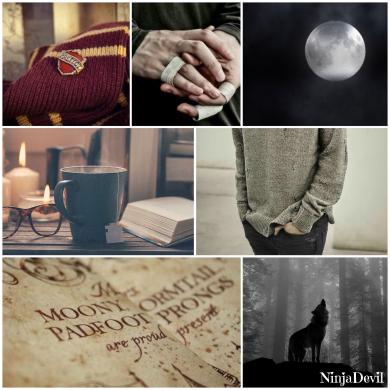
- Aesthetic Board for your Character
- One-Shots focused on an OC
- Design your Character
Common Flaws in Original Characters
Original characters that are distanced from your reader are bad for your story. The most common failings are easy to avoid with a little bit of work.

- Lack of character defects
No person is perfect, so characters without flaws ring untrue and therefore struggle to endear themselves to your readers.
- Lack of backstory
A backstory is what makes a character well-rounded. Backstory will inform the reader of a character’s motivations and answer the question, why? However, you shouldn’t dump your entire backstory on the reader in one go.
- Are not relatable
Relatability and likability are crucial. The main character can’t be disliked. Would anyone have read Harry Potter and the Philosopher’s Stone if it came from an angry, bullying professor’s perspective, a professor that hates the Chosen One?
- Lack of individual quirks, personality
Personality quirks make your character stand out from the crowd, and in fanfiction, they are surrounded by characters that are already beloved by your readers.
- No motivation
If you do not understand why a character is doing what they are doing, the reader cannot trust your character, and therefore they won’t like your character. This was a big part of why Severus Snape was so disliked; his motivations were unclear, so we didn’t like him or trust him. Notice, Severus Snape won a lot of love when we heard about his true motives and got a backstory that was jam-packed with likability.
Interview Characters
Rapid-fire questions are a good place to start, and they help you track and solidify basic information, but they don’t give you depth.
Interviewing characters can help you find the information you need to make them well-rounded and believable. Detailed information helps you to avoid most of the flaws listed above because, as they say, ‘the devil is in the details.’
- Keep your questions open; yes and no answers don’t give detail.
- Focus your questions on areas of mystery.
- Search for complex and exciting motivations that are key to your plot.
- Ask about the character’s life before the plot begins.
You can focus on these questions in the above areas and tailor them to your plot and characters. Try answering them as your character, and the more in-depth responses will help you develop the character’s voice.
Assign a Personality Type
Creating a believable character can be supported by a great deal of psychological research that already exists. This tool enables you to look at a spectrum of personality types and hone in on what makes your character tick.
The Myer-Briggs Type Indication is easy to understand, it’s the most recognisable, but it’s also considered a pseudoscience by most. That doesn’t mean you should throw it away. This test consists of a four-letter code that indicates a person’s (or character’s) preference between the following:
- Extroversion and Introversion
- Sensing and Intuition
- Thinking and Feeling
- Judging and Perceiving
There are four larger categories, and each of these has four personality types—sixteen recognisable personalities in total. These can be hard to decipher, but they are a treasure trove of information once you do. I have linked a personality table for your information here.
This tool can also help to create an alignment chart. Dungeons and Dragons—the tabletop game—initially used this to understand a character’s moral compass and, therefore, how they will react to any given obstacle.
[image of the chart]
Unlike the Myer-Briggs—which takes more study and understanding—these titles are clear and easy to understand. To get into the intricacies of each, you can go to geek and sundry. Their breakdown is simple and they have great references to pop culture, for example:
True Neutral

- Perfect alignment for those unsure of a character’s conviction—without being a cop-out
- Can be some of the strongest characters because they are unburdened by emotion or morality
- They don’t worry about their intentions being misunderstood, whether they are good or bad.
- They see things as they are and act and in a way that fits a given moment.
E.g. Sherlock Holmes, M (James Bond), The Driver (Ryan Gosling in Drive).
Alignment and personality tests exist online and can be taken for free. They can give you a lot of useful information, especially if you answer as your character.
Aesthetic Board for Your Character
Even though we are writers, sometimes, words are hard.
Writer’s block has plagued all of us from one time or another, so sometimes we need to engage in productive procrastination. Other creative mediums might not get words on the page, but they can further your process.
Inspiration comes from the world around us, all five of our senses, and other creative mediums. You can engage in crowd watching and study mannerisms, overhear conversations and notice the traits of those around you. There is also a wealth of information at your fingertips through the internet.
Aesthetics are a means of capturing the essence of a character, and there is no writing involved. They can motivate you and provide something visual that can help you on those days when you struggle to know your characters. Create as many as you like focusing on different facets of your character.
Here are a few that our very own NinjaDevil created. Can you guess which aesthetic goes with which character?


Design Your Character
Designing your character means knowing them through and through. There are a few things to consider: their likes and dislikes, pet peeves, quirks, and history. Their history is vital because this is what shapes someone into who they become. A great tip for this is asking your character questions and then answering them. Check out Ash’s Q&A on creating original characters.
These questions and answers are important because they help develop a backstory that informs the actions they will make in your story, but that’s only one way of doing things. You may not write about every scrap of information you glean, but you do want to gather as much information about background, appearance and personality as you can. This will help you to pull small details into your story to show a fully formed person.
When designing a character, make sure that when considering pet peeves, foibles, and dislikes, that you remember that these attributes will make a character feel more relatable. Someone who is perfect, likes everyone, and doesn’t have bad habits, is two dimensional.
No one likes someone that’s shallow. An example of this is the movie character, Romilda Vane. We only know her as pretty, popular, and interested in Harry to the point of spiking his chocolate with a love potion. As such, we don’t care about her.
Finally, personality is essential. Don’t be afraid to make decisions that make them stand out as a person. Chess isn’t the world’s most exciting game (at least for us Muggles), but knowing Ron’s passion for this game tells us a lot about his personality.
One-Shots Focused on Your OC
One-shots are fantastic. You can explore aspects of your original character and build upon what you’ve already created. A one-shot doesn’t have a vast plot; it can’t because there aren’t the words. They are fantastic for exploring different sides of a character, how they react to different situations or explore some of that backstory you’ve gleaned from the previous tip.
The more one-shots you write, the more you will know your character. Go on, give it a go. Write the best OC for your final IWSC fic! It just might make your fic stand out for the crowd and get that extra point that tips the scales to victory!
Ash’s quick tips

– “Very” and “really” are intensifiers without meaning. Delete them from your writing:
Example: “The Cruciatus Curse is very painful.”
→ The use of “very” diminishes the impact of the adjective.
– For every “very” and “really”, there’s a stronger alternative.
Example: “The Cruciatus Curse is excruciating.”
→ A stronger adjective makes the sentence and its meaning more forceful.
Be careful: “very” and “really” are a part of speech, but even so, limit how often you use them in dialogue.
Writing School – Clarity in writing

Has your beta ever marked a passage and asked you what is happening there because they didn’t understand your writing? Have your judges asked you to provide more detail and be more specific in your story? Here are some things you should consider:
- Know your audience and their expectations
What do they already know, and what do you need to tell them? What’s interesting and relevant? What do they want, and what do they fear? Ensure you tailor your writing to those things.
- Clarify the scene details
This involves showing the ‘where’, ‘when’, and ‘how’ of the scene. Many writers tend to go for too little detail, either worrying about dragging down the story with “unnecessary description” or failing to imagine the scene with enough detail. Keep in mind that someone talking does not equal setting the stage; instead, it’s a head floating in emptiness for your readers!
- Metaphors and similes are the sugar that helps the medicine go down
Explain new concepts by referencing something familiar. Metaphors can be used to help make a specific point. Magic, for example, can be hard to describe or imagine.
When trying to explain a difficult concept, think about its main features and let your mind wander to find other ideas that share those features. Use that as a comparison.
Example:
Apparition feels like being “forced through a tight rubber tube.”
- Generally speaking, specific is better
When you provide precise details in your writing, there’s less room for ambiguity. Your reader is far more likely to end up with the same idea in their head as you have in yours.
Being specific also requires less effort on their part — they don’t need to expend any mental energy to fill in the blanks.
Example:
If you write about a ‘room full of magical devices’, write about them! Describe what devices they are, what they look like, what noises they make. Be the most creative you can be, and your stories will feel more real.
If there is too much to describe, pick out one or two elements that stand out or that your characters can interact with.
- Pronouns vs Noun repetition
You can avoid repeating nouns by using pronouns. Using them too often can be a mistake if it’s not clear who/what the pronoun is referring to.
Example:
When Harry and Ron decided to leave Hogwarts, he proposed they should go to Ilvermorny instead.
Who decided? Harry or Ron? When there are multiple people involved, it’s best to repeat the person’s name.
- Build up to emotional outbursts

All too often, characters act in a way that is hard to understand or for readers to follow. It might feel misplaced or over the top, especially if they do something out of character. Avoid unearned emotional moments. If there is a reason to yell, take the time to show the causes, and have the character work up to the moment. Ask yourself: Would you react the same way in that setting and situation?
- Paragraphing
Each new thought should get its own paragraph. If someone were to read only the first sentence of every paragraph — which some readers tend to do when they skim ahead — they should still be able to follow the basic construct of your story. Check out this paragraphing article from Handy Hints.
Final Advice:
Reduce complexity with the fortune cookie test.
If you can’t explain what you want to say in a simple, short sentence, it’s probably too complicated or unfocused.
Example:
‘In the conversation between Harry and Hermione, it becomes clear that he is in love with her while she remains clueless.’
A simple premise can be shown in a complicated way, but if you can’t break down your scenes into simple summaries like this, try to sharpen them. Delete unnecessary or conflicting information, and where things are unclear, add more detail and description.
DRABBLE:
For this round’s drabble, write at least one scene with multiple characters interacting with each other and their environment. Make sure that all scene details are clear but take care to not over-explain and ruin the flow.
Your prompts this round all start with the letter ‘S’ –- just for fun 😀
- (Action) sweeping the floor
- (Word) sweat
- (Object) scissors
- (Dialogue) “Save your breath to cool your potion.” (adapted from “Save your breath to cool your broth”)
Find the rules for this challenge in our rules and regulations thread!
Trivia and Puzzles
Welcome to the Trivia and Puzzles section of the WWN. The best part? You can win points!
These quizzes and puzzles will always follow the books over the movies, so in case of disparity, the book-correct answer will be the right one. The answers to Trivia and Puzzle can be sent to the competition account on FFN: The International Wizarding School Championship, or emailed to the competition at wizardingschoolchampionship@gmail.com, until the end of the round.
The Trivia and Puzzle are worth 5 points each. The winners will be drawn by an admin from a magic hat and announced in the following issue. If we receive up to 10 entries, 1 winner will be drawn, but if we get more than 10 entries, 3 winners will be drawn!
Issue Six Winners
Last round we had a tougher trivia than before but everyone made up for it in the crossword! The winners for last round are as follows:

Trivia Winner:
- Claude Amelia Song of Durmstrangs
Puzzle Winners:
- Janie-Ohio of Beauxbatons
- Claude Amelia Song of Durmstrangs
- Lady Sloane of Beauxbatons
Puzzle
Weasley-doku! Just like in sudoku, no Weasley can be repeated in the same column, the same row, or the same box!

Trivia—How Well Do You Know Harry Potter and The Deathly Hallows?
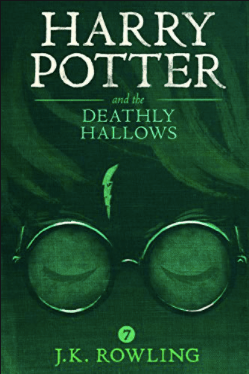
- Who interviewed Rita Skeeter about her book on Dumbledore?
- What was the question Lupin asked Harry to confirm that he was Harry?
- Who was Harry disguised as at the wedding?
- Where did Hermione apparate to with Ron and Harry when Death Eaters crashed the Wedding?
- Whom did the trio disguise themselves as to break into the ministry?
- What had Mr. Lovegood mistaken as the horn of a Crumple-Horned Snorkack?
- What was the name of the Goblin who helped the trio by proclaiming that the Sword of Gryffindor was fake?
- In which village was Shell Cottage?
- What was Kingsley Shaklebolt’s codename on Potterwatch?
- Who cast the fiendfyre that destroyed the diadem of Rowena Ravenclaw?
Creative Corner
Hey, hey, hey,
It’s Vee here, and I have yet another Creative Corner Challenge for you. Last round, you all designed some pretty spectacular rounds, in fact, we had so many ties to win, we had an extra round of votes! The winner (s) are:
Joint First Place: Ilvermorny’s QuickSilverFox, and Beauxbaton’s Lady Slone!
Literary Archetypes
QuickSilver’s Round focused on literary archetypes. Each theme had a bonus attached, meaning you got the extra points for using certain characters. Overall, this theme was one we really enjoyed because of the character archetypes it focused on, making each theme unique but also helping writers to hone their skills in particular areas.

- The Lover – Write about a character experiencing love for the first time
- The Outlaw – Write about a character who breaks the rules
- The Sage – Write about a relationship with a mentor
- The Caregiver – Write about a character taking care of another
- The Explorer – Write about a character questioning something ‘known’
Severus Snape

Lady Slone’s round was based on one of the most divisive characters in the fandom, Severus Snape. This enabled her to create themes that were both light and dark. Slone picked one overall rule that every school would have to adhere too, and that was for the story to be linked in some way to Severus Snape, even if he wasn’t in it. You know I was going to love that! Her themes focused on the many layers of the character, and I couldn’t help thinking that character rounds were a great idea for a season theme!
- Lifelong Love – Write about a character who will never stop loving something or someone.
- Repentance – Write about a character who tries to make up for something they did
- Torment – Write about someone being tormented or someone tormenting others.
- Half-blood Prince – Write about someone who does not follow traditional rules.
- Double Agent – Write about someone who appears to be on two sides.
Second Place: Ilvermorny’s Leprechaun!
Ollivander’s Wand Shop
Leprechaun’s theme really harkened back to the location themed rounds we had during Season 2, however, this one was entirely unique. What made this Ollivanders round stand out so much was the research that went into wand properties, which would inspire the theme of each round. Another thing that I really liked about this round was the bonus rule. Writing about a character that possessed the wand wood or core. This rule keeps things open enough to please everyone, but also nudges you towards something new!

- Ebony with Dragon Heartstring – Ebony wood is likely to bind with someone who holds firm in their beliefs but while a dragon heartstring can be powerful, it can be fickle. Write about fighting against change.
- Willow with Dragon Heartstring – Willow wood comes with great potential for anyone who receives this wand although they may suffer with insecurity which makes it a good match for a dragon heartstring core. Write about accomplishments being risked because of self-doubt.
- Cherry with Phoenix Feather – Cherry wood is a rare find similar to the phoenix feather but it possesses lethal power while the phoenix feather has a variation of magical abilities. Write about someone who is too powerful for their own good.
- Mahogany with Unicorn Tail Hair – Mahogany wood is known to bond with those who are protective and show strength to their loved ones while Unicorn Tail Hair is known to be loyal. Write about being loyal to the point of destruction.
- Hazel with Unicorn Tail Hair – Hazel wood is known to be able to absorb the users magic. Write about being unpredictable when under pressure:
If you want to check out the rest of our rounds, we have a view only doc here.
Shop Fronts!
We have another challenge for you. This issue, you will need to design and describe Hogsmeade’s newest shop. It can sell anything magical, maybe even something of your own creation. As usual, we have a few rules for you to follow when completing this challenge. Your submission must include:
- An image of the shop front—this must be an image of your own creation.
- A short profile of 150 words maximum on the shop and what it sells.
- There is no leeway on this wordcount.
- A stock list of 4–8 items.
- A clear connection to magic.
Each student can submit one piece, which will automatically gain 3 points. The winning shop (or top three depending on the number of submissions) will get an extra 5 points for their team.
In this challenge, you can work with other people in your team. Please note, you can only work with others when specified, and a joint contribution counts towards both students’ submissions.
You should email them to wizardingschoolchampionship@gmail.com and include: Pen name; School; Year.
We received a lot of general art submissions this round. We have published five of them in this issue!

Regulus Black aesthetic by Ash Juillet 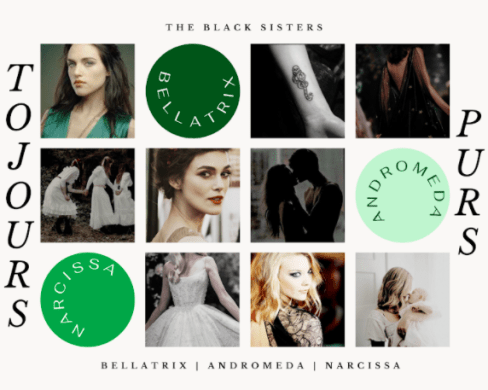
The Black Sisters aesthetic by Bea Writes 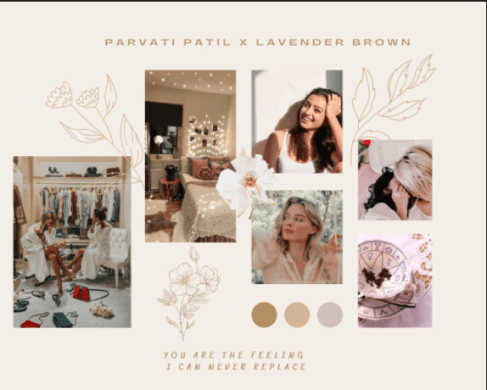
Parvati and Lavender moodboard by Mrs Dragneel 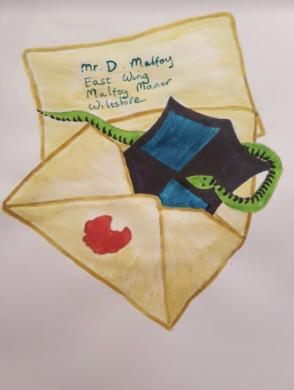
Draco receiving a letter by drarrymadhatter 
Newt Scamander by Captain Voxland
Dear Severus Snape
The two topics I receive the most letters about are Hogwarts and love. For some reason, that one time I confessed my undying love stuck in the minds of the masses. Idiots. Now, you all have this ridiculous notion that I’m Mr Romantic.
I have shredded every single letter. As such, in this edition of Dear Severus Snape, the theme is Hogwarts.
Dear Professor Snape,
I’m a first year Slytherin, and I’ve never been away from home for as long as this. Did you ever feel that you were alone and wouldn’t make friends when you first came to Hogwarts? How did you end up overcoming that fear and making friends? I’m really curious and hope that you find it in your heart to help me.
Dear Homesick Slytherin,
I know exactly what you mean. Finally, I was alone, away from my wretched family. I found out that teachers aren’t allowed to drink alcohol and let off steam on children, so naturally, I never wanted to leave!
On the friends front, don’t worry. In Slytherin, we don’t do friends; we just use and manipulate each other to succeed. You’ll have no pesky emotional attachments holding you back.
From a professor who knows how to set a mind at ease,

S. Snape
Dear Severus Snape,
I will shortly start teaching remedial potions over in the States, and I was wondering if you had any words of wisdom,
A Nervous Novice Potions Professor
Dear Nervous Novice,
Hand in your notice. I taught at Hogwarts simply to escape Azkaban. If I had my time over, I would pick Azkaban.
If you’re set on this career choice, remember that all children are stupid. My key catchphrases for success are: ‘Dunderheads!’, ‘Ten points from Gryffindor’, and ‘Detention.’
Always remember, detention is a great way to get someone else to do those disgusting jobs you detest, such as milking Flobberworms!
Severus Snape – An Inspiration to All
Professor,
The Slytherin/Gryffindor game is this saturday, and since Draco Malfoy is “busy”, I’ll be playing Seeker. Can I get some Felix Felicis? I know it’s “against the rules”, but based on some of the conversations I’ve overheard between you and Draco, it appears that you don’t care about the rules.
Helping me out is a win-win-win (you, me, and Slytherin).
- Amateur Seeker – Skilled Blackmailer
- P.S. I’ll have you know, my father is very high up in the Ministry
Dear Pathetic Excuse for a Blackmailer,
You realise that I am the right-hand man of both Albus Dumbledore and the Dark Lord? I feel that I am more than capable of using either or both of them to foil this ridiculous ploy of yours.
As for Quidditch. I want Slytherin to win—which is why I already plan to polyjuice the Seeker from the Ballycastle Bats (best team in the league if you ask me!) as Draco. I won’t leave something as important as this to luck. Potter must go down. He MUST be beaten, and trusting an imbecile like you will not make this happen.
Prof. S. Snape
P.S. A month’s detention for attempting and failing to blackmail faculty.
Dear Severus,
As a teacher, maybe you could help me. Why is it so hard for students, and people in general, to do what they are told.
Please help me.
Jenny
Jenny,
People—particularly students—are the epitome of idiocy.
Severus Snape
P.S. Advice – build an impenetrable emotionless fortress to hide behind.
Dear Mr Severus Snape,
As an esteemed and highly talented potions master, we are sure that you recognise the necessity of high-quality cauldrons. We, in turn, recognise the enormous amount of influence you wield as a courageous war hero, well-respected potioneer, and highly admired writer.
Would you be willing to promote our exceptional products and preeminent brand?
You will be well-compensated, of course. We would be happy to negotiate prices and details with you.
Please address owls to myself or Capacious Cauldrons. We look forward to hearing from you and to a fruitful partnership.
Yours faithfully,
Alphard Furcifer
Owner of Capacious Cauldrons
Dear Alphard Furcifer,
As Headmaster of Hogwarts, I could, with the right amount of … encouragement … state that Hogwarts students should use only Capacious Cauldrons. However, since I find your cauldrons to be sub-par in the extreme, I would recommend you lubricate the deal with a hefty sack of Galleons.
Severus Snape
Dear Professor Snape,
I have heard that you enjoy making up your own spells. I was wondering if you have ever made up your own potions too? Or would that be too difficult for you? I’m also curious as to what was your favorite spell that you made up and why? Also what advice would you give to someone who wanted to make spells as you did?
Sincerely,
An aspiring Duelist

Dear Aspiring Duelist,
I have been making my own spells for longer than you have been having hot meals, and since I am highly proficient at potions, it stands to reason that I did more than correct the text book.
As for tips, if you can’t work it out for yourself, you simply don’t have the intellect to pull it off.
Severus Snape
We would like to remind all readers that the views expressed by Severus Snape do not reflect the views of those working for Wizarding World News. We just find his point of view highly amusing.
Interview

Let’s welcome accio-broom! Accio is 34 and from South Wales, United Kingdom. She likes roller skating, crochet, and tormenting her two rescue cats, Ginny & Luna. And of course, Harry Potter.
What made you decide to join the competition?
I started reading fanfiction as we went into lockdown to relieve boredom. A couple of months in, I had some ideas in my head and thought, “I could give this a go too.”
Someone I know from the HPRomione Discord server, be11atrixthestrange, posted about the competition, and I thought it would be a good way for me to improve my writing and give me something to work towards, instead of just writing about my Romione headcanons.
Vee’s going to be sending be11atrixthestrange a thank-you card. She loves having you on her team.
What has been your favourite part of this competition so far?
I know it sounds cheesy, but it’s actually the companionship. I live alone, which has been hard during the pandemic, but Ilvermorny has become like a little family to me and has kept me sane.
I take it that means you’ll be returning next season?
I hope to, and I think Vee might hunt me down if I don’t. But real-life pre-pandemic was really busy for me, so it would all depend on what real-life post-pandemic looks like. If I can make it work, I will be there!
Good because Vee will definitely hunt you down. What is something you would change for season 4?
Ban all Beauxbatons from doing extra tasks so we can try to catch-up with points?
But seriously, not a lot. I still find how to achieve JP quite confusing, so some clearer guidelines around that would be nice, make it more objective so we know what we’re working towards.
Objective guidelines are difficult for JP because it’s a subjective category. Each judge reads their group of stories and picks their favourite. The only requirement is that they not pick a story simply because it includes their favourite character or pairing. When I was a judge, I picked my JP based on creativity, readability, and engagingness.
Does that help?
Yes, absolutely. Especially the part about not picking for their favourite character or pairing. Although I love writing mostly about canon, I know it’s not always the most popular thing to read and I always worry about the impact that might have on my judging.

For a series that managed to generate such a huge fandom, it’s surprising how often canon gets thrown out the window.
But speaking of pairings, I take it your favourite is Romione?
I am 100% rooting for Ron & Hermione, and I have been since I first read the Chamber of Secrets.
I love a slow burn/pining trope, and those two have seven years of it. Despite the fact they were both idiots growing up, they look after each other and know how far to push each other. Of course, they argue, but I see that it mostly happens because they like to challenge each other, and they know the right buttons to press to get the reactions they want. Plus, the fact that we only get to see their story through Harry’s eyes means there are many missing moments we can explore as writers.
Unfortunately, this means I have a strong dislike for any pairing that breaks Romione (apart from Rarry—that will always hold a special place in my heart). If someone comes to me and says, “I think you should read this awesome Dramione fic because…” and they give me a good enough reason, I will give it a try. As long as it doesn’t involve any Ron bashing, that is!
You’re fairly against character bashing, then?
I am passionately against character bashing. I think it’s the laziest form of writing, and I can find it quite upsetting, especially as most of it is geared towards Ron and the Weasleys (who are the most adorable characters anyway. Why would you want to bash them?!).

Don’t get me wrong, if someone takes an aspect of a character’s personality and uses it in the right, negative way, I am totally supportive of that. Or when someone writes the perfect reason as to why that character is acting out of sorts, then I’m here for that.
But taking Ron bashing as an example, writers turn him into a lazy, cheating, horrible excuse of a man to give Hermione a reason to leave him and run to another male character. It usually goes unexplained why he acted that way, too, as if he had a lobotomy, and that was always his character (when in reality, he is the complete opposite).
The good thing about being writers is that we can just say, “it didn’t work out,” or just not include Ron in the story. We can be creative without assassinating characters.
A very good point.
Is your favourite story written by yourself a Romione?
It is! It’s called Lego House. In a nutshell: Harry is a famous musician, and Ron is in charge of his security, but they’re a little bit lax on getting to appointments etc. So, Sirius, Harry’s manager, hires Hermione to sort them out.
That sounds like the perfect job for Hermione. Multi-chapters can be difficult. How do you motivate yourself to keep writing new chapters?

I’m a planner, so I like to have a rough idea of how many chapters I will be writing and what will be in each one. That doesn’t mean the plan stays the same throughout. When I started writing it, Lego House was supposed to be 10 chapters long. My current plan is for 19, but I’m actually thinking of removing some chapters as I’ve covered some plot points in other ways.
It’s also good to recognise that sometimes, the chapter just won’t happen, no matter how strongly you want to write it. My best suggestion is to leave it for a while, work on something else, then come back to it. You might feel more inspired at a different time of the day.
I’m a massive daydreamer and take inspiration from movies, so I’m constantly thinking, “what would that moment look like in this fic”. I write the moment, even if it’s not going to happen in the story for a while. I also read a lot of stories that come under the same trope. So my reading list is full of Muggle AUs at the moment. They help to keep me motivated and inspired.
Lego House is a cute title. How do you come up with story names?
I’m a bit lazy with my story titles. Unless I can find a word or two to describe what I’ve written, I try to find a song with the closest lyric. Usually, that’s a Taylor Swift or Ed Sheeran song!
You must mostly write romances, in that case. What is your all-time favourite book?
My all-time favourite book is The Stand by Stephen King, although it’s a biggie. I like most books written by him, but I return to this one almost as much as I do Harry Potter (without giving away spoilers, it’s about a massive pandemic, so I’ve been avoiding it recently).
Have you ever thought about including horror in your stories?

I’ve considered it, but I have never had any good ideas for it. Some horror stories are so clever, how the twists and turns take the reader by surprise. I’d be worried that I wouldn’t do the genre justice. I’ll have to keep my eyes peeled for some horror-inspiring prompts in the competition.
What is the most difficult part about writing for you?
Usually just getting words out. Sometimes I can sit at my laptop and stare at the screen for ages, and nothing happens. I taught myself to just put something down, even if it’s just gobbledegook. You can fine-tune that draft into something that makes more sense later.
The first draft is always the hardest, although the second one isn’t much easier. What would you say is the most rewarding thing about writing?
When I get my thoughts out of my head for a start. They often keep me awake at night, and if I don’t get them written down in some form, I’d most likely go a bit bonkers. Other than that, discussing my stories with my readers and hearing what they thought about it, even if the feedback isn’t always positive.
Sometimes negative feedback is the most useful.
What does your writing space look like?
I write everywhere. On my phone in the bath, while I sat on Zoom calls at my desk in my study, or tucked into my corner sofa in my living room with both cats by my side.
Most writers I know can’t write unless they’re at their desk on their computer. What other behind-the-scenes tidbit in your life would probably surprise your readers?
I failed my English Literature A-Level.
You’re right. That is surprising!
Would-You-Rather time! Would you rather cure writer’s block by hanging upside down like Dan Brown or by drinking 50 cups of coffee a day like Honoré de Balzac?
Oh my gosh, with 50 cups of coffee, I’d be dead. I have to switch to decaf after my first one. But I’m not sure I’d get on well with hanging upside down either. So neither?
Do you have your own creative way of curing writer’s block?

Read—even if it’s a graphic novel or an original piece of fiction or a magazine. Inspiration can be found EVERYWHERE.
Either-Or: paperback or ebook?
Paperback. I love the feel of the pages in my hand and the smell.
I could live off that smell!
Do you have a unique skill you’d like to share with us?
I guess being able to roller skate counts? Despite being plus size, I can still move pretty quickly and was the best blocker on my Roller Derby team. I love going down the paths in my city and seeing people look surprised by a big girl on skates.
Thank you, accio-broom!
Now we have with us Beauxbatons’s gingerdream, who is very short at under 5-foot and is media-obsessed!
First question: How did you get into fanfiction, and what do you love most about it?
I got into it by accident. I was looking for a sequel to a book I was reading, and one of the top hits was fanfiction.net. I love how writing fanfics is a labour of love and glory. We learn a lot of skills along the way, but mostly, we are a group of people who just love to create.
True that. What is your favourite thing about the Harry Potter fandom?
I love that the universe is huge. While HP is very Eurocentric, I love thinking about how different characters interact with magic. From Mrs Weasley to Voldemort, everyone has such a different relationship with it.
How do you decide each character’s relationship with magic?
I always ask, “Why?”
The series made it obvious that most characters have an area of magic they hold close or specialise in, so I try to focus on the intersection between the characters’ needs, wants, and interests before trying to align their relationship with magic. A good example from canon would be Gilderoy’s proficiency with Memory Charms and his inability to perform other magic to the same standard.
I’ve never given the areas of magical proficiency much thought, but it does give some interesting insights into characterisation. Who are your favourite and least favourite Harry Potter characters and pairings?
I love all the characters to some extent (or I can at least understand their motivations). I’m not the biggest fan of canon pairings, but I do love the Weasleys.
One thing I would have loved to be explored more in the books are the female characters like Umbridge and Amelia Bones, who are in powerful positions of government.
It isn’t often that someone says they want to know more about Umbridge, but I agree with the sentiment. How do you feel J.K. Rowling dealt with feminism in the Harry Potter series?
Rowling’s recent statements and actions, while deplorable, are not surprising. This comes through in Harry Potter and unfortunately, targets her female characters.
The series did a terrible job with feminism, especially if we note that her female characters are either unhinged, overtly emotional, vindictive, mocked, are made inadequate or recluse spinsters.
I don’t remember liking any of the female characters until I started reading fanfic interpretations of them. However, I do think Hermione or Ginny represent what contemporary feminism starts as for many people.
The message with Ginny and Hermione is that the only way to be a cool girl is to be a tomboy or a bookworm. While neither of those identities is bad, Ginny and Hermione’s treatment of female characters like Fleur or Lavender turned them into people I wouldn’t want to hang out with.
With the series lacking in certain areas, what is your go-to fanfiction story, and why does it stand out?
The HEX series by MaidenMotherCrone. It follows a similar format to the SKAM series and deals with issues presented in the show. It is well-written and deals with topics like religion, coming out, feminism, racism, and friendship, which I don’t see often done well in fanfics.
Methods of Humanity by local_doom_void is a series of one-shots and short stories that tackles the issue of “What would it take to make Voldemort human?” It is surprisingly joyful, optimistic, and (while OOC at times) never fails to entertain.
I’ve read the HEX series. I liked how it dealt with many issues, but I found some chapters difficult to get through, to the point where I haven’t finished the Pansy/Hermione story. Did you have that problem, too?
Definitely! HEX is a difficult read. However, the series is incredibly self-aware. HEX isn’t bingeable or escapist. The premise it chooses to ground itself in is reality (the one we don’t see often enough in a world as supposedly diverse as Harry Potter). All the main characters deal with heavy topics that just ask people to come as they are.
There is a moment in the miseducation of hermione granger that still stands out to me. Hermione offers Eid prayer with her family and asks in her prayer for permission to be made whole (not fixed). I’m not joking when I say I broke down crying after that chapter. It was the first time in my ten years of reading fanfiction and a lifetime of consuming media that I felt seen, and not as a caricature or forgotten side-character.
People who are used to being represented in the media can’t understand what it’s like not to be, how important it is to see yourself on a screen or in a story.
What else do you love finding in stories?
New insights as to how the author sees the world they are creating. Writers put a lot of themselves into a work, and it is nice to step into someone else’s world for a little bit.
What is the insight you use most in your stories?
People are messy, and not everyone has to like you.
That second part isn’t a message that pops up nearly enough.
What is your all-time favourite book?
This changes all the time, but if you like works with strong religious themes, The Year of the Witching by Alexis Henderson is *chef’s kiss*. Also, for anyone looking for a messy late-twenties protagonist, Honey Girl by Morgan Rogers lives up to the hype.
You do like stories that deal with big issues, haha.
Now that we know what you look for in stories, what do you avoid?
In fanfiction, it’s stories that rely heavily on OCs without explaining them in context to the universe.
How in context with the universe are we talking? Do they need to interact with canon characters, or is setting them loose in canon locations enough?
Unlike canon characters, we don’t know anything about an OC, so I need to be sold on the fact that their presence is an integral part of the story. This is my pet-peeve when an OC joins the Golden Trio or the Marauders only to take up someone else’s spot, usually Ron’s or Peter’s, without realising why Peter and Ron work in those groups.
A friend of mine described the Golden Trio as a tricycle and that type of OC as a 4×4 wheel complete with a snow chain and gold rims. The two don’t match.
Do you have any writing advice that you think everyone should know?
Everything has an audience as long as you put enough heart into it. My first fanfic with its million errors is still one of my best-received stories. That isn’t an excuse not to edit, but it does show that every story has a willing audience.
I also think that everyone should learn to read critically and enjoy it.
What advice would you give on critical reading?
The point of critical reading isn’t to be “woke” or ruin reading. Subconsciously, we judge what we read all the time. This is just another tool to broaden or challenge that judgement criterion.
- A book can be well-written, beloved, have the best intentions, yet perpetuate harmful stereotypes. We can’t change what is already written, but we can acknowledge those flaws.
- Publishing is, for the lack of a better phrase, a very white, cis, straight, able-bodied and neurotypical Global North industry (any of the publishing reports in the last five years confirms this). This plays a role in what we see in bookstores. So, seek OwnVoices work about an experience, wherever possible.
- Analyse each book the way you would for literature class. Who is the author, and what is their background? What themes did you pick up? What parts did you enjoy or not enjoy? What gave you red flags or moments for pause?
You can read other people’s reviews if you aren’t into the classroom-style analysis, especially if it is in a genre or about an experience you aren’t familiar with.
- If a topic does interest you, look at nonfiction work about it (even if it is a documentary, picture book, or blog post) because a lot of things we read about are inspired by real events.
Good advice! We have time for two more questions: As a child, what did you want to be when you grew up? And what behind-the-scenes tidbit in your life would surprise your readers the most?
When I was little, I wanted to be a time traveller. And I do most of my best writing thinking in church.
Did you want to be a time traveller because of Doctor Who? Because I can relate to that.
For me, it was The Magic Tree House books.
On to Would-You-Rather: Would you rather write lying on your stomach like James Joyce or standing like Virginia Woolf and Lewis Carroll?
Neither. I tend to write at a desk with a very uncomfortable chair.
Does the uncomfortable chair help?
Probably, since I now find it difficult to work on a comfortable chair.
And Either-Or: Computer or notebook?
Notebook.
Do you write your stories in a notebook before transferring them over?
I try to jot talking points that I might forget, but they are usually unpolished scene drafts.
And to finish: What will you be sharing with us?
My favourite artist is Hayley Kiyoko. Her work is exquisitely sapphic, and I adore every single one of her albums. “Wanna be Missed” from Kiyoko’s Expectations album could be a Bellamione anthem, in my opinion.
The lair of madam Pince
Judges’ Picks

Year 1: Handle It by Socrates7727
For years, Draco Malfoy looked up to his mother, but children grow, and their blind adoration fades. After the war, Draco has to confront his mother over missing funds, and he finds himself truly seeing her for the first time.
Year 2: Conversations with the Dumbledores by gingerdream
Albus Dumbledore is untouchable until he makes the biggest mistake of his life and turns to his brother for help. Aberforth wants to keep his family together. It’s a losing battle, yet he fights it. He begs, threatens, and compromises, but he can’t win against Albus, not even with a favour that changes the course of history.
Year 3: Stoppage of Time by Ebenbild
Ron Weasley always comes back. It’s one of his best qualities. Ron Weasley often leaves. It’s one of his worst flaws. Ron Disapparates during the Horcrux hunt. Harry is convinced he’ll be back, but Hermione isn’t so sure. If he does return, can she forgive him? Because Ron always comes back, but he’s never done it for her.
Year 4: A Face of Stone by DrarryMadhatter
Harry Potter is dead—no. Harry Potter is lost, but Draco Malfoy will find a way to get him back. While the wizarding world mourns a fallen hero, Draco sacrifices everything for an impossible cure to save the love of his life.
Year 5: you can’t cancel quidditch by loverloverlover
Oliver Wood loves Quidditch with everything he has, but the sport hasn’t always returned the favour. Quidditch has forced Oliver to lie and deceive, to adapt and trick. It has made him fail and made him question his worth. But it has also taught him the most useful skill: perseverance.
Year 6: i will forever linger by ninjadevil2000
Everyone deals with grief in their own way. Cho Chang knows that her way isn’t healthy, but it’s the only thing that fills the emptiness that Cedric Diggory left behind. When her mother takes away her dangerous coping mechanism, she should feel relieved, but nothingness is so much worse than pain.
Year 7: Obliviate by SeleneBlackburn
Jean Granger remembers her name. The rest of her memories return slowly. For days, she’s confused. She doesn’t understand until she remembers her daughter and a wand pointed at her face. Now she’s angry, and forgiveness is the last thing on her mind.
How to Get More Views and Reviews on Your Stories:
Working With a Beta Reader
More than one article this season has mentioned the benefits of working with a beta reader. No matter how good you are at editing, you will always miss something.
Having a beta reader will improve your story’s quality. A better story means happy readers who will continue viewing and possibly reviewing your work because they trust you to deliver a high-quality tale.
But good beta readers are hard to find.
How to Find a Good Beta Reader:
Step 1—The Search

There are 13,492 beta readers on fanfiction.net for the Harry Potter fandom alone. Some are no longer active; others have profiles so filled with SPaG mistakes that they’re incomprehensible.
Those at least are easy to weed out.
My advice for finding a good beta reader is to check if your favourite fic writers have beta reader profiles. If they don’t, check their favourite authors. Scroll through profiles until you find someone who catches your eye and read one of their recent stories to see if you like their writing style and ideas.
This process can take a while.
Step 2—The PM
When you find a compelling profile, send that person a PM. Make sure that you are polite and as articulate as you can be. Any self-respecting beta reader will see a PM brimming with SPaG mistakes and will decline your request.
- Explain what drew you to them (buttering someone up before asking for something is generally a good idea).
- Let them know what you want from them. Everyone has different beta reading expectations, so be specific. If you’re only looking for someone to check your SPaG and aren’t interested in comments on plot or characterisation, you need to be clear about that from the start.
- Acknowledge your writing experience. If you’re new to fanfiction or new to a fandom, your beta reader needs to know so that they can help you avoid the clichés. For example, in Harry Potter fics, the line “Scared, Potter?” pops up frequently.
- Write a blurb about the story you want them to beta read. Make sure it sounds interesting and polished.
Step 3—The Test Run

If your potential beta reader gets back to you with an affirmative, ask them to go on a test run to make sure that you’re suited to each other.
- Start by discussing the technical aspects. I like using Google Docs for beta reading because it helps me keep track of the suggestions, but I had a beta reader a couple of years ago who preferred fanfiction.net’s DocX option. Finding a compromise that everyone is comfortable with is essential at this point of the process.
- Again, be clear about your expectations. Tell them what type of feedback you want. Are your main concerns structure and pacing or dialogue and characterisation? Direct guidelines will help your beta reader focus their efforts and avoid over-critiquing.
- Leave instructions with your expectations at the top of the document so that your beta reader can find them easily.
- Do not discuss specific concerns. If you’re afraid that your depiction of Hermione in a particular scene is OOC, don’t mention it until after they’ve read the story to see if they point it out. If they don’t, ask them about it.
- Give them a deadline. You need to know that you can trust this person to keep their promises and communicate with you if they can’t. If they miss the deadline, send them a polite reminder.
- Do not interrupt them after they start beta reading your story/chapter. Don’t hound them for updates or suggest ideas. Let them finish and take a step back from your story so that when it’s time to return, you’ll see it with fresh eyes and a more objective point-of-view.
Step 4—The Decision
After your beta reader has finished with the test-run story, it’s time to decide if you two can work together.
Read their suggestions as objectively as you can. A beta reader’s goal isn’t to criticise you; it’s to help you. Check this article on how to handle constructive criticism.

Whether you like the suggestions or not, show your gratitude. Beta readers get next to nothing out of editing your stories, yet some will spend hours working on it. Thank them for their time (and consider rewarding their efforts with a good review on one of their stories).
What to look for in a beta reader:
- Honesty. There’s no point getting a beta reader if they can’t be honest with you about your work.
- Tact. You don’t want a beta reader who is constantly hurting your feelings with the tone of their comments.
- Knowledge. If your beta reader is a member of your target audience, they will enjoy your story more, and they will be able to spot the genre or trope clichés.
- Reliability. You want a beta reader who can make promises and keep them.
How to Keep a Good Beta Reader Around:
Your beta reader isn’t going to get much, if anything, out of this arrangement, so you need to accommodate them and make beta reading as pleasant as possible. This means you should keep following the steps you did for the test run as well as a few others.
- Be Polite
Politeness is non-negotiable. Always thank your beta reader for their time and effort.
- Return the Favour
Offer to return the favour or start reviewing their stories. If your beta reader gets something out of the arrangement, they’re more likely to stick around.
- Edit First
I took down my beta reader profile because I felt I was always pointing out the same issues. The people I beta read for didn’t learn from their mistakes, which I found frustrating and eventually boring.
Be sure to send your beta reader the best possible version of your story. Sending them the first draft is disrespectful to their time and effort. It will prompt them to end the arrangement.
Do at least one round of editing yourself before sending them your story. Failure to do this will result in an annoyed beta reader, which you do not want.

Check for:
– Complicated sentences. The goal when you write a story is to communicate with people. You can’t do that if half of your sentences are too confusing to understand.
– Esoteric language. What does “esoteric” mean? It’s an adjective used for things that are unusual and understood only by a small number of people. Why say “esoteric” instead of “unusual”? Because “esoteric” is the more accurate word, but as I said in the above bullet point, your goal is to communicate and be understood. If that means sacrificing some linguistic accuracy, so be it.
– Wordiness. Less is more, so learn to be concise and omit needless words. “She fell down due to the fact that she was late” becomes “She fell because she was late”. Readers are lazy (no offence); we want writers to get to the point, and we want them to get there quickly.
– Weak verbs. Weak verbs are verbs that need an adverb to make part of the author’s meaning clear. “He looked at her angrily” becomes “He glared at her”. Whenever you use an adverb, check the strength of your verb.
– Empty adverbs. Actually, totally, absolutely, completely, continually, constantly, continuously, literally, really, unfortunately, ironically, incredibly, hopefully, finally. These adverbs don’t serve a purpose and can suck the meaning and intention from your words.
– Passive voice. It’s more interesting to read about the girl who caught the ball than the ball that was caught. The girl is acting, whereas the ball is being acted upon. Writers often overuse the passive voice, and it obscures the real subject and action of the sentence.
– Pacing. The flow of your story will affect how much readers enjoy it. Check out this Handy Hints article for some tips on the matter.
Noticing your story’s pacing issues is tricky when the plot and sentences are still fresh in your mind. I recommend leaving your story alone for a few days after you finish writing it so that you can see it with fresh eyes. You’ll spot things then that you hadn’t noticed before so long as you can be critical about your writing.
How to Work With Your Beta Reader:
Everyone works differently, so you and your beta reader will figure this part out yourselves. There are, however, aspects of feedback that a lot of writers forget to ask about and a lot of beta readers forget to give despite them being important.
Beta readers are great for picking up on things that you missed or sections that are unclear, but those are things that most fanfiction readers will forgive you for if they like your story.
You need to ask your beta reader these questions:
- Do they feel emotionally invested in the story? Focus this question on the main character.
- Are the story’s details fresh and exciting? You can direct this question toward the AU setting, the atmosphere, or your wordcraft.
- Is the story gripping? The focal point of this question is whether or not there’s enough tension. If there isn’t, remember that tension relies not only on conflict but also on the reader’s emotional investment.
- Are they satisfied with how you resolve each moment of conflict? Unsatisfactory resolutions (whether it’s the ending of a scene or the story) will disappoint your reader. They’ll no longer trust you to provide a good fic.
Extra Tips:
- If possible, get more than one beta reader and split them into rounds. Ask your more lenient beta reader to do the first round. They’ll point out the more noticeable mistakes. Once they’re done, edit and then ask a pickier beta reader to step up for round 2.
- Thank and credit your beta readers in your A/N. Not only will this make them feel appreciated, but it will also show your readers that you tried to make your story as good as it could be.
In the next issue of the WWN, we’ll be looking at the benefits of writing fanfiction.
Writing Q and A with Ash

Q
To what extent should one concern themselves with accents in competition-level fanfic (i.e. in words such as nee that have a French derivative but are often written simply as nee Black or nee Potter for simplicity’s sake in the world of fanfic).
A
In a competition environment, the leniency or lack thereof when it comes to accents will depend on the judge. Most will probably let you get away with writing “nee” instead of “née”. I wouldn’t have done.
It’s a problem that belongs in the SPaG category, but it will also affect your story’s pacing because it will trip readers up (unless the reader is more familiar with fan fiction than they are with published fiction).
Q
Is historical accuracy important for fanfiction or it is up to the writer?
A
Everything is up to the writer, but if you want readers to fully appreciate your story, you need to accommodate their suspension of disbelief.
Published authors who write historical fiction do not make their stories historically accurate because the language used would be incomprehensible to most people. What they do instead is create an approximation: something that sounds convincingly old.

In his book On Writing, Sol Stein uses an example from his play Napoleon. During an argument, one character tells the other to calm down. The character couldn’t say, “Don’t get so hot under the collar” or “Cool it”, so instead, he says, “Save your blood the journey to your face. I meant no harm.”
It isn’t historically accurate, but it’s enough to accommodate most people’s suspension of disbelief.
The problem with using wording, events, mentalities, inventions, etc. that aren’t an approximation of historical accuracy is that it shatters the illusion of reality that your story is supposed to convey.
The power of historical fiction for bad and for good can be immense in shaping consciousness of the past.
Antony Beevor
Q
How do you deal when you have to write a character you hate?
A
There are two ways you can go about this.
1) Use them as a punching bag.
This method can be cathartic, but you need to be careful not to turn the character into a caricature.
Think about every person who has ever wronged you, and use those interactions to inspire you. Fill the character with all the hate and disdain you feel for your real-life foes. We all have someone we hate or at least dislike, so it will make the character feel real to your readers.
You can even go the extreme route and make the character purely evil. There’s something soothing about a black and white perspective where every antagonist is irredeemable and good conquers all.
The problem with this method is that it can make the character feel two-dimensional, which brings us to point two.
2) Find a way to relate to them.

We are all villains in someone else’s story. This character you hate probably doesn’t see themself as an antagonist, so how do they interpret their actions? There’s always a reason for the ways we act, even if the explanation doesn’t justify the behaviour from an outsider’s perspective.
Empathising with the characters you hate does not mean turning them into saints; that would be boring and unrealistic. Let the characters be terrible, but try to understand why they’re like that.
Examples:
Sirius Black, Severus Snape, and Dolores Umbridge are all bullies.
– Sirius Black is reckless and immature. He tormented his fellow schoolmates with pranks that, from his perspective, were funny. Why? Because he grew up in an oppressive household where acting out was always punished, so when out from under his parents’ thumb, he went wild.
– Severus Snape is bitter and repressed. He verbally abused his students, making many cry and becoming some’s worst fear. Why? Because he grew up poor with an abusive father. He spent years being powerless, so when he eventually gained power, he took advantage.
– Dolores Umbridge is callous and intolerant. She gaslighted anyone who got in the way of her grab for power. Why? Because she was a half-blood Slytherin who spent years surrounded by people who saw her as lesser, so she had to smile and manipulate her way to the top of the heap.
Each of these characters is worthy of sympathy if presented in the right light. Whether you want to make them complex or despicable is up to you.
“I will eviscerate you in fiction. Every pimple, every character flaw. I was naked for a day; you will be naked for eternity.”
Brian Helgeland
Q
Do you have any tips on building a memorable story?
A
Of the eleven books and countless fics I’ve read since the beginning of the year, I only remember three clearly. The others weren’t bad—necessarily—they just weren’t good enough.
There are four aspects you need to nail if you want your story to be memorable: characters, plot, world-building, and writing style.
1) Writing memorable characters.
Good characters are arguably the most important part of a good story because they’re what will make readers care about the plot.
Base your characters on real people so that they feel authentic.
Make their characterisation indirect, meaning the reader has to pick up on it: don’t tell me that a character is arrogant, show me. The more readers participate in the story, the more unforgettable the experience will be.
Keep your protagonist proactive by giving them a goal in every scene. Make their goals relatable and let them fail from time to time. The problem with passive characters is that readers can’t root for them.
Character development is essential. Your characters should not be the same people at the end of the story as they were at the beginning.
And remember to make your side characters just as memorable as your main characters.
2) Coming up with a memorable plot.
The first step in making your plot memorable is to write what you care about. Your passion for the story will leak into it and spread to your readers. That fervour will also help you intensify the tension in your story because the antagonist will be attacking something you love.
Build your story’s conflict. Follow every one of your main character’s successes with a failure and let those failures accumulate into a situation that seems hopeless. You need to keep your readers on the edge of their seat and make them worry. The goal is not only to make them forgo sleep and responsibilities until they finish your story; it’s to make them forget that they’re tired and have a million other things they should be doing.
Make sure that all that conflict doesn’t go to waste. If 99% of your story is amazing, but the ending is unsatisfying, your readers will lose faith in you. For a satisfying ending:
- resolve all conflict.
- make the ending a direct result of your main character’s actions.
- add some last-minute tension by including the aforementioned moment of hopelessness during which your readers aren’t sure if the characters will succeed.
- don’t fall for the “shock value” trap. Yes, the ending should be surprising, but the clues you laid out during the rest of the story shouldn’t all be red herrings.
3) Build a memorable world.
This point doesn’t just apply to fantasy. All settings, magical or mundane, should be engaging.
Write a summary for each setting with the details you want to include and the atmosphere you want to create. Try to give each setting its own tone and role in the story and don’t add too many details. If you focus on one detail, the setting will stand out more (like the Cornucopia in the Hunger Games).
Keep in mind that even magical settings need to feel real; there need to be rules for how things work, and those rules need to be consistent.
4) Make your writing style memorable.
Your writing style’s job is to make reading your story pleasant. It needs to engage readers, which means that you need to master writing techniques like “show, don’t tell”, POV, engaging your readers’ senses, etc.
To improve your writing style, study the writers you admire and read writing tips. Drop the pretence of formality and don’t take yourself too seriously. There’s nothing worse than a pompous writer; it takes the life out of a story.
Keep your writing simple and straightforward. Use easy words and short sentences whenever possible, and don’t try too hard to make your writing style perfect. Readers will know if you’re forcing it.

5) Tips for one-shots.
It’s easier to make a multi-chapter memorable than it is with a one-shot because longer stories give more opportunities for plot twists and character development.
My recommendation for one-shots is to incorporate at least one new idea into the story, whether it’s a new interpretation of someone’s characterisation, a brand new trope, a never-before-seen plot, etc. The more creative it is, the more memorable it will be.
The first person who wrote a story in which Harry was raised by goblins is a great example. They created a brand new trope.

Feel free to contribute to other aspects of the paper by sending a private message to the Competition account. We are always looking for pieces of fanart, and even your thoughts or recommendations. Even if you want to send a message to someone in the competition that you think has excelled, or maybe they helped you out? Send it to Aunt Molly! Anything else should be sent to Wizarding School Championship. In the Subject should be Wizarding World News: [Name the section of the paper you are writing about] depending on what you’re messaging about.
 Wizarding World News